 ChipApex | Global Electronic Components Supplier

SEARCH
Search Product
Search Post
— IC芯片 | 连接器 | 传感器 | 被动器件 —
Search productSearch post
— IC芯片 | 连接器 | 传感器 | 被动器件 —
Consult the customer manager about the wholesale price.
consultation hotline:86-132-6715-2157
email:[email protected]
Contact the product manager for consultation. One-stop consultation is available.
Do you want a lower wholesale price? Please send us your inquiry and we will reply immediately.
LP3996SDX-3333/NOPB is listed in the Voltage Regulators - Linear, Low Drop Out (LDO) Regulators range at ChipApex. The manufacturer field lists Texas Instruments. Its product description is IC REG LIN 3.3V 150/300MA 10WSON. Review the specifications below when checking this part for your BOM.
The LP3996SDX-3333/NOPB is a dual low-dropout (LDO) voltage regulator from Texas Instruments, designed for portable applications requiring high power supply rejection ratio (PSRR). It integrates two independent LDOs: one with a fixed 3.3V output and another with a fixed 3.3V output, both capable of delivering up to 150mA. The device operates with an input voltage range of 1.8V to 5.5V. Key electrical parameters include a typical dropout voltage of 200mV at 150mA load and a quiescent current of 40µA. It features enable pins for power management and is housed in a 6-pin SOT-23 package.
Verify the exact part number LP3996SDX-3333/NOPB against manufacturer datasheets to ensure compatibility with your design specifications. Confirm that the SOT-23 package and pinout match your PCB layout. Check for any recent revisions or obsolescence notices from Texas Instruments before finalizing procurement decisions.
Select this component when dual 3.3V rails are needed with minimal board space. Ensure input voltage stays within 1.8V to 5.5V range. Consider thermal performance if operating near maximum load currents. Verify PSRR requirements align with application noise sensitivity.
Part of Texas Instruments' LP399x family of dual LDO regulators. Designed for cost-sensitive, space-constrained portable applications. Shares common architecture with other variants differing in output voltages or current ratings.
Check for direct substitutes like LP3996SDX-18/NOPB or LP3996SDX-25/NOPB if different output voltages are acceptable. Verify pin compatibility and electrical characteristics before substitution.
Explore related parts through Power Management (PMIC), Integrated Circuits (ICs), all product categories, ChipApex homepage.
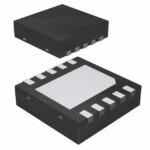 LP3996SDX-3333/NOPB
Choose LED drivers by current, string voltage, dimming and thermal limits. Understand constant-current operation and the checks needed for your load.
Read More
LP3996SDX-3333/NOPB is listed in the Voltage Regulators - Linear, Low Drop Out (LDO) Regulators range at ChipApex. The manufacturer field lists Texas Instruments. Its…
Read More
LP3996SDX-3333/NOPB is listed in the Voltage Regulators - Linear, Low Drop Out (LDO) Regulators range at ChipApex. The manufacturer field lists Texas Instruments. Its…
Read More
Learn how a pressure transducer converts pressure into voltage, current, or digital output, and compare pressure references and key selection specs.
Read More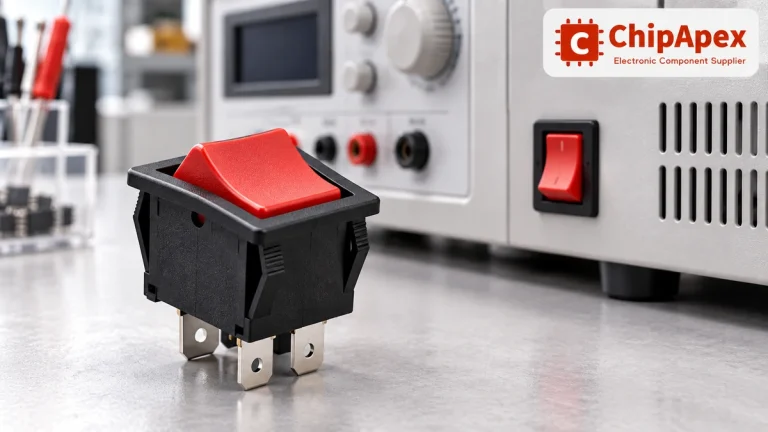
Choose a rocker switch by AC/DC ratings, contact arrangement, illumination, panel fit and sealing. Get practical checks for engineering and component sourcing.
Read More
Understand how oscillators generate timing signals, how they differ from crystals, and which frequency, output and stability specs matter when choosing one.
Read More
LP3996SDX-3333/NOPB is listed in the Voltage Regulators - Linear, Low Drop Out (LDO) Regulators range at ChipApex. The manufacturer field lists Texas Instruments. Its…
Read More
Compare RC, crystal and MEMS oscillator circuits. Check ppm, jitter, load capacitance, startup margin and output compatibility before choosing a clock source.
Read More
LP3996SDX-3333/NOPB is listed in the Voltage Regulators - Linear, Low Drop Out (LDO) Regulators range at ChipApex. The manufacturer field lists Texas Instruments. Its…
Read More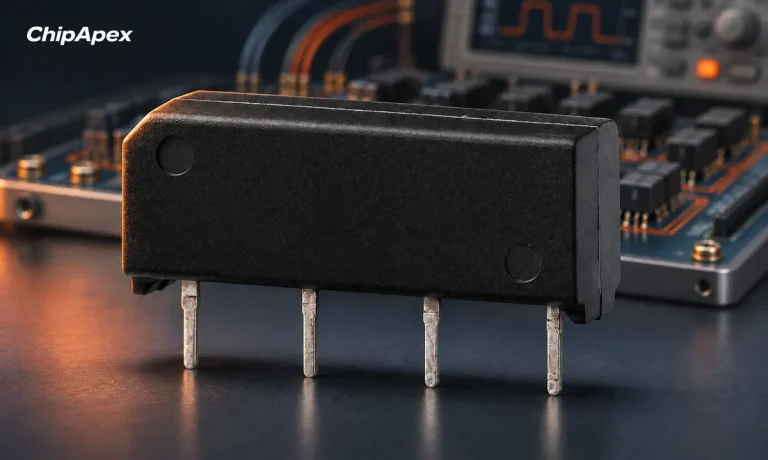
Choose a reed relay for signal switching. Understand hot and cold switching, leakage, contact resistance, isolation and measurement settling requirements.
Read More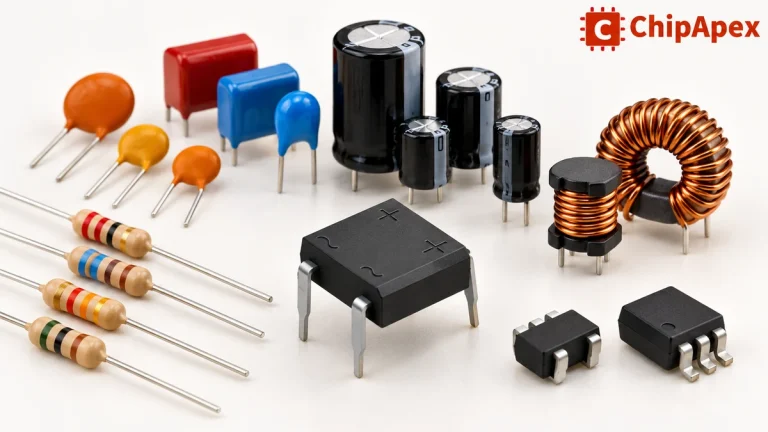
Explore electronic component types, functions, packages and datasheets. Learn selection, replacement and BOM checks before ordering parts for your PCB.
Read More
LP3996SDX-3333/NOPB is listed in the Voltage Regulators - Linear, Low Drop Out (LDO) Regulators range at ChipApex. The manufacturer field lists Texas Instruments. Its…
Read More
The activity of extra discounts on wholesale prices is in full swing…
Please fill in your contact information and we will send you the latest wholesale price list.




