 ChipApex | Global Electronic Components Supplier

SEARCH
Search Product
Search Post
— IC芯片 | 连接器 | 传感器 | 被动器件 —
Search productSearch post
— IC芯片 | 连接器 | 传感器 | 被动器件 —
Consult the customer manager about the wholesale price.
consultation hotline:86-132-6715-2157
email:[email protected]
Contact the product manager for consultation. One-stop consultation is available.
Do you want a lower wholesale price? Please send us your inquiry and we will reply immediately.
LTV-M701 is listed in the Transistor, Photovoltaic Output Optoisolators range at ChipApex. The manufacturer field lists Lite-On Inc.. Its product description is OPTOISO 3.75KV DARL W/BASE 5-SOP. Review the specifications below when checking this part for your BOM.
The LTV-M701 is a high-speed optocoupler from Lite-On, featuring a single channel with a Darlington phototransistor output. It operates within a temperature range of -40°C to 85°C and utilizes surface mount packaging. The device provides digital logic isolation at speeds up to 100 kBd, offering high gain for efficient signal transmission in compact applications requiring reliable electrical isolation.
Verify the specific ordering suffix and package variant against official Lite-On documentation before procurement. Confirm that the component matches the required Darlington output type and operating temperature range specifications. Ensure compatibility with surface mount assembly processes and validate isolation voltage ratings for the intended circuit design.
Select this component when high gain and fast response are critical for digital isolation. The Darlington output structure supports higher current drive capabilities compared to standard phototransistors. Consider the 100 kBd speed limit and SOP-5 package dimensions for board layout constraints.
This part belongs to the LTV-M series of high-speed photocouplers. It complements models like the LTV-M601 by offering specialized high-gain characteristics suitable for demanding digital isolation tasks where signal integrity and speed are prioritized over analog linearity.
Direct substitutes include other Lite-On M-series devices such as the LTV-M601 or LTV-M501, provided the speed and output type requirements align. Verify pinout compatibility and thermal performance when cross-referencing with competitor equivalents.
The LTV-M701 supports a maximum data rate of 100 kBd for digital logic applications.
It utilizes a Darlington phototransistor output to achieve high gain.
Explore related parts through Optocouplers, Optoisolators, Isolators, all product categories, ChipApex homepage.
 LTV-M701

LTV-M701 is listed in the Transistor, Photovoltaic Output Optoisolators range at ChipApex. The manufacturer field lists Lite-On Inc.. Its product description is OPTOISO 3.75KV…
Read More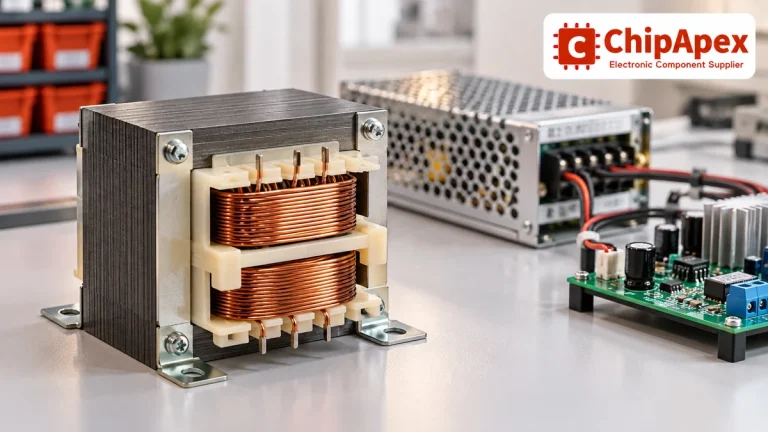
Select power transformers by input frequency, secondary VA, rectifier load, isolation, regulation and inrush. Build a clearer specification for your next RFQ.
Read More
Learn how a diode conducts, how to identify anode and cathode, and when to choose rectifier, TVS, Zener or photodiode types for a circuit.
Read More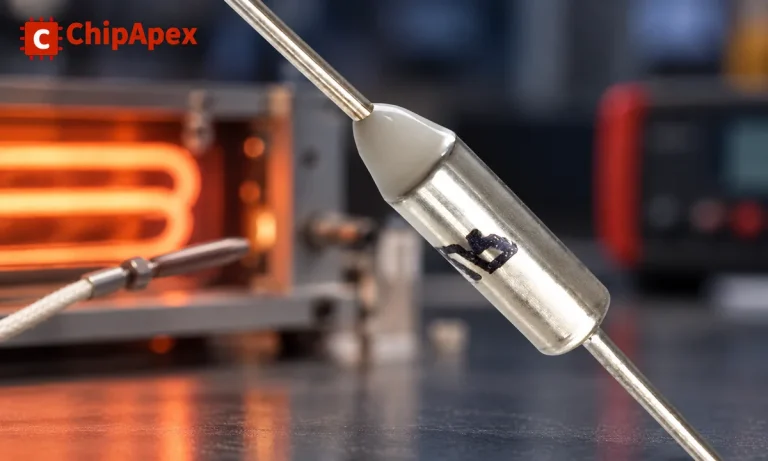
Understand thermal fuse operation, Tf, Th and Tm, electrical ratings and mounting. Check temperature limits and replacement requirements for your design.
Read More
Compare RC, crystal and MEMS oscillator circuits. Check ppm, jitter, load capacitance, startup margin and output compatibility before choosing a clock source.
Read More
LTV-M701 is listed in the Transistor, Photovoltaic Output Optoisolators range at ChipApex. The manufacturer field lists Lite-On Inc.. Its product description is OPTOISO 3.75KV…
Read More
Choose a DIP switch by contact type, coded positions, footprint and signal ratings. Check logic polarity, assembly conditions and PCB configuration behavior.
Read More
LTV-M701 is listed in the Transistor, Photovoltaic Output Optoisolators range at ChipApex. The manufacturer field lists Lite-On Inc.. Its product description is OPTOISO 3.75KV…
Read More
LTV-M701 is listed in the Transistor, Photovoltaic Output Optoisolators range at ChipApex. The manufacturer field lists Lite-On Inc.. Its product description is OPTOISO 3.75KV…
Read More
LTV-M701 is listed in the Transistor, Photovoltaic Output Optoisolators range at ChipApex. The manufacturer field lists Lite-On Inc.. Its product description is OPTOISO 3.75KV…
Read More
LTV-M701 is listed in the Transistor, Photovoltaic Output Optoisolators range at ChipApex. The manufacturer field lists Lite-On Inc.. Its product description is OPTOISO 3.75KV…
Read More
Learn why PTC resistance rises with temperature, how it differs from NTC, and which ratings matter for sensing and protection.
Read More
The activity of extra discounts on wholesale prices is in full swing…
Please fill in your contact information and we will send you the latest wholesale price list.





