 ChipApex | Global Electronic Components Supplier

SEARCH
Search Product
Search Post
— IC芯片 | 连接器 | 传感器 | 被动器件 —
Search productSearch post
— IC芯片 | 连接器 | 传感器 | 被动器件 —
Consult the customer manager about the wholesale price.
consultation hotline:86-132-6715-2157
email:[email protected]
Contact the product manager for consultation. One-stop consultation is available.
Do you want a lower wholesale price? Please send us your inquiry and we will reply immediately.
MC74LCX240DT is listed in the Buffers, Drivers, Receivers, Transceivers range at ChipApex. The manufacturer field lists onsemi. Its product description is BUS DRIVER, LVC/LCX/Z SERIES. Review the specifications below when checking this part for your BOM.
The MC74LCX240DT is an octal buffer and line driver manufactured by onsemi, belonging to the 74LCX logic series. It features two independent four-bit buffers with inverted outputs and three-state control. The device operates within a supply voltage range of 2V to 3.6V and supports surface-mount installation in a 20-SOIC package. It is designed for low-voltage applications requiring high-speed performance and low power consumption.
Verify component authenticity through authorized distributors due to potential obsolescence. Confirm RoHS compliance status as historical batches may vary. Ensure the 20-SOIC package dimensions match PCB footprint requirements. Check for lead-free soldering compatibility if required by assembly standards. Validate datasheet revisions against current manufacturing specifications.
Select this component when designing circuits that require octal buffering with inversion capabilities. It is suitable for systems operating between 2V and 3.6V where low power consumption is critical. Consider the three-state feature for managing multiple drivers on shared buses. Ensure the SOIC package fits the available board space and thermal constraints.
This part belongs to the 74LCX family, which combines CMOS technology with low voltage operation. It serves as a successor to older 74HC or 74HCT series components in modern low-power designs. The device is commonly used in consumer electronics and industrial control systems where signal integrity and speed are prioritized over high voltage tolerance.
Direct substitutes include MC74LCX240DTR2G and MC74LCX240DW. Cross-brand alternatives such as SN74LVC240PW from Texas Instruments may be compatible but require verification of electrical characteristics and pinout alignment.
Explore related parts through Logic, Integrated Circuits (ICs), all product categories, ChipApex homepage.
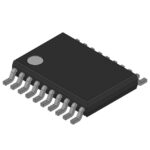 MC74LCX240DT

Learn the relay definition, coil and contact operation, NO and NC forms, load ratings and suppression choices. Compare mechanical, reed and solid-state types.
Read More
Learn how a JFET works and how to compare bias, leakage, noise and pinout. Review practical selection questions for high-impedance analog circuits.
Read More
MC74LCX240DT is listed in the Buffers, Drivers, Receivers, Transceivers range at ChipApex. The manufacturer field lists onsemi. Its product description is BUS DRIVER, LVC/LCX/Z…
Read More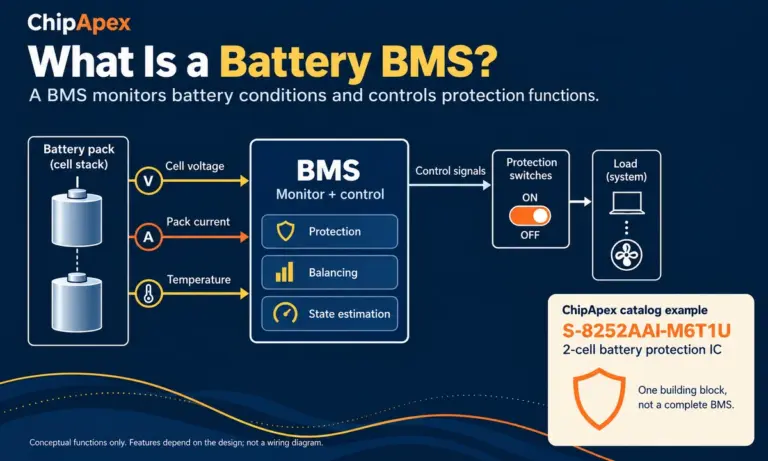
Learn what a battery BMS does, how protection differs from charging, and which pack specifications to check when sourcing BMS components through ChipApex.
Read More
MC74LCX240DT is listed in the Buffers, Drivers, Receivers, Transceivers range at ChipApex. The manufacturer field lists onsemi. Its product description is BUS DRIVER, LVC/LCX/Z…
Read More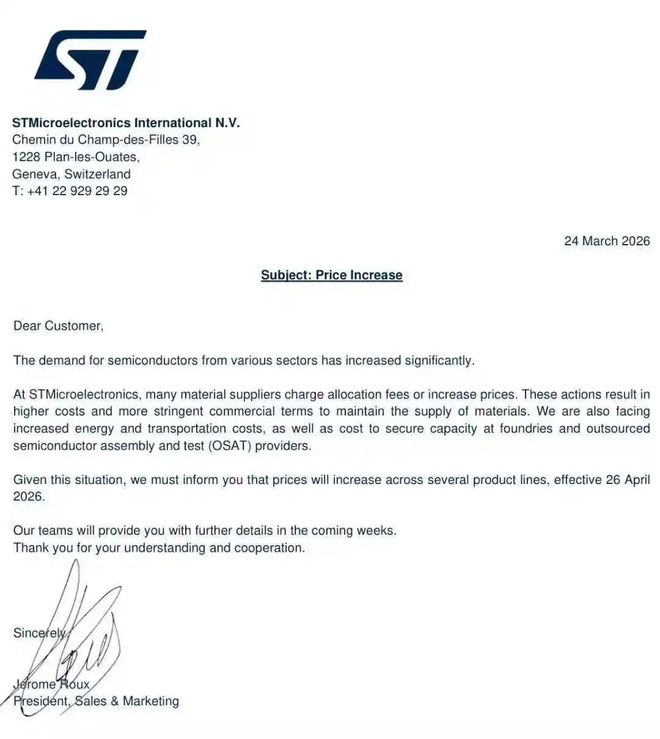
MC74LCX240DT is listed in the Buffers, Drivers, Receivers, Transceivers range at ChipApex. The manufacturer field lists onsemi. Its product description is BUS DRIVER, LVC/LCX/Z…
Read More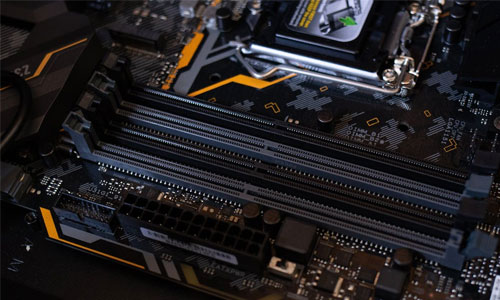
MC74LCX240DT is listed in the Buffers, Drivers, Receivers, Transceivers range at ChipApex. The manufacturer field lists onsemi. Its product description is BUS DRIVER, LVC/LCX/Z…
Read More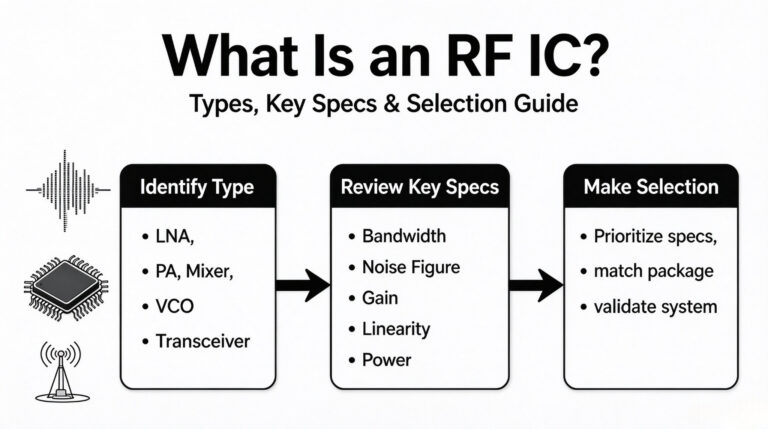
MC74LCX240DT is listed in the Buffers, Drivers, Receivers, Transceivers range at ChipApex. The manufacturer field lists onsemi. Its product description is BUS DRIVER, LVC/LCX/Z…
Read More
Compare thermistors, RTDs, thermocouples and temperature ICs. Learn how range, accuracy, response, interfaces and mounting affect component selection.
Read More
Choose a DIP switch by contact type, coded positions, footprint and signal ratings. Check logic polarity, assembly conditions and PCB configuration behavior.
Read More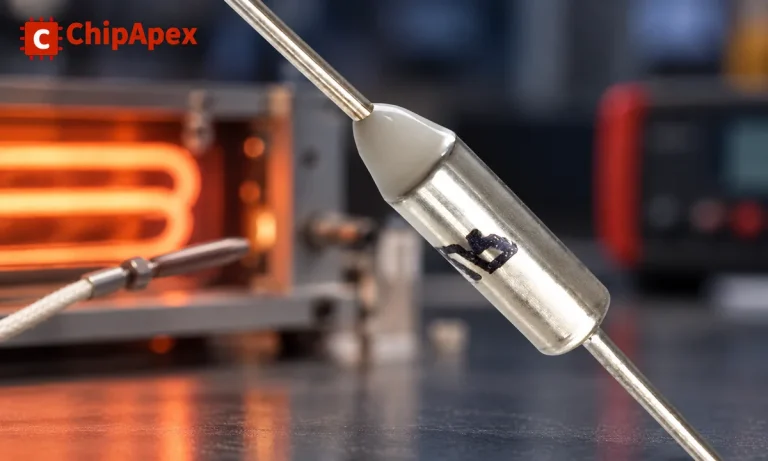
Understand thermal fuse operation, Tf, Th and Tm, electrical ratings and mounting. Check temperature limits and replacement requirements for your design.
Read More
Learn why PTC resistance rises with temperature, how it differs from NTC, and which ratings matter for sensing and protection.
Read More
The activity of extra discounts on wholesale prices is in full swing…
Please fill in your contact information and we will send you the latest wholesale price list.





