ChipApex | Global Electronic Components Supplier

SEARCH
Search Product
Search Post
— IC芯片 | 连接器 | 传感器 | 被动器件 —
Search productSearch post
— IC芯片 | 连接器 | 传感器 | 被动器件 —
Consult the customer manager about the wholesale price.
consultation hotline:86-132-6715-2157
email:[email protected]
Contact the product manager for consultation. One-stop consultation is available.
Do you want a lower wholesale price? Please send us your inquiry and we will reply immediately.
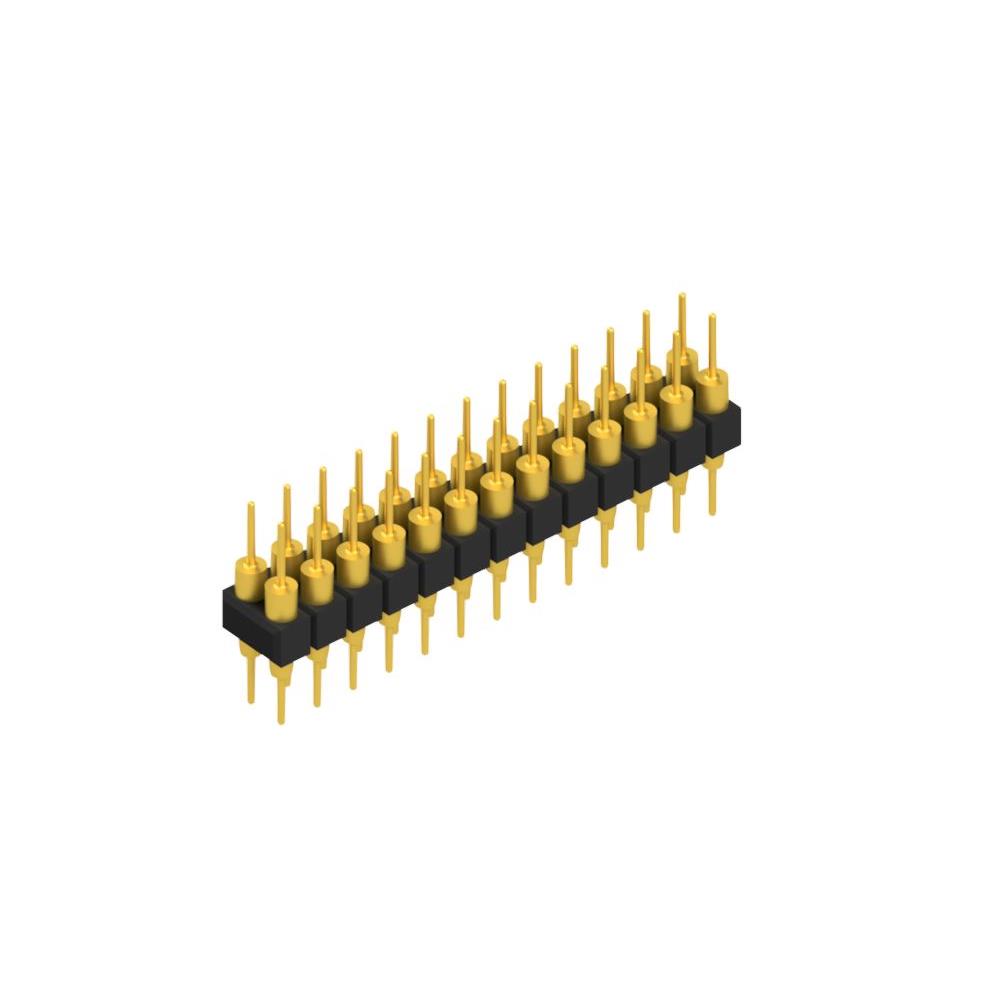
MK 214 X 1 26 G is listed in the Headers, Male Pins range at ChipApex. The manufacturer field lists Fischer Elektronik. Its product description is Solder and plug pins, D0.5 mm. Review the specifications below when checking this part for your BOM.
The Fischer Elektronik MK 214 X 1 26 G is a high-frequency power resistor designed for demanding electronic applications. It features a robust metal housing that facilitates efficient heat dissipation, ensuring stable operation under continuous load conditions. The component is engineered to withstand significant thermal stress while maintaining precise resistance values. Its construction supports reliable performance in environments requiring durable passive components with standardized mounting interfaces and consistent electrical characteristics.
Verify the exact part number against official Fischer Elektronik documentation to ensure compatibility with specific circuit requirements. Confirm technical specifications such as power rating and resistance value directly from the manufacturer's datasheet before procurement. Ensure that sourcing channels provide authentic products with full traceability to avoid counterfeit components.
Select this component based on its suitability for high-frequency power handling and thermal management needs. Evaluate the metal housing design for adequate heat dissipation in your specific application environment. Consider the mechanical mounting options and physical dimensions to ensure proper integration into the target electronic assembly.
This resistor belongs to the Fischer Elektronik MK 214 series, which specializes in high-power, high-frequency resistive components. The series is known for its reliability in industrial and communication electronics. The specific model variant indicates particular electrical and mechanical attributes tailored for rigorous operational demands within the broader product line.
Consult official Fischer Elektronik catalogs for direct cross-references or updated series replacements. Verify that any substitute component matches the original electrical parameters and thermal capabilities. Ensure mechanical compatibility if space constraints are critical.
Explore related parts through Rectangular Connectors, Connectors, Interconnects, all product categories, ChipApex homepage.
 MK 214 X 1 26 G

MK 214 X 1 26 G is listed in the Headers, Male Pins range at ChipApex. The manufacturer field lists Fischer Elektronik. Its product…
Read More
Compare thermistors, RTDs, thermocouples and temperature ICs. Learn how range, accuracy, response, interfaces and mounting affect component selection.
Read More
Learn what a battery BMS does, how protection differs from charging, and which pack specifications to check when sourcing BMS components through ChipApex.
Read More
Learn what an integrated circuit is, how ICs work, the main types and the specs to check before choosing a part for your design…
Read More
Select a DC-DC converter by input range, topology, isolation and temperature. Compare ripple, efficiency and load limits before choosing a component.
Read More
MK 214 X 1 26 G is listed in the Headers, Male Pins range at ChipApex. The manufacturer field lists Fischer Elektronik. Its product…
Read More
Choose LED drivers by current, string voltage, dimming and thermal limits. Understand constant-current operation and the checks needed for your load.
Read More
See how a MEMS gyroscope measures angular rate, why its angle estimate drifts, and which range, noise, interface and temperature specs to compare.
Read More
MK 214 X 1 26 G is listed in the Headers, Male Pins range at ChipApex. The manufacturer field lists Fischer Elektronik. Its product…
Read More
MK 214 X 1 26 G is listed in the Headers, Male Pins range at ChipApex. The manufacturer field lists Fischer Elektronik. Its product…
Read More
Choose a vibration sensor for machine monitoring. Compare sensing methods, bandwidth, noise and mounting, then define the signal-chain requirements.
Read More
See when an inductor behaves linearly, how DC bias and saturation reduce inductance, and which current and temperature curves to check.
Read More
The activity of extra discounts on wholesale prices is in full swing…
Please fill in your contact information and we will send you the latest wholesale price list.