ChipApex | Global Electronic Components Supplier

SEARCH
Search Product
Search Post
— IC芯片 | 连接器 | 传感器 | 被动器件 —
Search productSearch post
— IC芯片 | 连接器 | 传感器 | 被动器件 —
Consult the customer manager about the wholesale price.
consultation hotline:86-132-6715-2157
email:[email protected]
Contact the product manager for consultation. One-stop consultation is available.
Do you want a lower wholesale price? Please send us your inquiry and we will reply immediately.
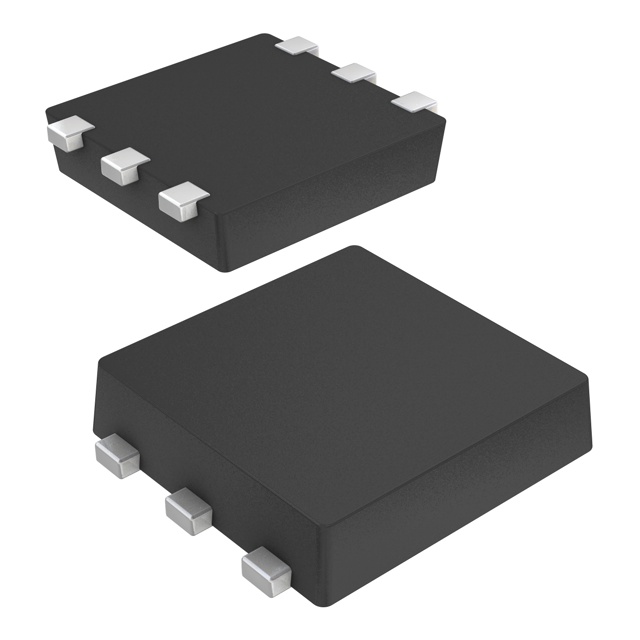
S-1112B30PI-L6PTFG is listed in the Voltage Regulators - Linear, Low Drop Out (LDO) Regulators range at ChipApex. The manufacturer field lists ABLIC Inc.. Its product description is IC REG LINEAR 3V 150MA SNT-6A. Review the specifications below when checking this part for your BOM.
The S-1112B30PI-L6PTFG is a positive voltage regulator from the S-1112 Series, manufactured by ABLIC Inc. It provides a fixed output voltage of 3.0 V with an accuracy of ±1.0%. The device operates within an input voltage range of 2.0 V to 6.5 V and supports an output current of up to 150 mA. Key electrical parameters include a typical dropout voltage of 190 mV at 100 mA, a ripple rejection ratio of 80 dB at 1.0 kHz, and a current consumption of 50 µA during operation. It features built-in overcurrent protection and an ON/OFF control circuit.
Verify the specific ordering suffix against the manufacturer's datasheet to confirm package type (SNT-6A(H)) and environmental compliance (Lead-free, Sn 100%, halogen-free). Confirm that the pin configuration matches the S-1112 series requirements, as it differs from the S-1122 series. Ensure the selected component meets the required operating temperature range and power dissipation constraints for the target application.
Select this component when a fixed 3.0 V output is required with high accuracy and low quiescent current. Consider the SNT-6A(H) package for its compact footprint suitable for high-density mounting. Evaluate the thermal performance based on the maximum power dissipation ratings provided in the datasheet, especially under high load conditions or elevated ambient temperatures.
This part belongs to the S-1112/1122 Series of CMOS voltage regulators developed by ABLIC Inc. The series is characterized by high ripple rejection and low dropout voltage. The S-1112 variant specifically utilizes the SNT-6A(H) or SOT-23-5 packages, distinguishing itself from the S-1122 series through its pin configuration and internal logic levels for the ON/OFF pin.
Public confirmed substitute part numbers are not available in the provided documentation. Verify compatibility with alternative LDOs by matching output voltage, current capacity, package dimensions, and pinout configurations.
Explore related parts through Power Management (PMIC), Integrated Circuits (ICs), all product categories, ChipApex homepage.
 S-1112B30PI-L6PTFG

Understand how a comparator switches at a voltage threshold, why hysteresis prevents chatter, and which output and input specs matter.
Read More
S-1112B30PI-L6PTFG is listed in the Voltage Regulators - Linear, Low Drop Out (LDO) Regulators range at ChipApex. The manufacturer field lists ABLIC Inc.. Its…
Read More
S-1112B30PI-L6PTFG is listed in the Voltage Regulators - Linear, Low Drop Out (LDO) Regulators range at ChipApex. The manufacturer field lists ABLIC Inc.. Its…
Read More
Learn the relay definition, coil and contact operation, NO and NC forms, load ratings and suppression choices. Compare mechanical, reed and solid-state types.
Read More
Compare Pt100 and Pt1000 RTDs, two-, three- and four-wire connections, excitation and self-heating. Build an error budget from element to reported temperature.
Read More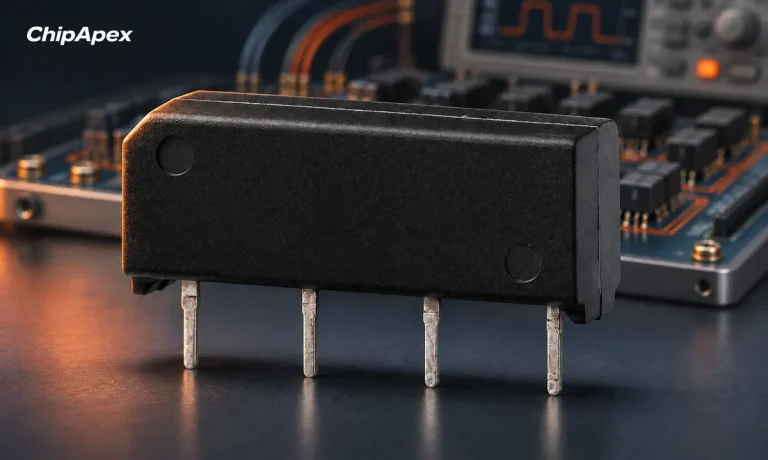
Choose a reed relay for signal switching. Understand hot and cold switching, leakage, contact resistance, isolation and measurement settling requirements.
Read More
Compare RC, crystal and MEMS oscillator circuits. Check ppm, jitter, load capacitance, startup margin and output compatibility before choosing a clock source.
Read More
S-1112B30PI-L6PTFG is listed in the Voltage Regulators - Linear, Low Drop Out (LDO) Regulators range at ChipApex. The manufacturer field lists ABLIC Inc.. Its…
Read More
S-1112B30PI-L6PTFG is listed in the Voltage Regulators - Linear, Low Drop Out (LDO) Regulators range at ChipApex. The manufacturer field lists ABLIC Inc.. Its…
Read More
Compare gas sensor technologies, cross-sensitivity and calibration needs. Define the gas, range and environment before choosing a sensing component.
Read More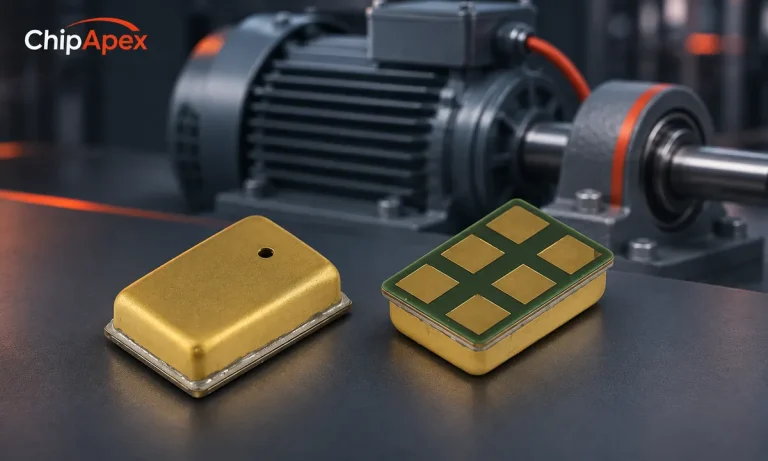
Choose a vibration sensor for machine monitoring. Compare sensing methods, bandwidth, noise and mounting, then define the signal-chain requirements.
Read More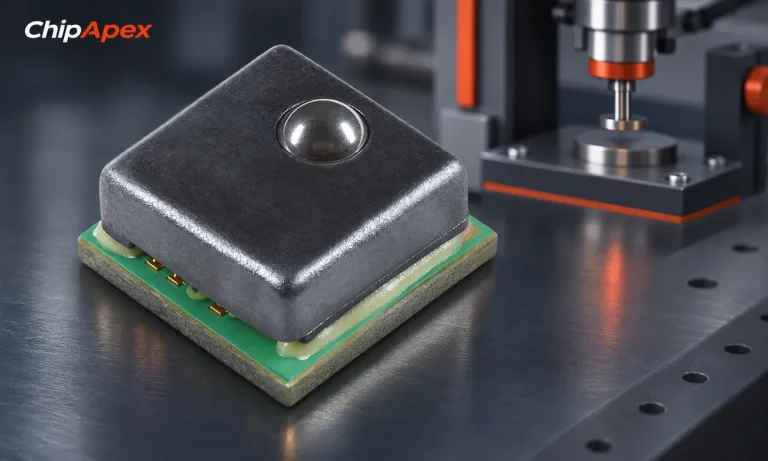
Understand load cell sensor output, bridge wiring and calibration. Learn how mV/V sensitivity, mechanics and ADC noise affect measurement accuracy.
Read More
The activity of extra discounts on wholesale prices is in full swing…
Please fill in your contact information and we will send you the latest wholesale price list.