 ChipApex | Global Electronic Components Supplier

SEARCH
Search Product
Search Post
— IC芯片 | 连接器 | 传感器 | 被动器件 —
Search productSearch post
— IC芯片 | 连接器 | 传感器 | 被动器件 —
Consult the customer manager about the wholesale price.
consultation hotline:86-132-6715-2157
email:[email protected]
Contact the product manager for consultation. One-stop consultation is available.
Do you want a lower wholesale price? Please send us your inquiry and we will reply immediately.
SBR05U20SN-7 is listed in the Diode Arrays range at ChipApex. The manufacturer field lists Diodes Incorporated. Its product description is DIODE ARR SBR 20V 250MA SC-59-3. Review the specifications below when checking this part for your BOM.
The SBR05U20SN-7 is a surface mount Super Barrier Rectifier manufactured by Diodes Incorporated. It features an SC-59 package and supports a peak repetitive reverse voltage of 20 V with an average rectified output current of 500 mA. The device exhibits a forward voltage drop ranging from 0.48 V to 0.56 V at 0.5 A, depending on junction temperature. Non-repetitive peak forward surge current capability is rated at 3 A. Thermal resistance from junction to ambient is 134 ºC/W, and the operating junction temperature range spans from -65 to +150 ºC.
Verify component authenticity through authorized distributors or direct manufacturer channels. Confirm that the ordering suffix matches the required tape and reel packaging specifications. Ensure compliance with RoHS directives and check for any specific environmental handling requirements before integration into production lines.
Select this component when a low forward voltage drop is critical for efficiency in 20 V applications. The SC-59 package suits space-constrained designs. Evaluate thermal management needs based on the specified junction-to-ambient thermal resistance and derating curves provided in the datasheet.
This part belongs to the SBR05U20 series of Super Barrier Rectifiers from Diodes Incorporated. These devices combine the benefits of Schottky diodes with the ruggedness of standard silicon rectifiers. The series is engineered for high-speed switching and improved thermal performance compared to conventional PN junction rectifiers.
SBR05U20LP-7
The maximum operating junction temperature is +150 ºC.
Yes, the SBR05U20SN-7 is qualified to AEC-Q101 standards for high reliability.
The non-repetitive peak forward surge current (IFSM) is rated at 3 A.
Explore related parts through Rectifiers, Diodes, Discrete Semiconductor Products, all product categories.
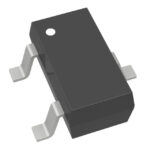 SBR05U20SN-7

Learn how a diode conducts, how to identify anode and cathode, and when to choose rectifier, TVS, Zener or photodiode types for a circuit.
Read More
SBR05U20SN-7 is listed in the Diode Arrays range at ChipApex. The manufacturer field lists Diodes Incorporated. Its product description is DIODE ARR SBR 20V…
Read More
SBR05U20SN-7 is listed in the Diode Arrays range at ChipApex. The manufacturer field lists Diodes Incorporated. Its product description is DIODE ARR SBR 20V…
Read More
SBR05U20SN-7 is listed in the Diode Arrays range at ChipApex. The manufacturer field lists Diodes Incorporated. Its product description is DIODE ARR SBR 20V…
Read More
SBR05U20SN-7 is listed in the Diode Arrays range at ChipApex. The manufacturer field lists Diodes Incorporated. Its product description is DIODE ARR SBR 20V…
Read More
Understand thermal fuse operation, Tf, Th and Tm, electrical ratings and mounting. Check temperature limits and replacement requirements for your design.
Read More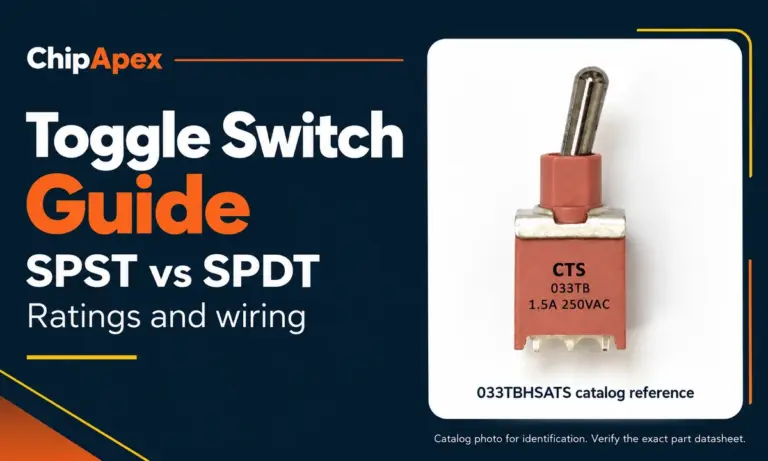
Compare SPST and SPDT toggle switches, understand AC/DC ratings, and follow wiring examples. Check contact action, mounting and parts in the ChipApex catalog.
Read More
SBR05U20SN-7 is listed in the Diode Arrays range at ChipApex. The manufacturer field lists Diodes Incorporated. Its product description is DIODE ARR SBR 20V…
Read More
SBR05U20SN-7 is listed in the Diode Arrays range at ChipApex. The manufacturer field lists Diodes Incorporated. Its product description is DIODE ARR SBR 20V…
Read More
Understand how oscillators generate timing signals, how they differ from crystals, and which frequency, output and stability specs matter when choosing one.
Read More
SBR05U20SN-7 is listed in the Diode Arrays range at ChipApex. The manufacturer field lists Diodes Incorporated. Its product description is DIODE ARR SBR 20V…
Read More
SBR05U20SN-7 is listed in the Diode Arrays range at ChipApex. The manufacturer field lists Diodes Incorporated. Its product description is DIODE ARR SBR 20V…
Read More
The activity of extra discounts on wholesale prices is in full swing…
Please fill in your contact information and we will send you the latest wholesale price list.





