 ChipApex | Global Electronic Components Supplier

SEARCH
Search Product
Search Post
— IC芯片 | 连接器 | 传感器 | 被动器件 —
Search productSearch post
— IC芯片 | 连接器 | 传感器 | 被动器件 —
Consult the customer manager about the wholesale price.
consultation hotline:86-132-6715-2157
email:[email protected]
Contact the product manager for consultation. One-stop consultation is available.
Do you want a lower wholesale price? Please send us your inquiry and we will reply immediately.
SN74ALS640BDWG4 is listed in the Buffers, Drivers, Receivers, Transceivers range at ChipApex. The manufacturer field lists Texas Instruments. Its product description is IC TXRX INVERT 5.5V 20SOIC. Review the specifications below when checking this part for your BOM.
The SN74ALS640BDWG4 is an octal bus transceiver from the Texas Instruments 74ALS series, housed in a 20-pin SOIC package. It features three-state outputs and operates within a supply voltage range of 4.5 V to 5.5 V. The device provides a propagation delay of 11 ns, with low-level output current capability of 24 mA and high-level output current of -15 mA. It supports TTL input and output levels and functions within an operating temperature range of 0°C to +70°C.
Verify the specific suffix 'G4' indicates RoHS compliance and lead-free construction as per manufacturer standards. Confirm the SOIC-20 package dimensions match the design footprint requirements. Ensure the operating temperature range aligns with the environmental conditions of the target application. Cross-reference the datasheet revision to confirm pinout consistency with existing designs.
Select this component when an octal transceiver with ALS speed characteristics is required. The 11 ns propagation delay suits moderate-to-high speed digital systems. Verify that the 24 mA sink current meets the load requirements of the connected bus lines. Consider the SOIC package for surface-mount assembly processes. Compare against LS or AS variants if power consumption or speed thresholds differ significantly.
This part belongs to the SN74ALS640B family of octal bus transceivers. It serves as a buffer and directional controller for data flow between two buses. The device simplifies circuit design by integrating direction control and output enable functions into a single package. It is widely used in microprocessor-based systems for memory and I/O expansion.
Yes, the device accepts TTL input levels and provides TTL-compatible output levels, ensuring compatibility with standard digital logic families.
The maximum recommended supply voltage (VCC) for the SN74ALS640BDWG4 is 5.5 V.
Explore related parts through Logic, Integrated Circuits (ICs), all product categories, ChipApex homepage.
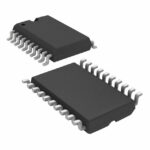 SN74ALS640BDWG4
Learn how a Zener diode regulates voltage. Calculate resistor current and power, check tolerance and temperature, and distinguish Zener and TVS applications.
Read More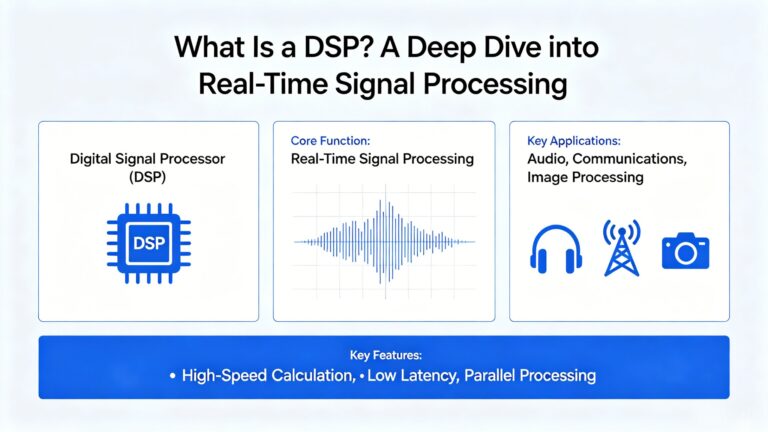
SN74ALS640BDWG4 is listed in the Buffers, Drivers, Receivers, Transceivers range at ChipApex. The manufacturer field lists Texas Instruments. Its product description is IC TXRX…
Read More
See how a MEMS gyroscope measures angular rate, why its angle estimate drifts, and which range, noise, interface and temperature specs to compare.
Read More
SN74ALS640BDWG4 is listed in the Buffers, Drivers, Receivers, Transceivers range at ChipApex. The manufacturer field lists Texas Instruments. Its product description is IC TXRX…
Read More
SN74ALS640BDWG4 is listed in the Buffers, Drivers, Receivers, Transceivers range at ChipApex. The manufacturer field lists Texas Instruments. Its product description is IC TXRX…
Read More
Compare RC, crystal and MEMS oscillator circuits. Check ppm, jitter, load capacitance, startup margin and output compatibility before choosing a clock source.
Read More
Choose a pin header by pitch, mating geometry, current rating and mounting. Learn why matching pin count and spacing does not guarantee compatibility.
Read More
Choose LED drivers by current, string voltage, dimming and thermal limits. Understand constant-current operation and the checks needed for your load.
Read More
SN74ALS640BDWG4 is listed in the Buffers, Drivers, Receivers, Transceivers range at ChipApex. The manufacturer field lists Texas Instruments. Its product description is IC TXRX…
Read More
Choose a vibration sensor for machine monitoring. Compare sensing methods, bandwidth, noise and mounting, then define the signal-chain requirements.
Read More
Compare Hall, shunt, current transformer and Rogowski sensing. Check AC/DC capability, accuracy, isolation, heat and response before selecting a sensor.
Read More
Compare Pt100 and Pt1000 RTDs, two-, three- and four-wire connections, excitation and self-heating. Build an error budget from element to reported temperature.
Read More
The activity of extra discounts on wholesale prices is in full swing…
Please fill in your contact information and we will send you the latest wholesale price list.





