 ChipApex | Global Electronic Components Supplier

SEARCH
Search Product
Search Post
— IC芯片 | 连接器 | 传感器 | 被动器件 —
Search productSearch post
— IC芯片 | 连接器 | 传感器 | 被动器件 —
Consult the customer manager about the wholesale price.
consultation hotline:86-132-6715-2157
email:[email protected]
Contact the product manager for consultation. One-stop consultation is available.
Do you want a lower wholesale price? Please send us your inquiry and we will reply immediately.
SN74AUC2G07YZPR is listed in the Buffers, Drivers, Receivers, Transceivers range at ChipApex. The manufacturer field lists Texas Instruments. Its product description is IC BUFFER NON-INVERT 2.7V 6DSBGA. Review the specifications below when checking this part for your BOM.
The SN74AUC2G07YZPR is a dual buffer and line driver from the Texas Instruments SN74AUC2G07 series. It features two non-inverting channels with open-drain outputs, designed for operation within a supply voltage range of 800 mV to 2.7 V. The device provides a low-level output current capability of 9 mA and maintains a static current of 10 uA. Propagation delays are specified at 2.5 ns and 1.2 ns. It operates reliably across an extended temperature range from -40 C to +85 C and is housed in a DSBGA-6 package.
Verify the specific suffix YZPR corresponds to the DSBGA-6 package and tape-and-reel quantity when ordering. Confirm RoHS compliance status through official manufacturer documentation prior to integration. Ensure the selected variant matches the required operating temperature range and electrical specifications for the target application environment.
Select this component when a dual non-inverting buffer with open-drain outputs is required for low-voltage systems. The AUC series offers faster switching speeds compared to standard LVC counterparts while maintaining low power consumption. Verify that the 9 mA sink current meets the load requirements of the connected circuitry and that the 2.7 V maximum supply voltage aligns with the system power rails.
This part belongs to the SN74AUC2Gxx family of ultra-low voltage logic devices. It serves as the dual-channel counterpart to single-channel variants like the SN74AUC1G07. The device integrates two independent buffers into a compact footprint, optimizing board space for dense consumer electronics and mobile applications requiring efficient signal conditioning.
SN74AUC2G07DCKR: Dual buffer with SC70-6 package. SN74AUC2G07YZPT: Dual buffer with DSBGA-6 cut-tape packaging.
Explore related parts through Logic, Integrated Circuits (ICs), all product categories, ChipApex homepage.
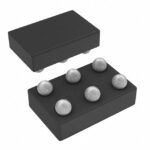 SN74AUC2G07YZPR
Choose LED drivers by current, string voltage, dimming and thermal limits. Understand constant-current operation and the checks needed for your load.
Read More
SN74AUC2G07YZPR is listed in the Buffers, Drivers, Receivers, Transceivers range at ChipApex. The manufacturer field lists Texas Instruments. Its product description is IC BUFFER…
Read More
Learn why PTC resistance rises with temperature, how it differs from NTC, and which ratings matter for sensing and protection.
Read More
Understand how a comparator switches at a voltage threshold, why hysteresis prevents chatter, and which output and input specs matter.
Read More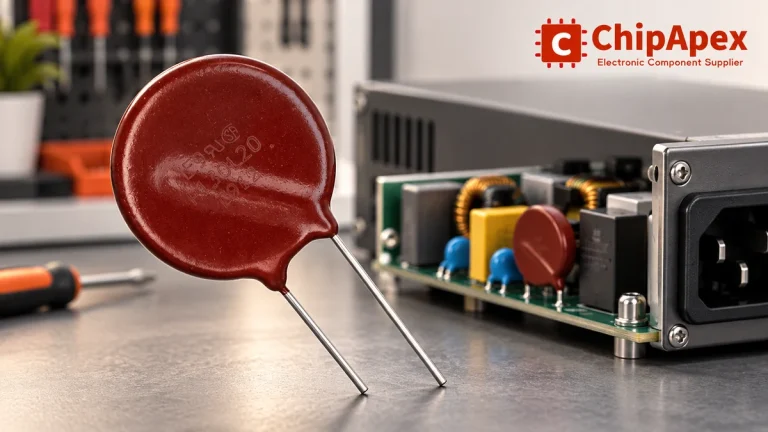
Select MOV varistors by continuous voltage, clamping behavior, surge waveform and repetition. Check thermal disconnection, fuse coordination and replacements.
Read More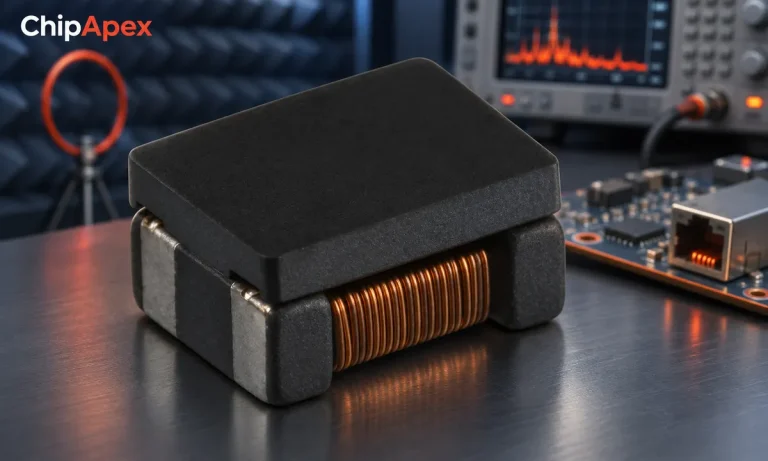
Select a common mode choke using noise frequency, current, insulation and signal integrity. Understand impedance curves, layout and filter limitations.
Read More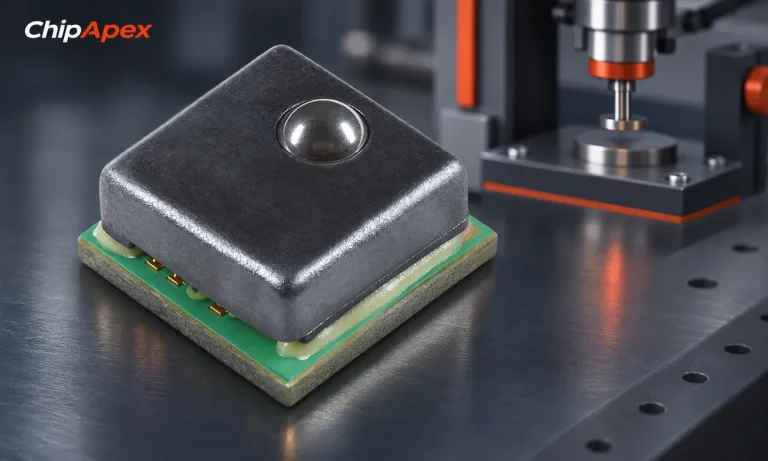
Understand load cell sensor output, bridge wiring and calibration. Learn how mV/V sensitivity, mechanics and ADC noise affect measurement accuracy.
Read More
SN74AUC2G07YZPR is listed in the Buffers, Drivers, Receivers, Transceivers range at ChipApex. The manufacturer field lists Texas Instruments. Its product description is IC BUFFER…
Read More
Understand tactile switches, PCB and keyboard differences, four-pin wiring, debounce, force, travel and replacement checks for reliable control inputs.
Read More
SN74AUC2G07YZPR is listed in the Buffers, Drivers, Receivers, Transceivers range at ChipApex. The manufacturer field lists Texas Instruments. Its product description is IC BUFFER…
Read More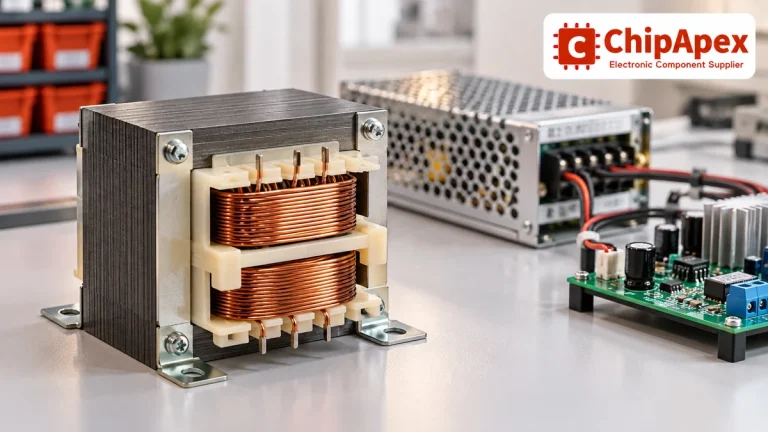
Select power transformers by input frequency, secondary VA, rectifier load, isolation, regulation and inrush. Build a clearer specification for your next RFQ.
Read More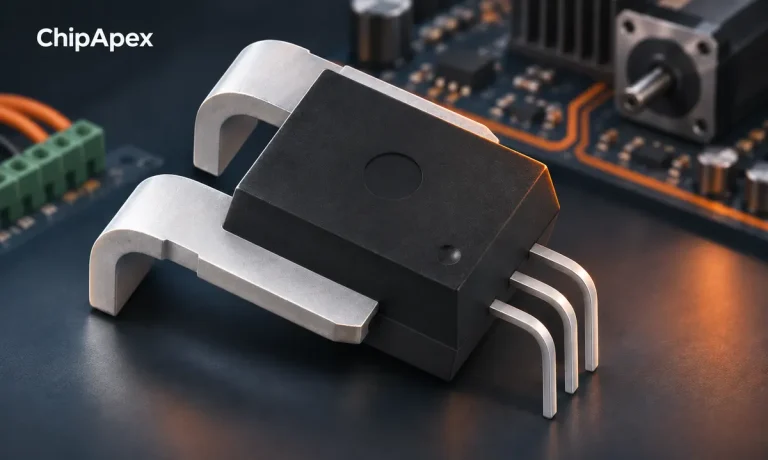
Compare Hall, shunt, current transformer and Rogowski sensing. Check AC/DC capability, accuracy, isolation, heat and response before selecting a sensor.
Read More
The activity of extra discounts on wholesale prices is in full swing…
Please fill in your contact information and we will send you the latest wholesale price list.





