 ChipApex | Global Electronic Components Supplier

SEARCH
Search Product
Search Post
— IC芯片 | 连接器 | 传感器 | 被动器件 —
Search productSearch post
— IC芯片 | 连接器 | 传感器 | 被动器件 —
Consult the customer manager about the wholesale price.
consultation hotline:86-132-6715-2157
email:[email protected]
Contact the product manager for consultation. One-stop consultation is available.
Do you want a lower wholesale price? Please send us your inquiry and we will reply immediately.
SN74HC541NG4 is listed in the Buffers, Drivers, Receivers, Transceivers range at ChipApex. The manufacturer field lists Texas Instruments. Its product description is IC BUFFER NON-INVERT 6V 20DIP. Review the specifications below when checking this part for your BOM.
The SN74HC541NG4 is an octal buffer and line driver manufactured by Texas Instruments. It belongs to the HC logic series and features non-inverting polarity with eight input lines and eight output lines. The device utilizes a PDIP-20 package and supports a supply voltage range from 2 V to 6 V. It provides high-level output current of -7.8 mA and low-level output current of 7.8 mA, with a static current of 8 uA. The operating power current is 80 uA, and it functions within a temperature range of -40 C to +85 C.
Verify the specific package type and manufacturer details against official datasheets before procurement. Confirm that the component meets all required electrical specifications for your application environment. Ensure compliance with relevant regulatory standards such as RoHS requirements. Cross-reference part numbers to avoid counterfeit or obsolete components during sourcing.
Select this component when an octal buffer with non-inverting functionality is required. Consider the HC logic series characteristics for compatibility with standard CMOS logic levels. Evaluate the PDIP-20 package suitability for through-hole mounting constraints. Assess the voltage range and current drive capabilities against load requirements.
This component is part of the broader 74HC541 family of octal buffers and line drivers produced by Texas Instruments. It shares functional similarities with other variants in the series but differs in packaging and specific ordering suffixes. The SN74HC541NG4 represents a specific configuration within this established logic family designed for general-purpose digital applications.
SN74HC541N
The SN74HC541NG4 has non-inverting polarity, meaning the output signals follow the input signals without inversion.
The SN74HC541NG4 features eight input lines and eight output lines, forming an octal buffer configuration.
Explore related parts through Logic, Integrated Circuits (ICs), all product categories, ChipApex homepage.
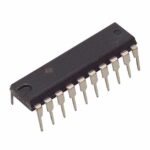 SN74HC541NG4

Choose an AC to DC converter by input range, output demand, isolation, efficiency and thermal derating. Compare architectures and check installation needs.
Read More
Learn the relay definition, coil and contact operation, NO and NC forms, load ratings and suppression choices. Compare mechanical, reed and solid-state types.
Read More
SN74HC541NG4 is listed in the Buffers, Drivers, Receivers, Transceivers range at ChipApex. The manufacturer field lists Texas Instruments. Its product description is IC BUFFER…
Read More
SN74HC541NG4 is listed in the Buffers, Drivers, Receivers, Transceivers range at ChipApex. The manufacturer field lists Texas Instruments. Its product description is IC BUFFER…
Read More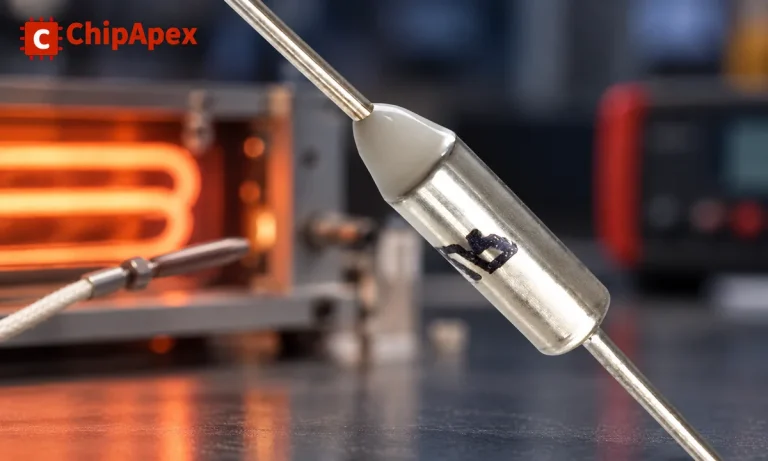
Understand thermal fuse operation, Tf, Th and Tm, electrical ratings and mounting. Check temperature limits and replacement requirements for your design.
Read More
SN74HC541NG4 is listed in the Buffers, Drivers, Receivers, Transceivers range at ChipApex. The manufacturer field lists Texas Instruments. Its product description is IC BUFFER…
Read More
SN74HC541NG4 is listed in the Buffers, Drivers, Receivers, Transceivers range at ChipApex. The manufacturer field lists Texas Instruments. Its product description is IC BUFFER…
Read More
SN74HC541NG4 is listed in the Buffers, Drivers, Receivers, Transceivers range at ChipApex. The manufacturer field lists Texas Instruments. Its product description is IC BUFFER…
Read More
Learn how a pressure transducer converts pressure into voltage, current, or digital output, and compare pressure references and key selection specs.
Read More
Understand UART protocol framing, baud rate and electrical interfaces. Learn 8N1 timing, TX/RX wiring, buffering and practical troubleshooting steps.
Read More
Compare Pt100 and Pt1000 RTDs, two-, three- and four-wire connections, excitation and self-heating. Build an error budget from element to reported temperature.
Read More
Select a DC-DC converter by input range, topology, isolation and temperature. Compare ripple, efficiency and load limits before choosing a component.
Read More
The activity of extra discounts on wholesale prices is in full swing…
Please fill in your contact information and we will send you the latest wholesale price list.





