 ChipApex | Global Electronic Components Supplier

SEARCH
Search Product
Search Post
— IC芯片 | 连接器 | 传感器 | 被动器件 —
Search productSearch post
— IC芯片 | 连接器 | 传感器 | 被动器件 —
Consult the customer manager about the wholesale price.
consultation hotline:86-132-6715-2157
email:[email protected]
Contact the product manager for consultation. One-stop consultation is available.
Do you want a lower wholesale price? Please send us your inquiry and we will reply immediately.
SN74HCT541DWRG4 is listed in the Buffers, Drivers, Receivers, Transceivers range at ChipApex. The manufacturer field lists Texas Instruments. Its product description is IC BUF NON-INVERT 5.5V 20SOIC. Review the specifications below when checking this part for your BOM.
The SN74HCT541DWRG4 is an octal buffer and line driver featuring three-state outputs, manufactured by Texas Instruments. It operates within a supply voltage range of 4.5 V to 5.5 V and supports a wide operating temperature range from -40°C to +85°C. The device utilizes HCT CMOS technology, ensuring compatibility with standard TTL inputs while offering low power consumption. Packaged in a 20-pin SOIC format, it provides non-inverting signal buffering for digital systems.
Verify the specific ordering suffix to confirm package type and environmental compliance. Ensure the component matches the required logic family specifications for your design. Check manufacturer documentation for moisture sensitivity levels and recommended soldering profiles before integration into production assemblies.
Select this component when interfacing 5V logic systems with bus architectures. The HCT series ensures compatibility with older TTL standards while maintaining modern CMOS efficiency. Consider the package size and pin count relative to available board space and routing requirements for optimal layout performance.
This part belongs to the SN74HCT541 series of octal buffers. It is designed for general-purpose digital logic applications where signal integrity and bus driving capability are essential. The device serves as a critical interface element between microprocessors and peripheral devices in complex electronic systems.
SN74HCT541DWR is a compatible alternative without the green packaging suffix. SN74HCT541PWR offers the same functionality in a TSSOP-20 package. Verify pinout compatibility and electrical characteristics before substituting any variant in existing designs.
Explore related parts through Logic, Integrated Circuits (ICs), all product categories, ChipApex homepage.
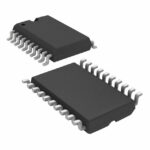 SN74HCT541DWRG4
Understand voltage controlled oscillator tuning, phase noise and PLL operation. Check supply noise, output loading and requirements before selection.
Read More
Learn what an IMU measures, how accelerometers and gyroscopes work together, why orientation estimates drift, and what to compare.
Read More
Select power transformers by input frequency, secondary VA, rectifier load, isolation, regulation and inrush. Build a clearer specification for your next RFQ.
Read More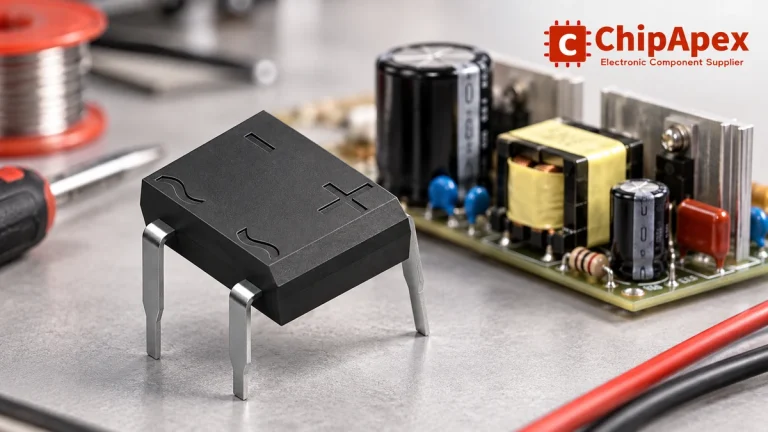
Select a bridge rectifier by reverse voltage, capacitor charging current, startup surge and cooling. Work through a stated DC voltage and ripple example.
Read More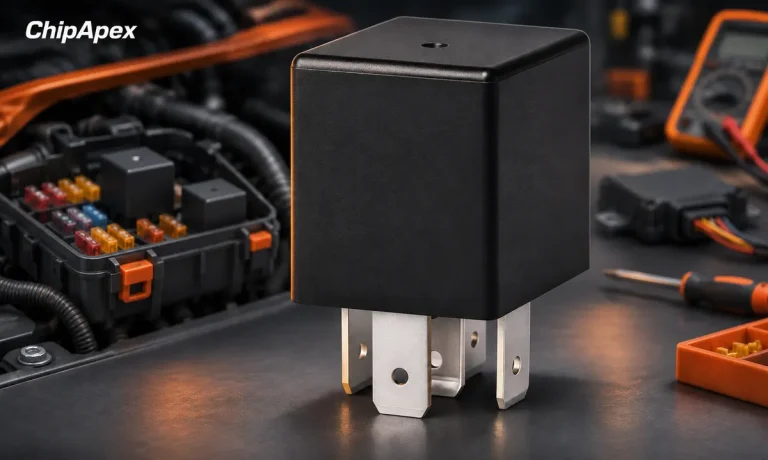
Understand automotive relay terminals, coil suppression and load ratings. Check inrush, socket compatibility and temperature before selecting a replacement.
Read More
SN74HCT541DWRG4 is listed in the Buffers, Drivers, Receivers, Transceivers range at ChipApex. The manufacturer field lists Texas Instruments. Its product description is IC BUF…
Read More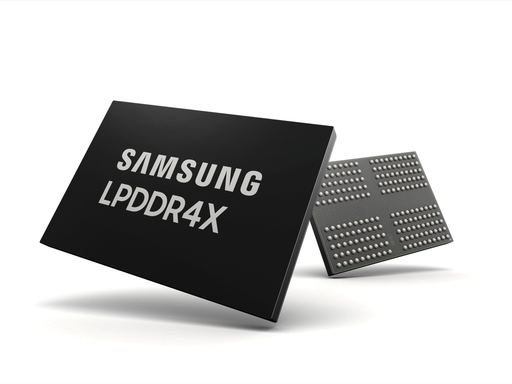
SN74HCT541DWRG4 is listed in the Buffers, Drivers, Receivers, Transceivers range at ChipApex. The manufacturer field lists Texas Instruments. Its product description is IC BUF…
Read More
SN74HCT541DWRG4 is listed in the Buffers, Drivers, Receivers, Transceivers range at ChipApex. The manufacturer field lists Texas Instruments. Its product description is IC BUF…
Read More
SN74HCT541DWRG4 is listed in the Buffers, Drivers, Receivers, Transceivers range at ChipApex. The manufacturer field lists Texas Instruments. Its product description is IC BUF…
Read More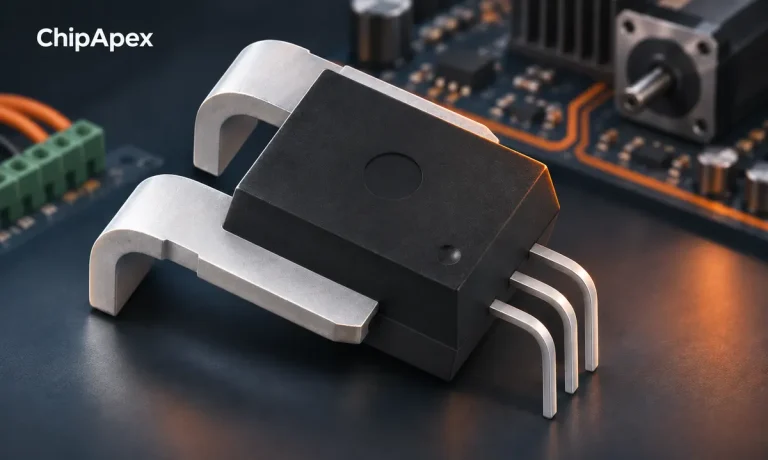
Compare Hall, shunt, current transformer and Rogowski sensing. Check AC/DC capability, accuracy, isolation, heat and response before selecting a sensor.
Read More
See when an inductor behaves linearly, how DC bias and saturation reduce inductance, and which current and temperature curves to check.
Read More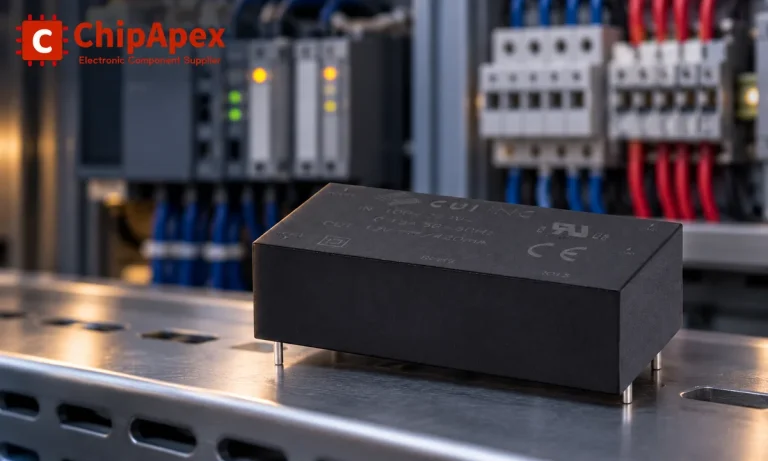
Choose an AC to DC converter by input range, output demand, isolation, efficiency and thermal derating. Compare architectures and check installation needs.
Read More
The activity of extra discounts on wholesale prices is in full swing…
Please fill in your contact information and we will send you the latest wholesale price list.





