 ChipApex | Global Electronic Components Supplier

SEARCH
Search Product
Search Post
— IC芯片 | 连接器 | 传感器 | 被动器件 —
Search productSearch post
— IC芯片 | 连接器 | 传感器 | 被动器件 —
Consult the customer manager about the wholesale price.
consultation hotline:86-132-6715-2157
email:[email protected]
Contact the product manager for consultation. One-stop consultation is available.
Do you want a lower wholesale price? Please send us your inquiry and we will reply immediately.
SN74LS03NS is listed in the Inverter Gates range at ChipApex. The manufacturer field lists Texas Instruments. Its product description is IC GATE NAND QUAD 2-INP 14SO. Review the specifications below when checking this part for your BOM.
The SN74LS03NS is a quad two-input positive-NAND gate integrated circuit manufactured by Texas Instruments. It belongs to the 74LS (Low-power Schottky) logic family and features open-collector outputs. The device operates within a supply voltage range of 4.75V to 5.25V. Key electrical parameters include a maximum propagation delay of 32ns at 5V with 15pF load capacitance, an output low current capability of 16mA, and an output high current of 250µA. Logic levels are defined as 0.8V for low input and 2V for high input. It functions reliably across a temperature range of 0°C to 70°C.
Verify the specific suffix 'NS' against the manufacturer's official documentation to confirm pinout and package dimensions match your design requirements. Ensure the component meets RoHS compliance standards if required by your manufacturing process. Cross-reference the ordering information with authorized distributors to confirm availability and authenticity before procurement.
Select this component when open-collector NAND logic is required for interfacing with different voltage levels or implementing wired-AND connections. The LS series offers a balance of speed and power consumption suitable for general digital applications. Verify that the load capacitance does not exceed specifications to maintain signal integrity.
This part is part of the Texas Instruments 74LS series, which utilizes Low-power Schottky technology to reduce power dissipation while maintaining acceptable switching speeds. The 74LS03 specifically provides open-collector outputs, distinguishing it from standard push-pull NAND gates like the 74LS00. This series is widely used in legacy and industrial digital systems.
Equivalent parts include SN74LS03N and SN74LS03DR. Verify compatibility with other manufacturers' 74LS03 variants such as those from ON Semiconductor or STMicroelectronics, ensuring pinouts and electrical characteristics align.
Explore related parts through Logic, Integrated Circuits (ICs), all product categories, ChipApex homepage.
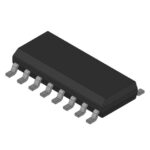 SN74LS03NS
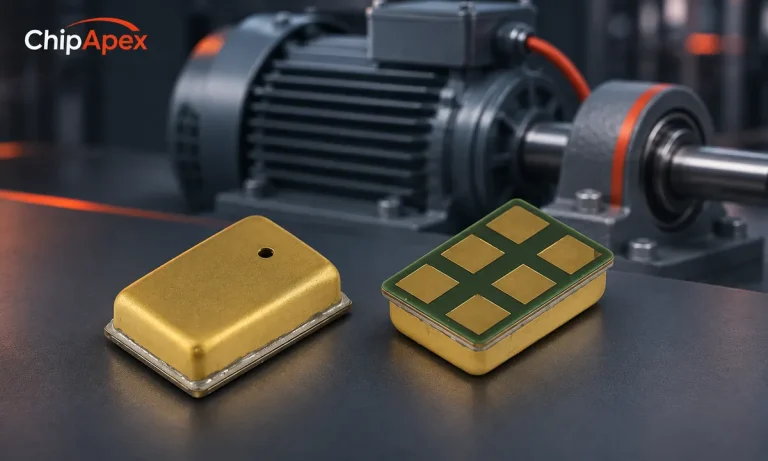
Choose a vibration sensor for machine monitoring. Compare sensing methods, bandwidth, noise and mounting, then define the signal-chain requirements.
Read More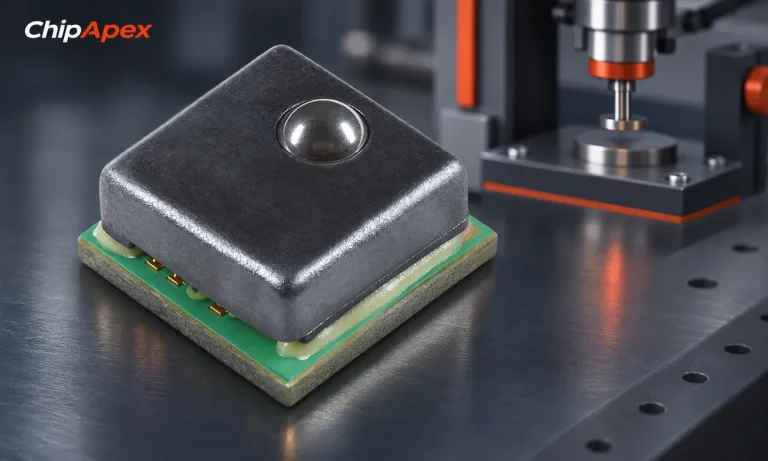
Understand load cell sensor output, bridge wiring and calibration. Learn how mV/V sensitivity, mechanics and ADC noise affect measurement accuracy.
Read More
Understand how an electric energy meter measures power and accumulates kWh. Review sensing, phase alignment, calibration and metering IC selection.
Read More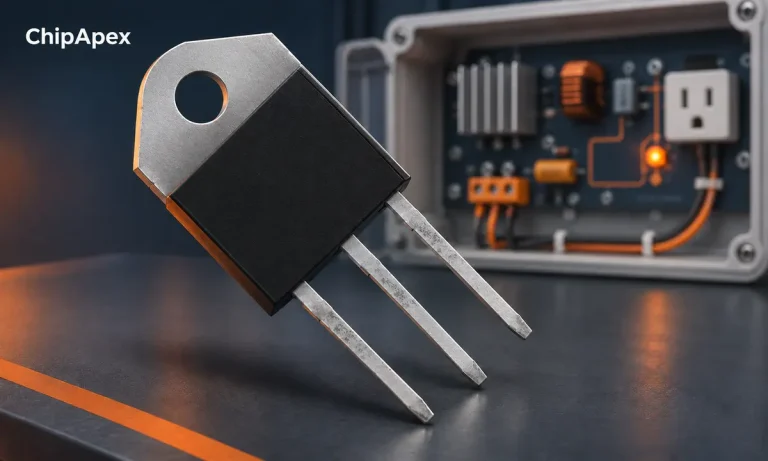
Learn how a TRIAC switches AC loads. Understand triggering, latching, holding current, phase control and thermal limits before choosing a component.
Read More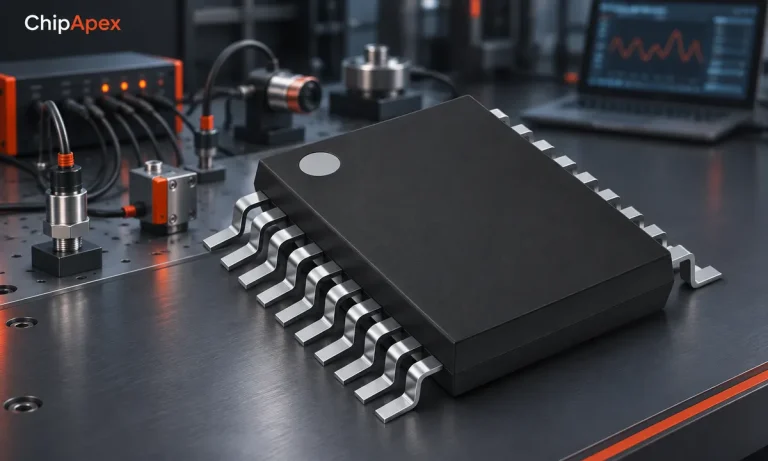
Learn what data acquisition means, from sensors and conditioning to sampling and storage. Review channel timing, wiring, calibration and data quality.
Read More
SN74LS03NS is listed in the Inverter Gates range at ChipApex. The manufacturer field lists Texas Instruments. Its product description is IC GATE NAND QUAD…
Read More
Learn the relay definition, coil and contact operation, NO and NC forms, load ratings and suppression choices. Compare mechanical, reed and solid-state types.
Read More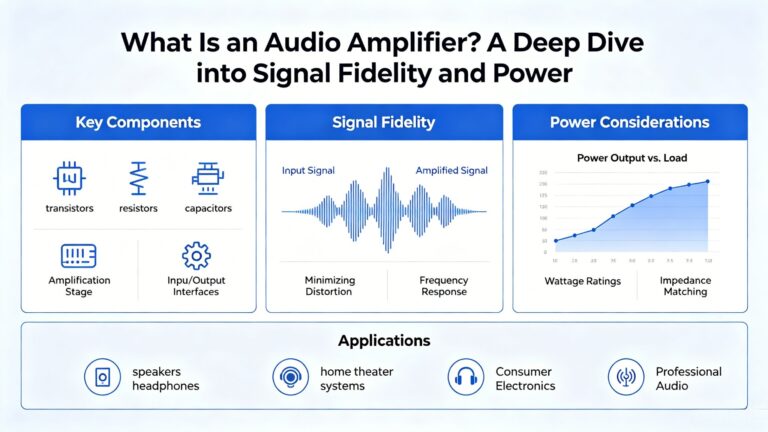
SN74LS03NS is listed in the Inverter Gates range at ChipApex. The manufacturer field lists Texas Instruments. Its product description is IC GATE NAND QUAD…
Read More
Choose a DIP switch by contact type, coded positions, footprint and signal ratings. Check logic polarity, assembly conditions and PCB configuration behavior.
Read More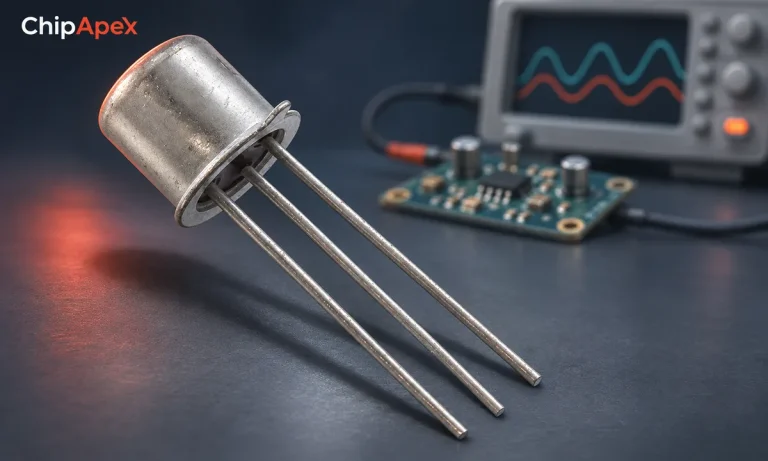
Learn what a transistor does in a circuit. Compare switching and amplification, BJT and MOSFET drive, operating limits and practical component selection.
Read More
SN74LS03NS is listed in the Inverter Gates range at ChipApex. The manufacturer field lists Texas Instruments. Its product description is IC GATE NAND QUAD…
Read More
See how a MEMS gyroscope measures angular rate, why its angle estimate drifts, and which range, noise, interface and temperature specs to compare.
Read More
The activity of extra discounts on wholesale prices is in full swing…
Please fill in your contact information and we will send you the latest wholesale price list.





