ChipApex | Global Electronic Components Supplier

SEARCH
Search Product
Search Post
— IC芯片 | 连接器 | 传感器 | 被动器件 —
Search productSearch post
— IC芯片 | 连接器 | 传感器 | 被动器件 —
Consult the customer manager about the wholesale price.
consultation hotline:86-132-6715-2157
email:[email protected]
Contact the product manager for consultation. One-stop consultation is available.
Do you want a lower wholesale price? Please send us your inquiry and we will reply immediately.
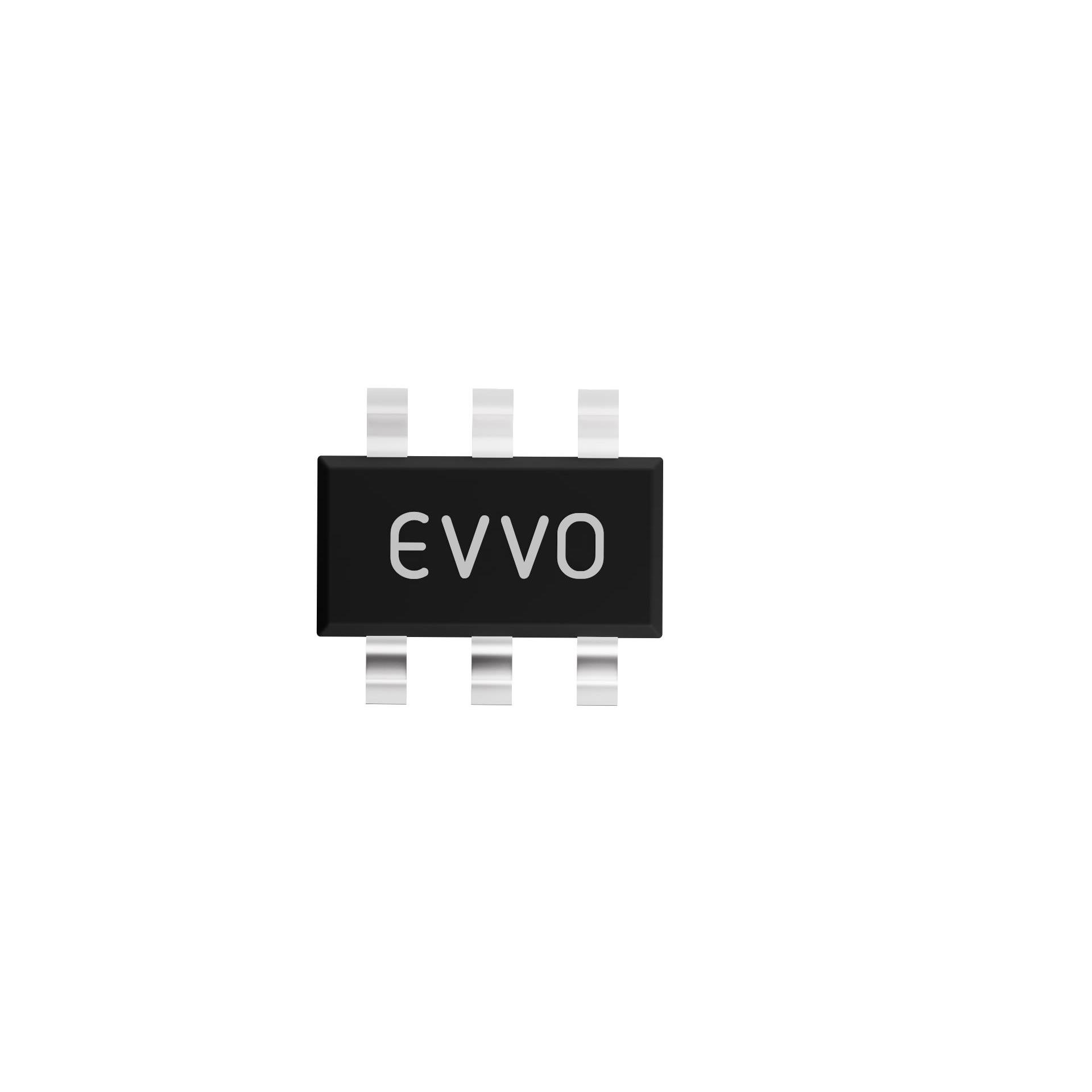
SN74LVC2G34DBVR-EV is listed in the Buffers, Drivers, Receivers, Transceivers range at ChipApex. The manufacturer field lists EVVO. Its product description is IC BUF NON-INVERT 5.5V SOT23-6. Review the specifications below when checking this part for your BOM.
The SN74LVC2G34DBVR-EV is a dual non-inverting buffer manufactured by EVVO, utilizing advanced CMOS technology. It operates within a supply voltage range of 1.65V to 5.5V and features overvoltage tolerant inputs capable of accepting voltages up to 5.5V. The device provides balanced output sink and source capabilities of 24mA. It exhibits near-zero static supply current, reducing system power requirements. The component is RoHS compliant and Pb-free.
Verify the manufacturer designation as EVVO rather than Texas Instruments, despite the naming convention similarity. Confirm the package type corresponds to SOT-23-6 based on the ordering information provided in the datasheet. Ensure compliance with RoHS standards and lead-free status matches project requirements. Check specific delivery modes such as tape and reel availability if applicable.
Select this component when a dual-channel non-inverting buffer is required for signal integrity maintenance. The wide operating voltage range supports compatibility with various logic families. Consider the 24mA drive strength for driving moderate loads without external amplification. The compact SOT-23-6 package is suitable for space-constrained PCB layouts.
This part belongs to the SN74LVC series of logic buffers. It serves as a dual-channel version of single-channel buffers like the SN74LVC1G34. The device is designed for general-purpose digital signal buffering in low-voltage applications. It complements other LVC family components offering similar functionality with varying channel counts or packages.
Direct substitutes include SN74LVC2G34DCKR (SC70-6 package) and SN74LVC2G34DRYR (DFN6 package). These variants share identical electrical characteristics but differ in physical footprint. Verify pinout compatibility and thermal resistance differences when transitioning between package types.
Explore related parts through Logic, Integrated Circuits (ICs), all product categories, ChipApex homepage.
 SN74LVC2G34DBVR-EV
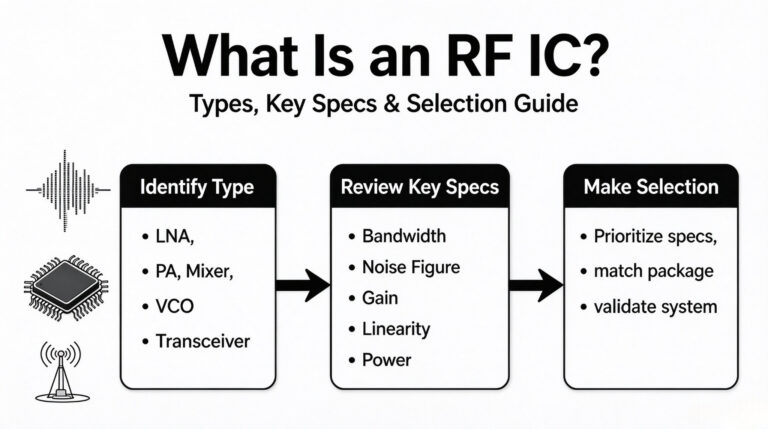
SN74LVC2G34DBVR-EV is listed in the Buffers, Drivers, Receivers, Transceivers range at ChipApex. The manufacturer field lists EVVO. Its product description is IC BUF NON-INVERT…
Read More
Find out when a bare shock switch needs a pull resistor, when an MCU internal pull-up is enough, and why sensor modules and piezo…
Read More
SN74LVC2G34DBVR-EV is listed in the Buffers, Drivers, Receivers, Transceivers range at ChipApex. The manufacturer field lists EVVO. Its product description is IC BUF NON-INVERT…
Read More
Compare RC, crystal and MEMS oscillator circuits. Check ppm, jitter, load capacitance, startup margin and output compatibility before choosing a clock source.
Read More
SN74LVC2G34DBVR-EV is listed in the Buffers, Drivers, Receivers, Transceivers range at ChipApex. The manufacturer field lists EVVO. Its product description is IC BUF NON-INVERT…
Read More
SN74LVC2G34DBVR-EV is listed in the Buffers, Drivers, Receivers, Transceivers range at ChipApex. The manufacturer field lists EVVO. Its product description is IC BUF NON-INVERT…
Read More
Select MOV varistors by continuous voltage, clamping behavior, surge waveform and repetition. Check thermal disconnection, fuse coordination and replacements.
Read More
SN74LVC2G34DBVR-EV is listed in the Buffers, Drivers, Receivers, Transceivers range at ChipApex. The manufacturer field lists EVVO. Its product description is IC BUF NON-INVERT…
Read More
SN74LVC2G34DBVR-EV is listed in the Buffers, Drivers, Receivers, Transceivers range at ChipApex. The manufacturer field lists EVVO. Its product description is IC BUF NON-INVERT…
Read More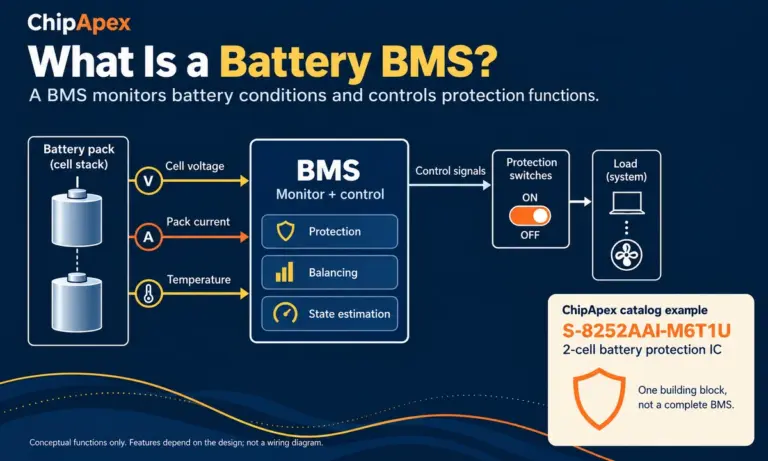
Learn what a battery BMS does, how protection differs from charging, and which pack specifications to check when sourcing BMS components through ChipApex.
Read More
See when an inductor behaves linearly, how DC bias and saturation reduce inductance, and which current and temperature curves to check.
Read More
Understand how oscillators generate timing signals, how they differ from crystals, and which frequency, output and stability specs matter when choosing one.
Read More
The activity of extra discounts on wholesale prices is in full swing…
Please fill in your contact information and we will send you the latest wholesale price list.