 ChipApex | Global Electronic Components Supplier

SEARCH
Search Product
Search Post
— IC芯片 | 连接器 | 传感器 | 被动器件 —
Search productSearch post
— IC芯片 | 连接器 | 传感器 | 被动器件 —
Consult the customer manager about the wholesale price.
consultation hotline:86-132-6715-2157
email:[email protected]
Contact the product manager for consultation. One-stop consultation is available.
Do you want a lower wholesale price? Please send us your inquiry and we will reply immediately.
SN74LVC573AZQNR is listed in the Latches range at ChipApex. The manufacturer field lists Texas Instruments. Its product description is IC D-TYPE TRANSP SGL 8:8 20BGA. Review the specifications below when checking this part for your BOM.
The SN74LVC573AZQNR is an octal transparent D-type latch with three-state outputs from the Texas Instruments LVC series. It operates within a supply voltage range of 1.65 V to 3.6 V and features inputs tolerant to 5.5 V for mixed-mode signal support. The device provides high drive capability, supporting up to 24 mA output current at 3.3 V, with propagation delays as low as 6.9 ns at 3.3 V. It includes Ioff circuitry for partial power-down protection and meets JESD 17 latch-up standards exceeding 250 mA.
Verify the ZQNR suffix indicates automotive qualification and Microstar Junior package configuration. Confirm RoHS compliance and lead finish details against the latest TI orderable addendum. Ensure the specific temperature grade matches system requirements. Cross-reference the datasheet revision date to validate parameter accuracy before finalizing procurement.
Select this component for designs requiring high-speed data latching in low-voltage environments. The 5.5-V tolerant inputs facilitate interface between different logic voltage domains without external level shifters. The three-state outputs allow direct connection to bus systems. Verify that the thermal characteristics of the Microstar Junior package suit the PCB layout constraints.
This part belongs to the SNx4LVC573A family of octal transparent D-type latches. It shares functional similarities with standard industrial variants but incorporates specific packaging and qualification attributes indicated by the suffix. The LVC series is designed for low-voltage CMOS applications requiring high drive strength and fast switching speeds.
SN74LVC573ADWR
The Ioff circuitry disables the outputs when the device is powered down, preventing damaging current backflow through the device when VCC is 0 V.
The inputs accept voltages up to 5.5 V, enabling support for mixed-mode signal operations on all ports.
Explore related parts through Logic, Integrated Circuits (ICs), all product categories, ChipApex homepage.
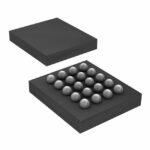 SN74LVC573AZQNR

SN74LVC573AZQNR is listed in the Latches range at ChipApex. The manufacturer field lists Texas Instruments. Its product description is IC D-TYPE TRANSP SGL 8:8…
Read More
Learn how optical sensing works, compare detection methods, and select sensors by target surface, ambient light, response time and electrical interface.
Read More
Choose a DIP switch by contact type, coded positions, footprint and signal ratings. Check logic polarity, assembly conditions and PCB configuration behavior.
Read More
Compare RC, crystal and MEMS oscillator circuits. Check ppm, jitter, load capacitance, startup margin and output compatibility before choosing a clock source.
Read More
Choose a pin header by pitch, mating geometry, current rating and mounting. Learn why matching pin count and spacing does not guarantee compatibility.
Read More
Explore electronic component types, functions, packages and datasheets. Learn selection, replacement and BOM checks before ordering parts for your PCB.
Read More
SN74LVC573AZQNR is listed in the Latches range at ChipApex. The manufacturer field lists Texas Instruments. Its product description is IC D-TYPE TRANSP SGL 8:8…
Read More
Choose a vibration sensor for machine monitoring. Compare sensing methods, bandwidth, noise and mounting, then define the signal-chain requirements.
Read More
Learn what data acquisition means, from sensors and conditioning to sampling and storage. Review channel timing, wiring, calibration and data quality.
Read More
Learn how a Zener diode regulates voltage. Calculate resistor current and power, check tolerance and temperature, and distinguish Zener and TVS applications.
Read More
Learn what a shift register does, how bits move and when to use SIPO or PISO devices. Review latch timing, logic levels, output drive…
Read More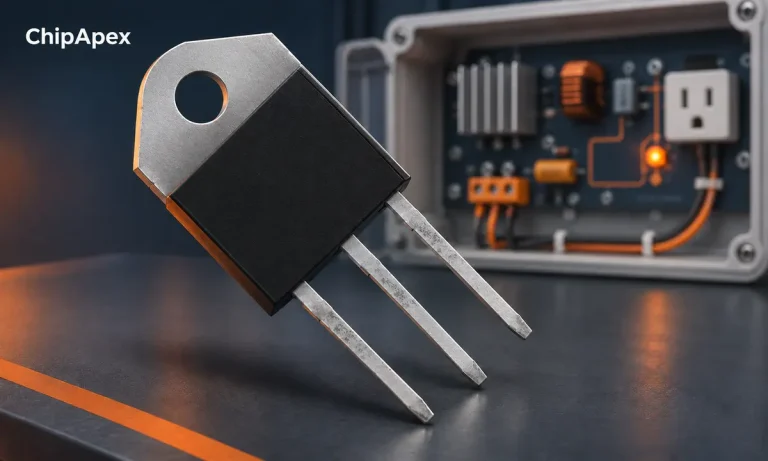
Learn how a TRIAC switches AC loads. Understand triggering, latching, holding current, phase control and thermal limits before choosing a component.
Read More
The activity of extra discounts on wholesale prices is in full swing…
Please fill in your contact information and we will send you the latest wholesale price list.





