 ChipApex | Global Electronic Components Supplier

SEARCH
Search Product
Search Post
— IC芯片 | 连接器 | 传感器 | 被动器件 —
Search productSearch post
— IC芯片 | 连接器 | 传感器 | 被动器件 —
Consult the customer manager about the wholesale price.
consultation hotline:86-132-6715-2157
email:[email protected]
Contact the product manager for consultation. One-stop consultation is available.
Do you want a lower wholesale price? Please send us your inquiry and we will reply immediately.
SN74LVCC3245ADBRE4 is listed in the Translators, Level Shifters range at ChipApex. The manufacturer field lists Texas Instruments. Its product description is IC TRANSLTR BIDIRECTIONAL 24SSOP. Review the specifications below when checking this part for your BOM.
The SN74LVCC3245ADBRE4 is a voltage-level translating bus transceiver manufactured by Texas Instruments. It features eight bidirectional channels with three-state outputs, designed to facilitate data transfer between different logic families. The device supports dual power supplies: VCCA operates within the 2.3 V to 3.6 V range, while VCCB accommodates voltages from 3 V to 5.5 V. This configuration enables seamless translation between low-voltage and standard CMOS logic levels. The component is housed in a 20-pin SSOP package and is rated for operation across an extended temperature range of -40°C to +85°C.
Verify the complete part number including the E4 suffix to confirm lead-free compliance and specific packaging details. Ensure the SSOP-20 package variant matches your PCB footprint requirements. Confirm that the voltage levels on both A and B ports fall within the specified operational ranges before integration. Check for any recent product change notices regarding pinout or electrical characteristics updates.
Select this component when bidirectional level shifting is required between dissimilar voltage domains. It is suitable for applications needing automatic direction control rather than manual pin-based direction setting. Consider the SSOP-20 package constraints for board space. Verify that the input/output current capabilities meet the load requirements of the connected devices.
This part belongs to the SN74LVCC3245A family of voltage-level translators. It shares functional similarities with other LVCC series devices but is distinguished by its specific dual-supply capability and bidirectional architecture. The RE4 suffix indicates environmental compliance and specific manufacturing traceability standards defined by Texas Instruments for this component line.
SN74LVCC3245ADBR is a compatible alternative within the same family offering identical functionality in the same package.
Explore related parts through Logic, Integrated Circuits (ICs), all product categories, ChipApex homepage.
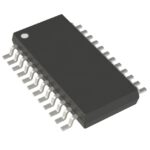 SN74LVCC3245ADBRE4

Select a bridge rectifier by reverse voltage, capacitor charging current, startup surge and cooling. Work through a stated DC voltage and ripple example.
Read More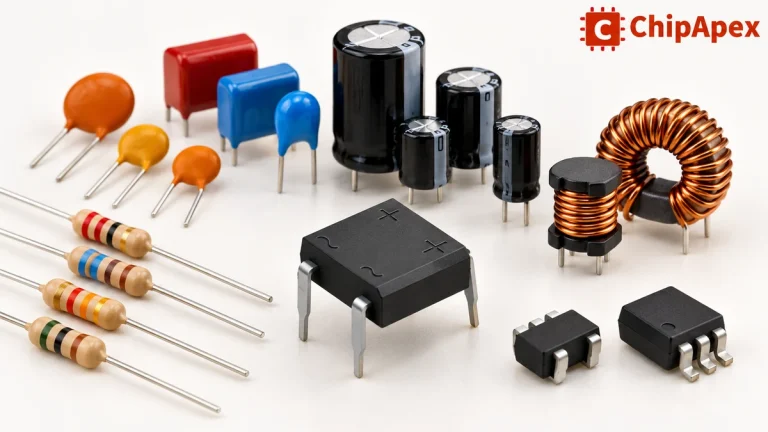
Explore electronic component types, functions, packages and datasheets. Learn selection, replacement and BOM checks before ordering parts for your PCB.
Read More
SN74LVCC3245ADBRE4 is listed in the Translators, Level Shifters range at ChipApex. The manufacturer field lists Texas Instruments. Its product description is IC TRANSLTR BIDIRECTIONAL…
Read More
Understand how a comparator switches at a voltage threshold, why hysteresis prevents chatter, and which output and input specs matter.
Read More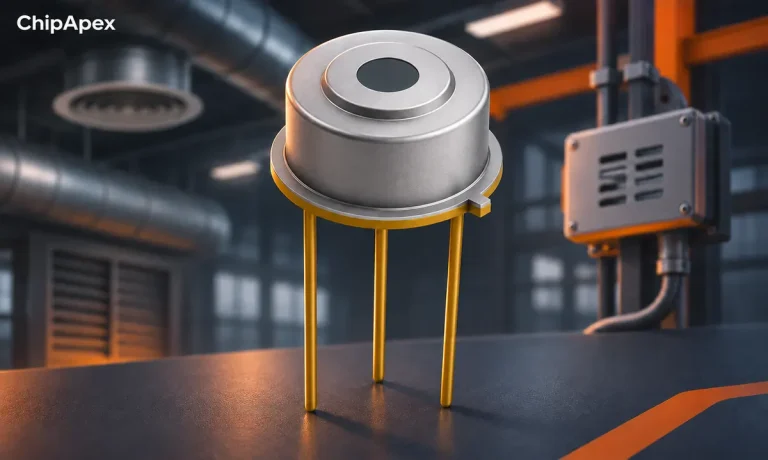
Compare gas sensor technologies, cross-sensitivity and calibration needs. Define the gas, range and environment before choosing a sensing component.
Read More
SN74LVCC3245ADBRE4 is listed in the Translators, Level Shifters range at ChipApex. The manufacturer field lists Texas Instruments. Its product description is IC TRANSLTR BIDIRECTIONAL…
Read More
SN74LVCC3245ADBRE4 is listed in the Translators, Level Shifters range at ChipApex. The manufacturer field lists Texas Instruments. Its product description is IC TRANSLTR BIDIRECTIONAL…
Read More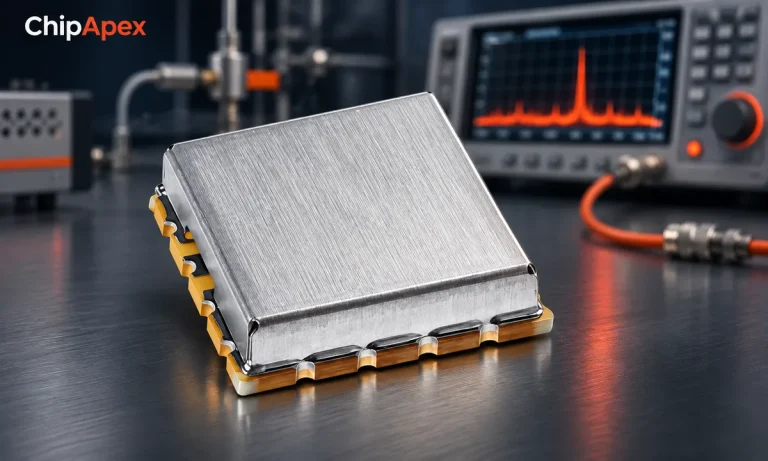
Understand voltage controlled oscillator tuning, phase noise and PLL operation. Check supply noise, output loading and requirements before selection.
Read More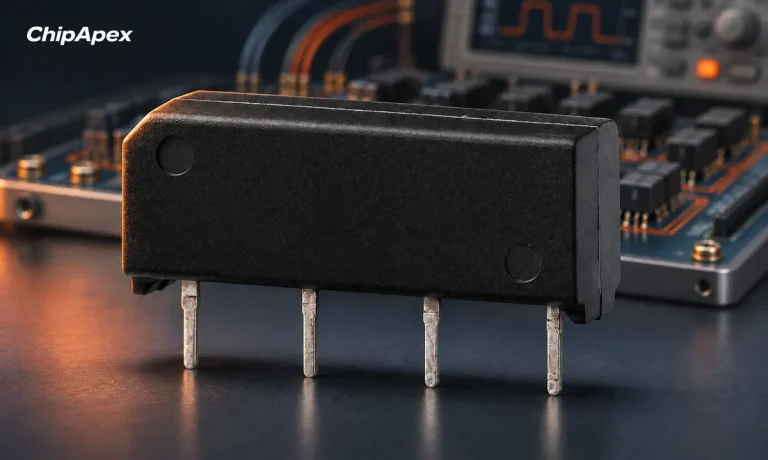
Choose a reed relay for signal switching. Understand hot and cold switching, leakage, contact resistance, isolation and measurement settling requirements.
Read More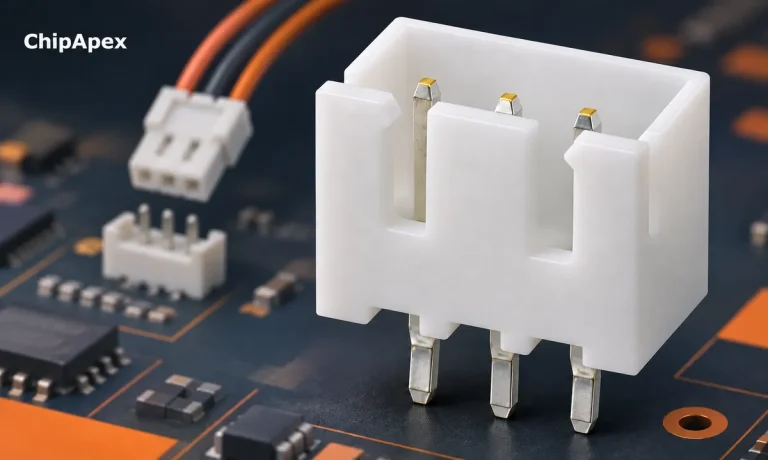
Choose a pin header by pitch, mating geometry, current rating and mounting. Learn why matching pin count and spacing does not guarantee compatibility.
Read More
Compare Pt100 and Pt1000 RTDs, two-, three- and four-wire connections, excitation and self-heating. Build an error budget from element to reported temperature.
Read More
Understand how oscillators generate timing signals, how they differ from crystals, and which frequency, output and stability specs matter when choosing one.
Read More
The activity of extra discounts on wholesale prices is in full swing…
Please fill in your contact information and we will send you the latest wholesale price list.





