 ChipApex | Global Electronic Components Supplier

SEARCH
Search Product
Search Post
— IC芯片 | 连接器 | 传感器 | 被动器件 —
Search productSearch post
— IC芯片 | 连接器 | 传感器 | 被动器件 —
Consult the customer manager about the wholesale price.
consultation hotline:86-132-6715-2157
email:[email protected]
Contact the product manager for consultation. One-stop consultation is available.
Do you want a lower wholesale price? Please send us your inquiry and we will reply immediately.
SN74LVT16245BDLG4 is listed in the Buffers, Drivers, Receivers, Transceivers range at ChipApex. The manufacturer field lists Texas Instruments. Its product description is IC TXRX NON-INVERT 3.6V 48SSOP. Review the specifications below when checking this part for your BOM.
The SN74LVT16245BDLG4 is a 3.3-V ABT (Advanced BiCMOS Technology) 16-bit bus transceiver manufactured by Texas Instruments. It features three-state outputs and operates within a supply voltage range of 2.7 V to 3.6 V. The device supports TTL or CMOS input levels and provides LVTTL output levels. Key electrical parameters include a maximum propagation delay of 4.1 ns, a low-level output current of 64 mA, and a high-level output current of -32 mA. It functions as two 8-bit or one 16-bit transceiver with non-inverting polarity. The component is housed in a 48-pin SSOP package and is rated for an operating temperature range from -40°C to +85°C.
Verify the specific suffix 'G4' indicates lead-free compliance and RoHS adherence when sourcing. Confirm the SSOP-48 package variant matches your PCB footprint requirements. Ensure the supply voltage provided to the device remains strictly within the 2.7 V to 3.6 V operational window to prevent damage. Check for any specific handling instructions related to moisture sensitivity level if the component has been stored for extended periods.
Select this component when a 3.3-V logic family transceiver is required for 16-bit wide data buses. It is suitable for designs needing high drive strength with 64 mA low-level output current. Consider this part over standard LVT variants if improved switching speed and lower power consumption via ABT technology are necessary. Ensure the application environment stays within the specified industrial temperature range.
This device belongs to the Texas Instruments Widebus Family, which offers high-performance bus transceivers. The SN74LVT16245 series is part of the broader 74LVT logic line, optimized for 3.3-V applications. It serves as a bridge between different logic families or system components, facilitating efficient data movement in complex digital circuits.
The SN74LVT16245BDL is a compatible alternative within the same family. Verify pin compatibility and electrical specifications before substitution. Other members of the 74LVT16245 series may offer different packaging options but share similar functional characteristics.
Explore related parts through Logic, Integrated Circuits (ICs), all product categories, ChipApex homepage.
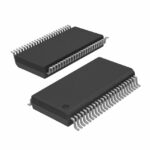 SN74LVT16245BDLG4

Learn how a diode conducts, how to identify anode and cathode, and when to choose rectifier, TVS, Zener or photodiode types for a circuit.
Read More
Compare RC, crystal and MEMS oscillator circuits. Check ppm, jitter, load capacitance, startup margin and output compatibility before choosing a clock source.
Read More
SN74LVT16245BDLG4 is listed in the Buffers, Drivers, Receivers, Transceivers range at ChipApex. The manufacturer field lists Texas Instruments. Its product description is IC TXRX…
Read More
SN74LVT16245BDLG4 is listed in the Buffers, Drivers, Receivers, Transceivers range at ChipApex. The manufacturer field lists Texas Instruments. Its product description is IC TXRX…
Read More
See when an inductor behaves linearly, how DC bias and saturation reduce inductance, and which current and temperature curves to check.
Read More
Understand how oscillators generate timing signals, how they differ from crystals, and which frequency, output and stability specs matter when choosing one.
Read More
SN74LVT16245BDLG4 is listed in the Buffers, Drivers, Receivers, Transceivers range at ChipApex. The manufacturer field lists Texas Instruments. Its product description is IC TXRX…
Read More
Choose logic inverter ICs by thresholds, supply, output drive and delay. Compare standard and Schmitt-trigger inputs, power sequencing and replacement checks.
Read More
Learn what an integrated circuit is, how ICs work, the main types and the specs to check before choosing a part for your design…
Read More
Understand how a comparator switches at a voltage threshold, why hysteresis prevents chatter, and which output and input specs matter.
Read More
See how a MEMS gyroscope measures angular rate, why its angle estimate drifts, and which range, noise, interface and temperature specs to compare.
Read More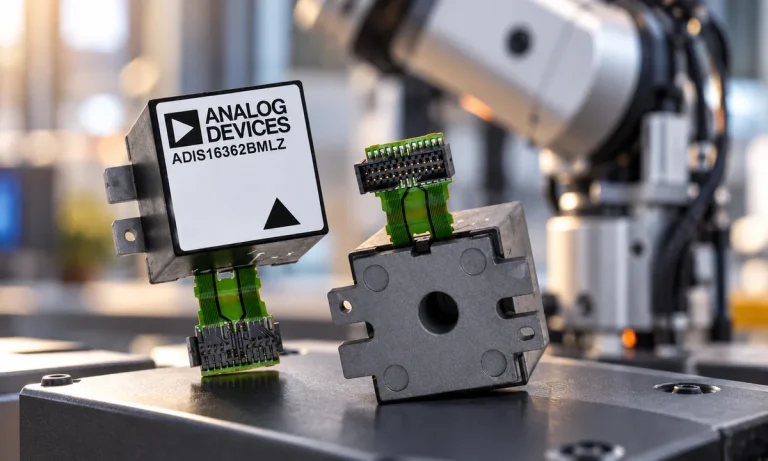
Learn what an IMU measures, how accelerometers and gyroscopes work together, why orientation estimates drift, and what to compare.
Read More
The activity of extra discounts on wholesale prices is in full swing…
Please fill in your contact information and we will send you the latest wholesale price list.





