 ChipApex | Global Electronic Components Supplier

SEARCH
Search Product
Search Post
— IC芯片 | 连接器 | 传感器 | 被动器件 —
Search productSearch post
— IC芯片 | 连接器 | 传感器 | 被动器件 —
Consult the customer manager about the wholesale price.
consultation hotline:86-132-6715-2157
email:[email protected]
Contact the product manager for consultation. One-stop consultation is available.
Do you want a lower wholesale price? Please send us your inquiry and we will reply immediately.
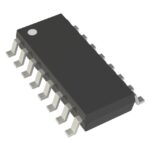
U211B-MFPY is listed in the Motor Drivers, Controllers range at ChipApex. The manufacturer field lists Microchip Technology. Its product description is IC MOTOR DRIVER 13V-16.8V 16SO. Review the specifications below when checking this part for your BOM.
The U211B-MFPY is a multifunctional industrial controller manufactured by Microchip Technology, designed for motor control, motion systems, and ignition applications. It integrates phase shift control with tachometer input and overload limit protection capabilities. The device operates within a supply voltage range of 13V to 16.8V and is housed in a 16-SOIC package. This component serves as an integrated solution for managing complex motor driver functions in demanding industrial environments.
Verify the specific suffix MFPY against official Microchip documentation to confirm package type and temperature grade. Ensure compatibility with 13V-16.8V operating ranges. Cross-reference datasheet revisions for any functional updates. Confirm RoHS compliance status through manufacturer channels before integration into final designs.
Select this component when phase shift control combined with tachometer feedback is required. Consider the 16-SOIC package constraints for PCB layout. Evaluate thermal performance within the specified industrial temperature range. Verify that the integrated overload protection meets system safety requirements without external circuitry.
This part belongs to Microchip's family of motor and motion controllers. It differs from standard drivers by including advanced control logic such as phase shifting and fault protection. The MFPY designation indicates specific packaging and operational characteristics distinct from other variants in the U211 series.
Consult Microchip official substitution lists for direct equivalents. Generic motor drivers may lack integrated phase shift or tachometer features. Verify pinout compatibility if substituting with similar SOIC packages. Ensure voltage ratings match the 13V-16.8V requirement.
Explore related parts through Power Management (PMIC), Integrated Circuits (ICs), all product categories, ChipApex homepage.
 U211B-MFPY
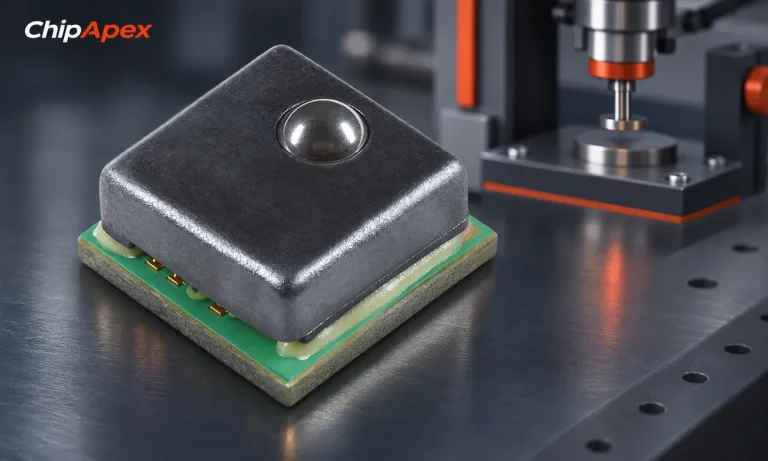
Understand load cell sensor output, bridge wiring and calibration. Learn how mV/V sensitivity, mechanics and ADC noise affect measurement accuracy.
Read More
Understand how oscillators generate timing signals, how they differ from crystals, and which frequency, output and stability specs matter when choosing one.
Read More
Learn the relay definition, coil and contact operation, NO and NC forms, load ratings and suppression choices. Compare mechanical, reed and solid-state types.
Read More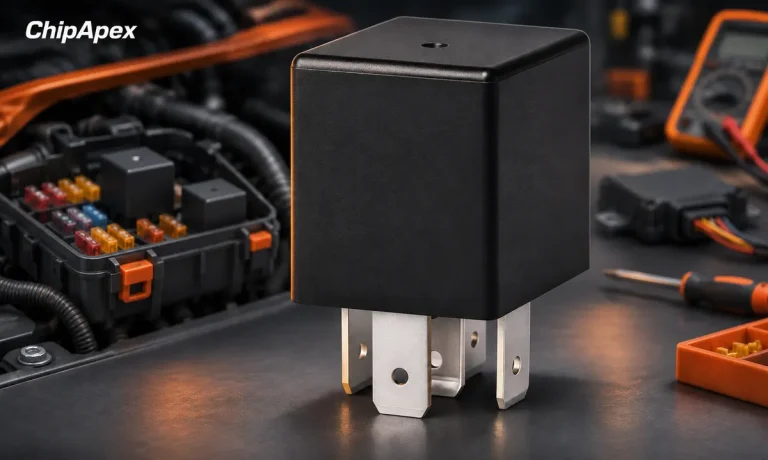
Understand automotive relay terminals, coil suppression and load ratings. Check inrush, socket compatibility and temperature before selecting a replacement.
Read More
U211B-MFPY is listed in the Motor Drivers, Controllers range at ChipApex. The manufacturer field lists Microchip Technology. Its product description is IC MOTOR DRIVER…
Read More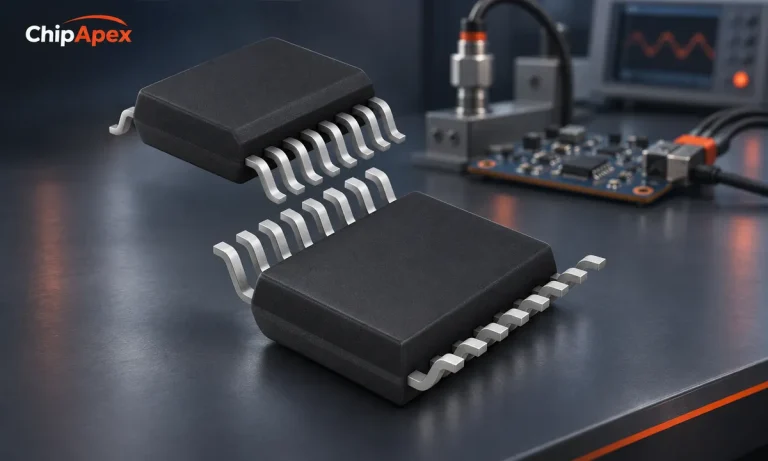
Choose an ADC converter by resolution, sample rate, noise and input design. Review practical tradeoffs and prepare component requirements for ChipApex.
Read More
U211B-MFPY is listed in the Motor Drivers, Controllers range at ChipApex. The manufacturer field lists Microchip Technology. Its product description is IC MOTOR DRIVER…
Read More
Find out when a bare shock switch needs a pull resistor, when an MCU internal pull-up is enough, and why sensor modules and piezo…
Read More
U211B-MFPY is listed in the Motor Drivers, Controllers range at ChipApex. The manufacturer field lists Microchip Technology. Its product description is IC MOTOR DRIVER…
Read More
U211B-MFPY is listed in the Motor Drivers, Controllers range at ChipApex. The manufacturer field lists Microchip Technology. Its product description is IC MOTOR DRIVER…
Read More
Learn what an integrated circuit is, how ICs work, the main types and the specs to check before choosing a part for your design…
Read More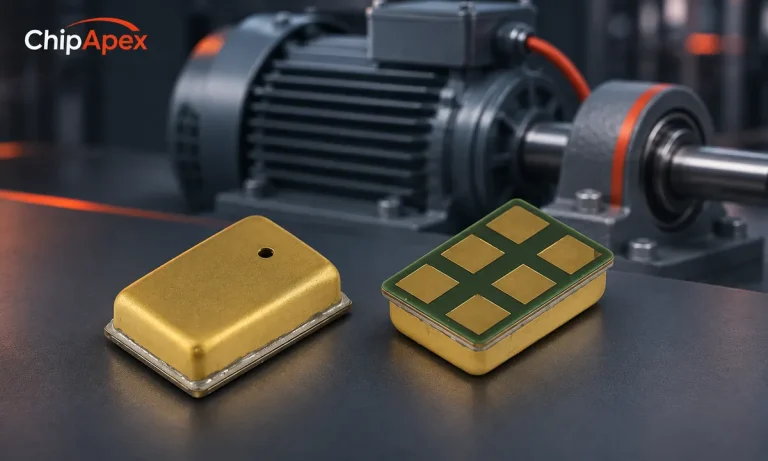
Choose a vibration sensor for machine monitoring. Compare sensing methods, bandwidth, noise and mounting, then define the signal-chain requirements.
Read More
The activity of extra discounts on wholesale prices is in full swing…
Please fill in your contact information and we will send you the latest wholesale price list.





