 ChipApex | Global Electronic Components Supplier

SEARCH
Search Product
Search Post
— IC芯片 | 连接器 | 传感器 | 被动器件 —
Search productSearch post
— IC芯片 | 连接器 | 传感器 | 被动器件 —
Consult the customer manager about the wholesale price.
consultation hotline:86-132-6715-2157
email:[email protected]
Contact the product manager for consultation. One-stop consultation is available.
Do you want a lower wholesale price? Please send us your inquiry and we will reply immediately.
XC9237G15D4R-G is listed in the Voltage Regulators - DC DC Switching Regulators range at ChipApex. The manufacturer field lists Torex Semiconductor Ltd. Its product description is IC REG BUCK 1.5V 600MA 6USPEL. Review the specifications below when checking this part for your BOM.
The XC9237G15D4R-G is a synchronous step-down DC/DC converter from Torex Semiconductor. It features a built-in driver transistor with an on-resistance of 0.42Ω for the high-side and 0.38Ω for the low-side. The device supports an input voltage range of 2V to 6V and provides a fixed output voltage of 1.5V at up to 0.6A output current. It operates with a switching frequency of 3.45MHz and includes a current-mode control architecture. The quiescent current is typically 15µA, and it functions within a temperature range of -40°C to +85°C.
Verify the specific suffix D4R against official Torex documentation to confirm package type and tape/reel specifications. Ensure the fixed 1.5V output aligns with target circuit requirements as external adjustment is not supported. Confirm RoHS compliance status through the manufacturer's latest datasheet before finalizing procurement orders.
Select this component when a fixed 1.5V rail is required from a 2V-6V source. The 3.45MHz frequency allows for smaller passive components compared to lower-frequency alternatives. Consider the 0.6A current limit for load demands. The SOT-25-5 package suits applications where board area is limited but thermal dissipation needs are moderate.
This part belongs to the XC9237 series of synchronous buck converters. The series is characterized by high integration and low quiescent current. Variants in the series differ primarily by output voltage settings and package options. The G-series designation indicates specific electrical characteristics and pinout configurations defined by Torex Semiconductor.
Direct substitutes include other XC9237 variants with compatible output voltages such as XC9237G12D4R-G (1.2V) or XC9237G18D4R-G (1.8V), provided the fixed voltage difference is acceptable. Cross-referencing with similar 600mA synchronous buck converters from other manufacturers requires verifying pin compatibility and thermal performance.
Explore related parts through Power Management (PMIC), Integrated Circuits (ICs), all product categories, ChipApex homepage.
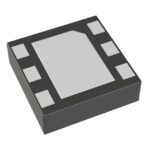 XC9237G15D4R-G
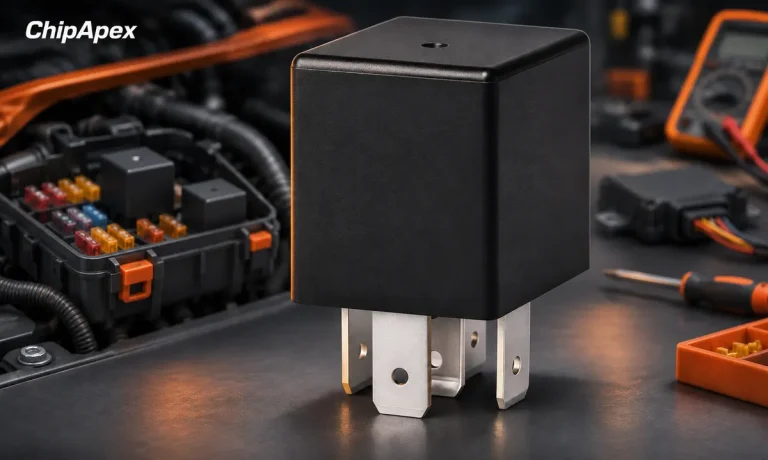
Understand automotive relay terminals, coil suppression and load ratings. Check inrush, socket compatibility and temperature before selecting a replacement.
Read More
XC9237G15D4R-G is listed in the Voltage Regulators - DC DC Switching Regulators range at ChipApex. The manufacturer field lists Torex Semiconductor Ltd. Its product…
Read More
XC9237G15D4R-G is listed in the Voltage Regulators - DC DC Switching Regulators range at ChipApex. The manufacturer field lists Torex Semiconductor Ltd. Its product…
Read More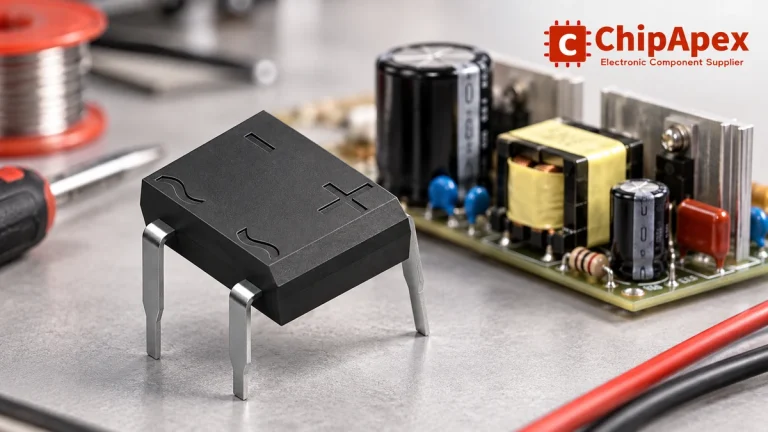
Select a bridge rectifier by reverse voltage, capacitor charging current, startup surge and cooling. Work through a stated DC voltage and ripple example.
Read More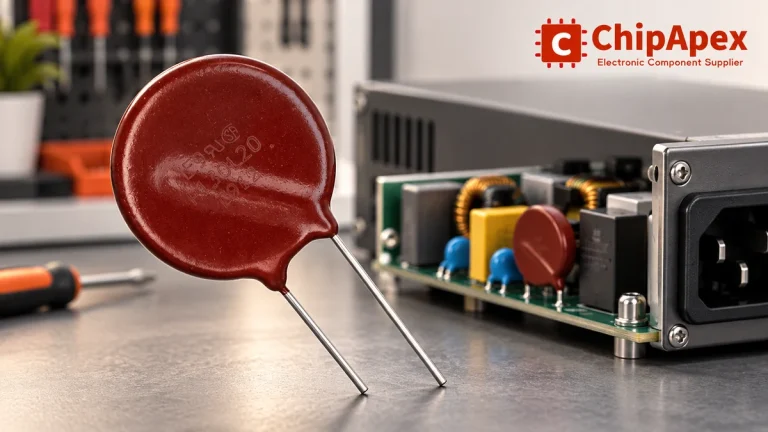
Select MOV varistors by continuous voltage, clamping behavior, surge waveform and repetition. Check thermal disconnection, fuse coordination and replacements.
Read More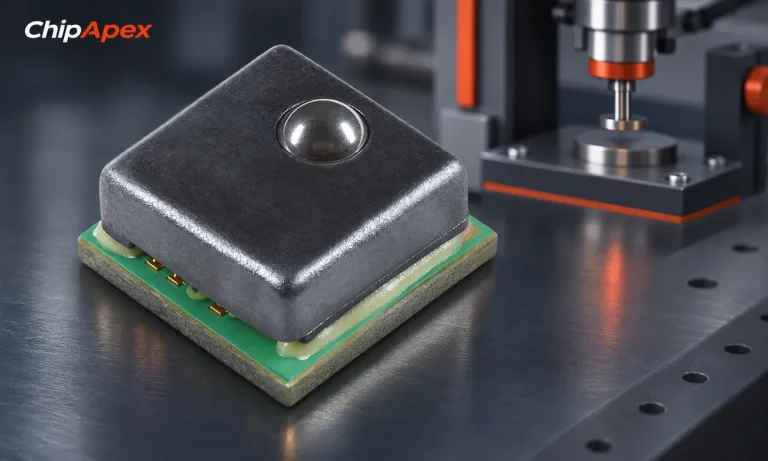
Understand load cell sensor output, bridge wiring and calibration. Learn how mV/V sensitivity, mechanics and ADC noise affect measurement accuracy.
Read More
XC9237G15D4R-G is listed in the Voltage Regulators - DC DC Switching Regulators range at ChipApex. The manufacturer field lists Torex Semiconductor Ltd. Its product…
Read More
Learn why PTC resistance rises with temperature, how it differs from NTC, and which ratings matter for sensing and protection.
Read More
Choose logic inverter ICs by thresholds, supply, output drive and delay. Compare standard and Schmitt-trigger inputs, power sequencing and replacement checks.
Read More
XC9237G15D4R-G is listed in the Voltage Regulators - DC DC Switching Regulators range at ChipApex. The manufacturer field lists Torex Semiconductor Ltd. Its product…
Read More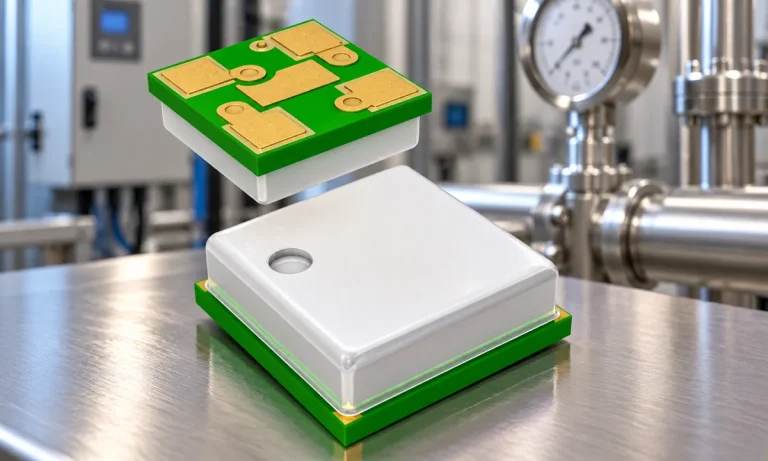
Learn how a pressure transducer converts pressure into voltage, current, or digital output, and compare pressure references and key selection specs.
Read More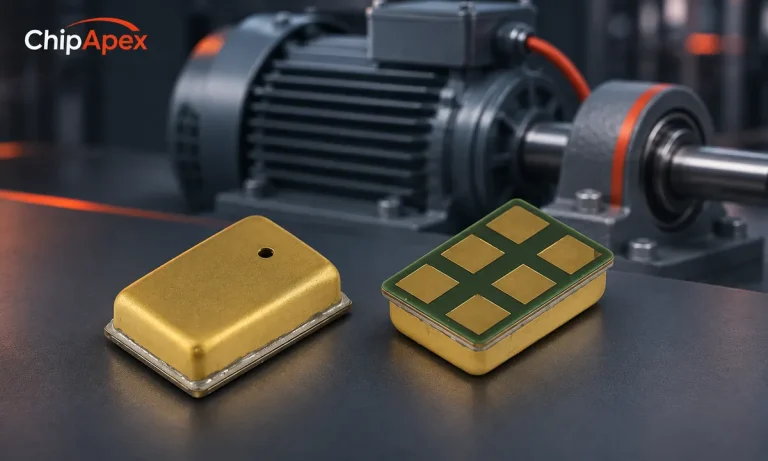
Choose a vibration sensor for machine monitoring. Compare sensing methods, bandwidth, noise and mounting, then define the signal-chain requirements.
Read More
The activity of extra discounts on wholesale prices is in full swing…
Please fill in your contact information and we will send you the latest wholesale price list.







