ChipApex | Global Electronic Components Supplier

SEARCH
Search Product
Search Post
— IC芯片 | 连接器 | 传感器 | 被动器件 —
Search productSearch post
— IC芯片 | 连接器 | 传感器 | 被动器件 —
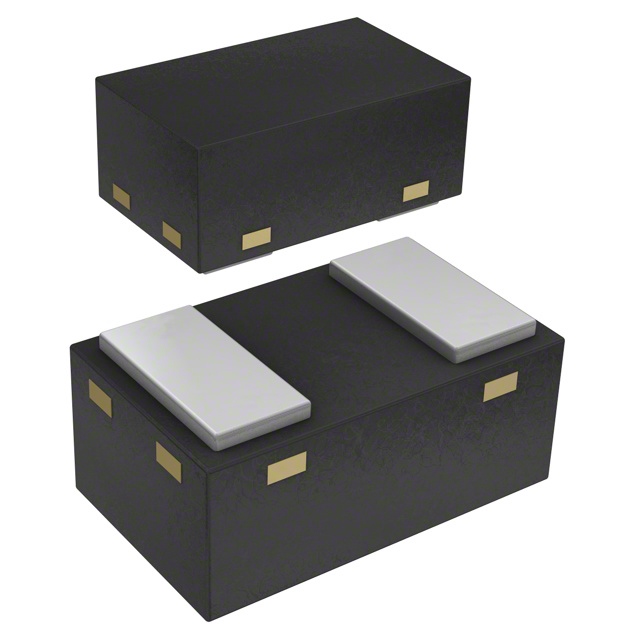
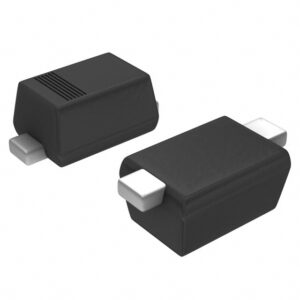
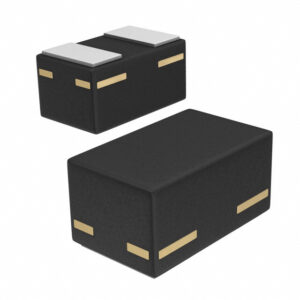
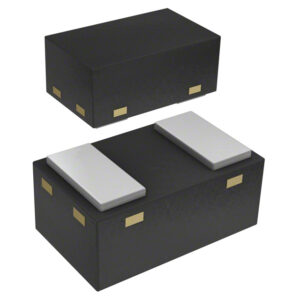
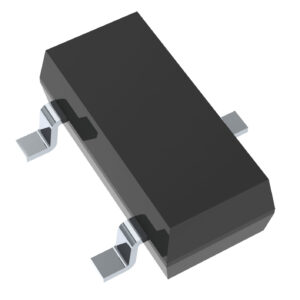
A varactor diode—also known as a varicap or tuning diode—is a type of semiconductor diode designed to operate in reverse bias, where it behaves like a variable capacitor rather than a typical rectifier. Its core function is to exploit the voltage-dependent capacitance of a reverse-biased PN junction, where the width of the depletion region changes with applied voltage, altering the capacitance. This feature makes varactors indispensable in electronic tuning applications, such as frequency modulation (FM), phase-locked loops (PLLs), voltage-controlled oscillators (VCOs), and RF filters. Varactors do not conduct in reverse bias and are used purely for their capacitive behavior. Additionally, MOS varactors—metal-oxide-semiconductor based—offer improved linearity and integration in CMOS technologies, making them suitable for modern RF IC designs. When selecting a varactor, several key parameters must be considered to ensure optimal performance in the target application. Capacitance range and tuning ratio (the ratio of maximum to minimum capacitance) are critical, as they determine how much frequency variation can be achieved. Quality factor (Q) affects signal purity and is especially important in high-frequency RF circuits. Engineers must also consider series resistance, reverse breakdown voltage, and package type, particularly in space-constrained or temperature-sensitive environments. Although varactors are compact and energy-efficient, their non-linear capacitance-voltage curve can introduce distortion, and they typically have a limited tuning range compared to mechanical alternatives. Nonetheless, for most automatic tuning, frequency modulation, and bandwidth control applications, varactors provide a solid-state solution that’s fast, reliable, and easier to integrate into modern analog and RF systems.

In embedded design, the tug-of-war between cost and performance is constant. On one side, you have Microcontrollers (MCUs)—cheap, simple, and efficient. On the other,…
Read More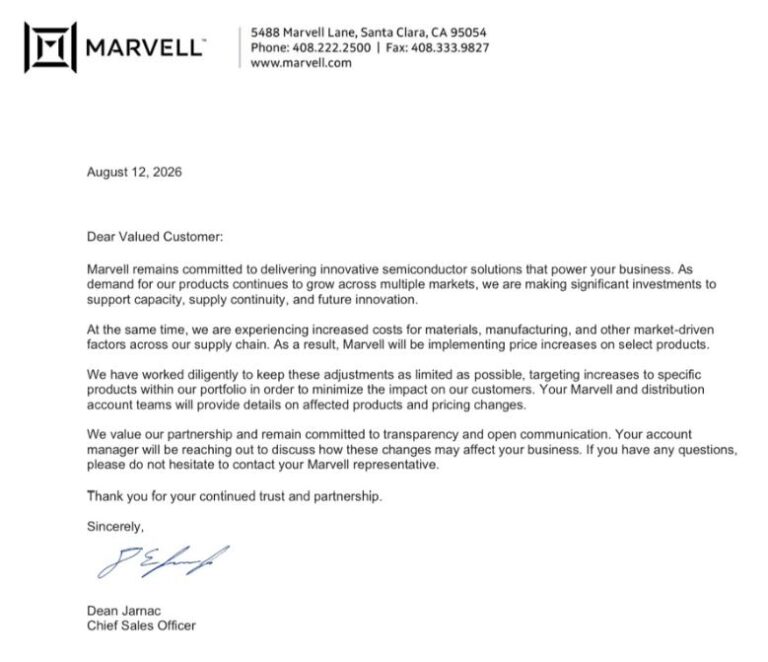
SANTA CLARA, Calif. — Leading semiconductor solution provider Marvell Technology (NASDAQ: MRVL) officially rolled out a selective price adjustment for its core electronic component…
Read More
Understand how oscillators generate timing signals, how they differ from crystals, and which frequency, output and stability specs matter when choosing one.
Read More
CHICAGO, USA – May 27, 2026 – Global leading interconnect manufacturer Molex officially issued a global distributor price adjustment notice on May 27, confirming…
Read More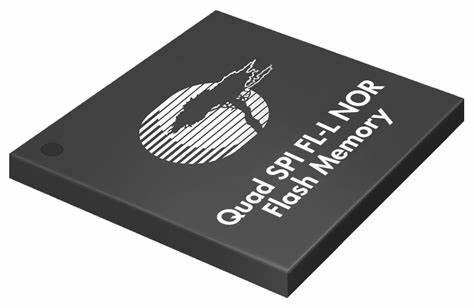
What Is NOR Flash? Why It Still Powers Critical Embedded Systems When your car’s engine control unit boots in milliseconds…When a medical device executes…
Read More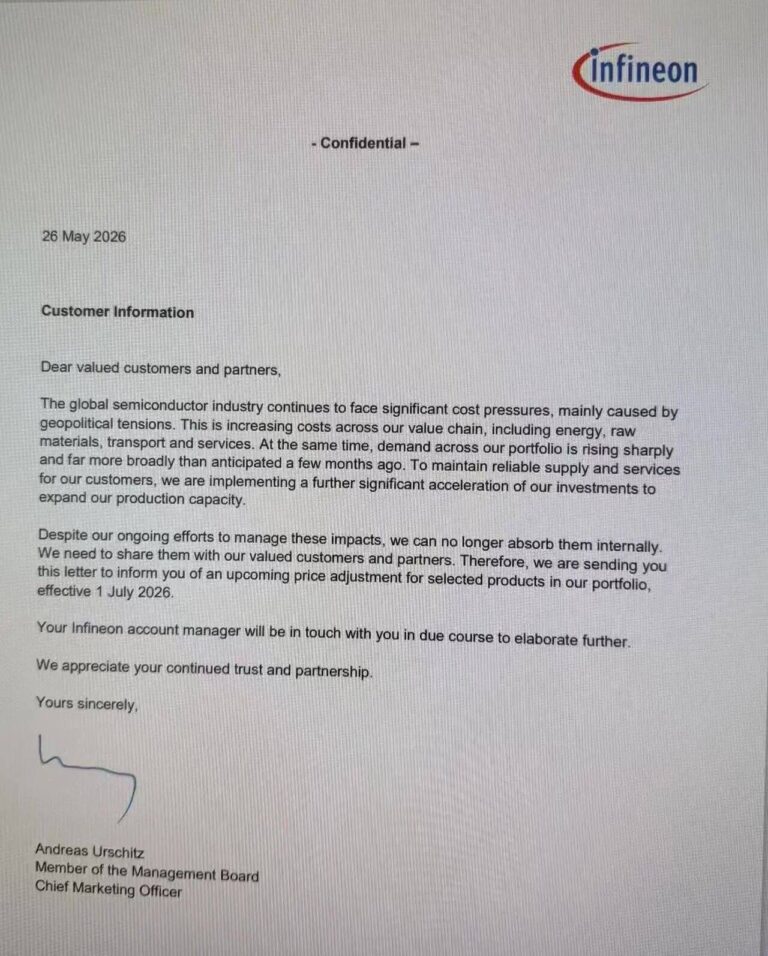
Munich, Germany – May 26, 2026 – Power semiconductor and automotive chip giant Infineon Technologies AG has formally notified customers worldwide of a second…
Read More
Find out when a bare shock switch needs a pull resistor, when an MCU internal pull-up is enough, and why sensor modules and piezo…
Read More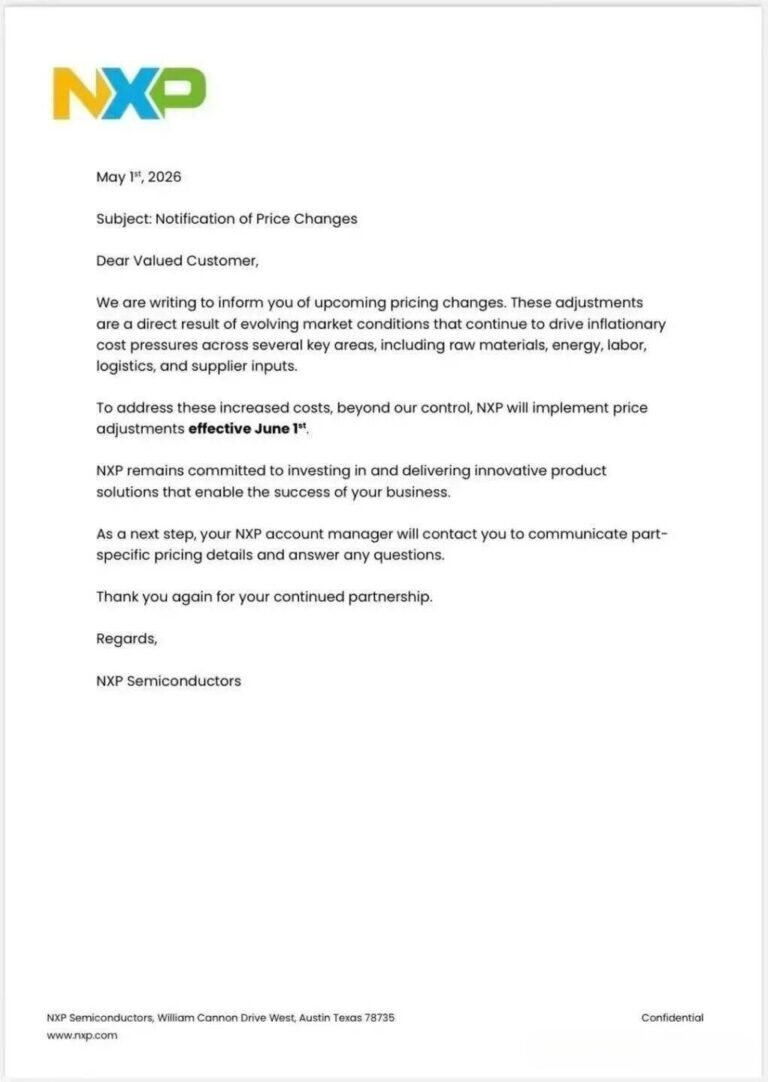
May 8, 2026 – Eindhoven, Netherlands NXP Semiconductors (NXPI), a global leader in automotive and industrial semiconductor solutions, has officially notified its worldwide channel…
Read More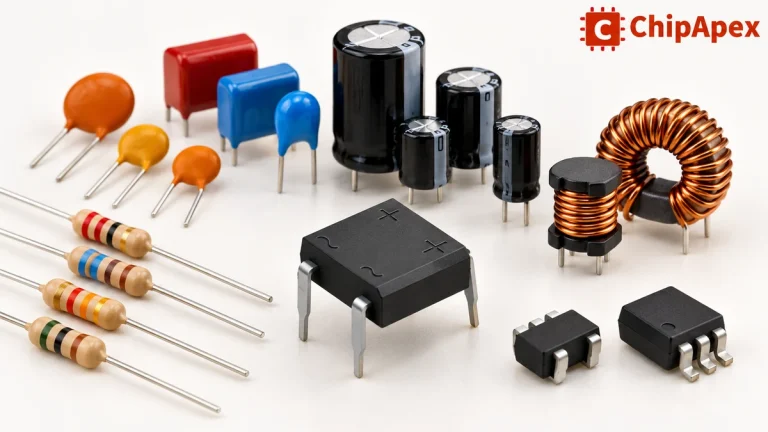
Explore electronic component types, functions, packages and datasheets. Learn selection, replacement and BOM checks before ordering parts for your PCB.
Read More
Learn what an integrated circuit is, how ICs work, the main types and the specs to check before choosing a part for your design…
Read More
Compare RC, crystal and MEMS oscillator circuits. Check ppm, jitter, load capacitance, startup margin and output compatibility before choosing a clock source.
Read More
In the world of electronics, memory components play a critical role in system performance—and DRAM (Dynamic Random-Access Memory) is one of the most widely…
Read More
The activity of extra discounts on wholesale prices is in full swing…
Please fill in your contact information and we will send you the latest wholesale price list.