ChipApex | Global Electronic Components Supplier

SEARCH
Search Product
Search Post
Search productSearch post
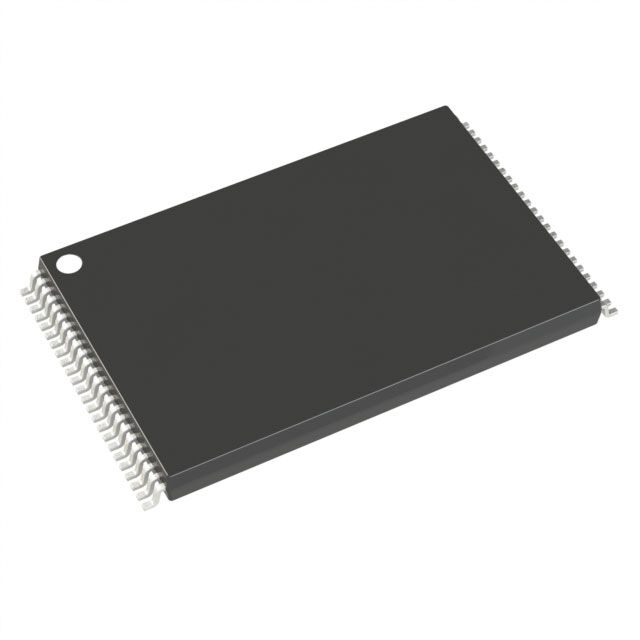
Memory is a semiconductor device that is used as data storage device on an integrated circuit. These devices are available in several formats CBRAM, DRAM, EEPROM, EERAM, EPROM, Flash, FRAM, NVSRAM, PCM (PRAM), PSRAM, RAM, and SRAM in either Non-Volatile or Volatile. Memory sizes range from 64 b to 6 Tb with the interface being I2C, MMC, Parallel, eMMC, Serial, Single Wire, SPI, UFS, Xccela Bus, and 1-Wire.
| Select products | Mfr | Description | Package | Supplier Device Package | Mounting Type | Series | Operating Temperature |
|---|---|---|---|---|---|---|---|
 BY25D05ASMIG(R) $0.09 | BYTe Semiconductor | IC FLASH 512KBIT SPI/DUAL 8USON | Tape & Reel (TR) | 8-USON (2x3) | Surface Mount | - | -40°C ~ 85°C (TA) |
 BY25D05ASOIG(R) $0.11 | BYTe Semiconductor | IC FLASH 512KBIT SPI/DUAL 8TSSOP | Tape & Reel (TR) | 8-TSSOP | Surface Mount | - | -40°C ~ 85°C (TA) |
BY25D05ASOIG(T) $0.09 | BYTe Semiconductor | IC FLASH 512KBIT SPI/DUAL 8TSSOP | Tube | 8-TSSOP | Surface Mount | - | -40°C ~ 85°C (TA) |
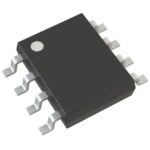 BY25D05ASTIG(R) $0.10 | BYTe Semiconductor | IC FLASH 512KBIT SPI/DUAL 8SOP | Tape & Reel (TR) | 8-SOP | Surface Mount | - | -40°C ~ 85°C (TA) |
BY25D05ASTIG(T) $0.09 | BYTe Semiconductor | IC FLASH 512KBIT SPI/DUAL 8SOP | Tube | 8-SOP | Surface Mount | - | -40°C ~ 85°C (TA) |
BY25D10ASTIG(R) $0.11 | BYTe Semiconductor | IC FLASH 1MBIT SPI/DUAL 8SOP | Tape & Reel (TR) | 8-SOP | Surface Mount | - | -40°C ~ 85°C (TA) |
BY25D10ASTIG(T) $0.09 | BYTe Semiconductor | IC FLASH 1MBIT SPI/DUAL 8SOP | Tube | 8-SOP | Surface Mount | - | -40°C ~ 85°C (TA) |
BY25D16ASMIG(R) $0.16 | BYTe Semiconductor | IC FLASH 16MBIT SPI/DUAL 8USON | Tape & Reel (TR) | 8-USON (2x3) | Surface Mount | - | -40°C ~ 85°C (TA) |
A digital-to-analog converter (DAC) turns a digital number into an analog voltage or current. It lets a controller set a physical output, such as…
Read More
Selecting the right microcontroller (MCU) isn’t just about specs—it’s about balancing performance, power, cost, and supply chain reliability. As an engineer, you’ve probably faced…
Read More
Understand voltage controlled oscillator tuning, phase noise and PLL operation. Check supply noise, output loading and requirements before selection.
Read More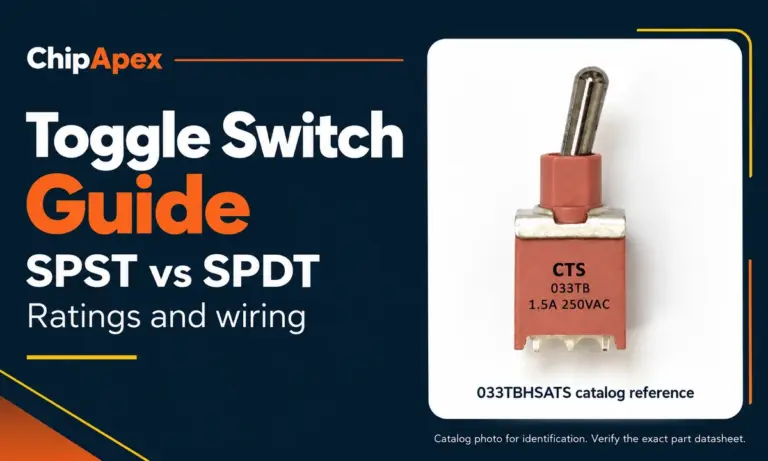
Compare SPST and SPDT toggle switches, understand AC/DC ratings, and follow wiring examples. Check contact action, mounting and parts in the ChipApex catalog.
Read More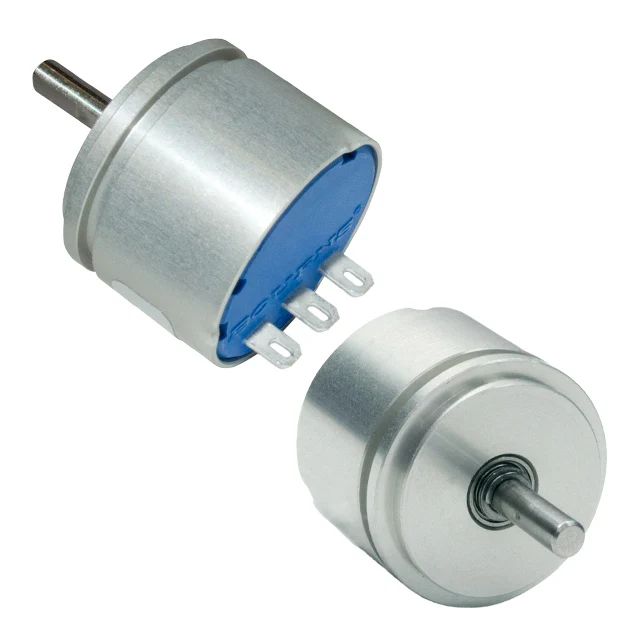
Learn how a TPS reports throttle angle to the ECU, compare potentiometer and magnetic sensors, and see what to verify before diagnosing or replacing…
Read More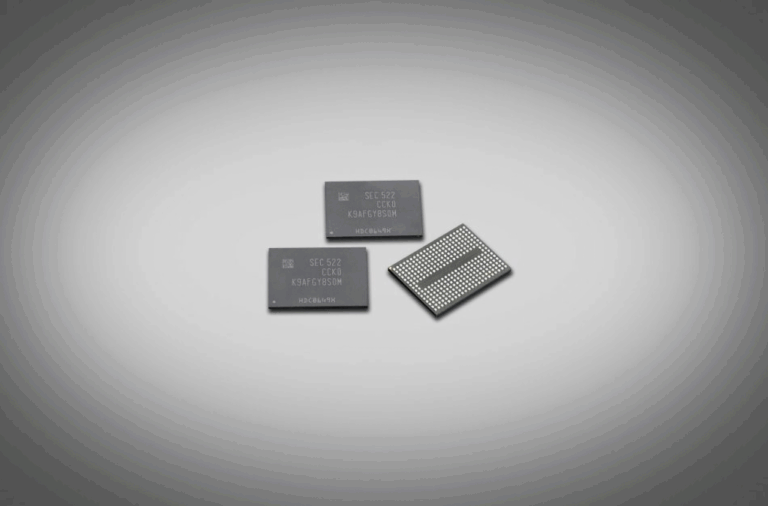
Date: May 13, 2026 The global memory industry is facing an unprecedented supply crunch in legacy MLC NAND Flash. Leading manufacturers including Samsung Electronics…
Read More
Monolithic Power Systems (MPS), a global leader in analog and mixed-signal semiconductors, has notified its distribution partners of an upcoming price increase for selected…
Read More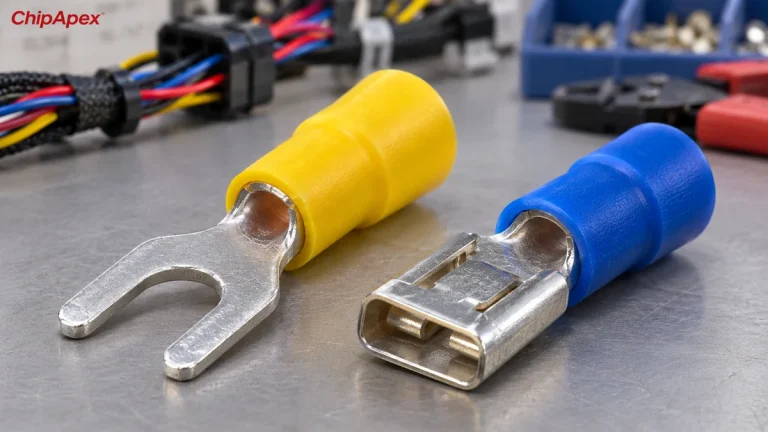
Identify fork terminals and flat-blade spade connectors. Match wire size, tab thickness, insulation and crimp tooling before selecting a replacement.
Read More
Vishay Intertechnology, Inc., a global leader in discrete semiconductors and passive electronic components, has officially announced a price adjustment for its Metal-Oxide-Semiconductor Field-Effect Transistors…
Read More
WILMINGTON, Mass. – July 3, 2026 – Analog Devices, Inc. (ADI), the global leading supplier of high-performance analog, mixed-signal and signal processing semiconductors, has…
Read More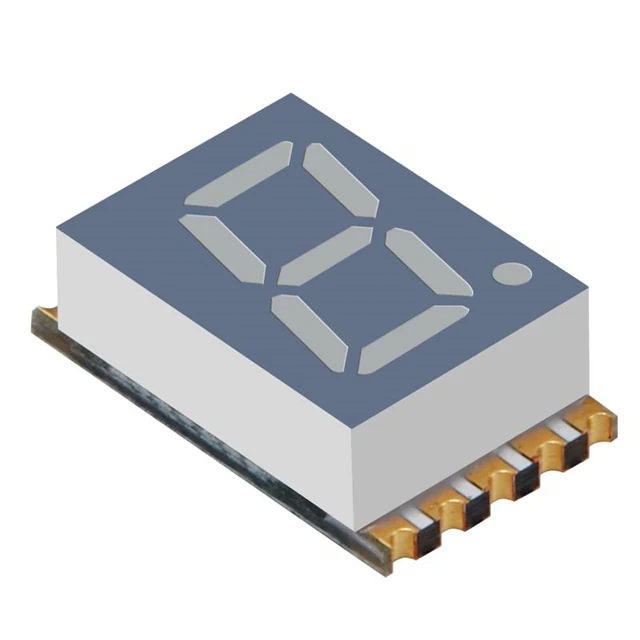
Identify common-anode and common-cathode seven-segment displays, calculate segment resistors and check driver current and four-digit multiplex timing.
Read More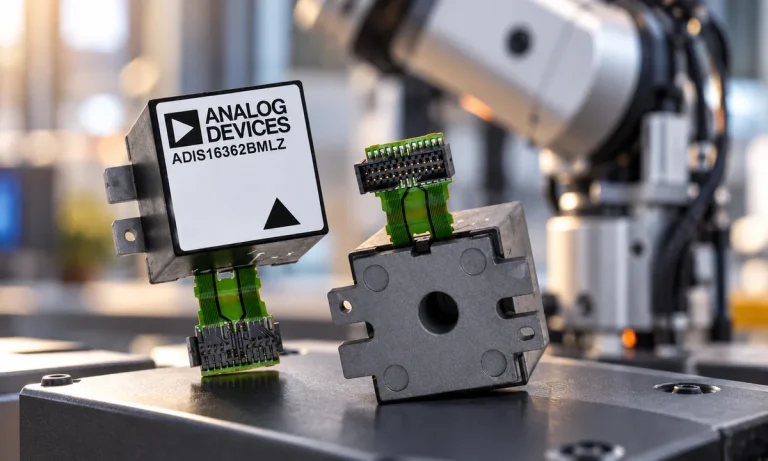
Learn what an IMU measures, how accelerometers and gyroscopes work together, why orientation estimates drift, and what to compare.
Read More
The activity of extra discounts on wholesale prices is in full swing…
Please fill in your contact information and we will send you the latest wholesale price list.