 ChipApex | Global Electronic Components Supplier

SEARCH
Search Product
Search Post
— IC芯片 | 连接器 | 传感器 | 被动器件 —
Search productSearch post
— IC芯片 | 连接器 | 传感器 | 被动器件 —
Consult the customer manager about the wholesale price.
consultation hotline:86-132-6715-2157
email:[email protected]
Contact the product manager for consultation. One-stop consultation is available.
Do you want a lower wholesale price? Please send us your inquiry and we will reply immediately.
The Phoenix Contact 1408508 is a PCB terminal block designed for secure electrical connections in industrial control environments. It features a nominal current rating of 24 A and a rated voltage of 630 V, ensuring reliable performance under standard operating conditions. The component utilizes a screw connection method with a pitch of 7.62 mm, accommodating wire cross-sections from 0.5 to 16 mm². Constructed with a polycarbonate housing and tin-plated contacts, it offers robust mechanical stability and corrosion resistance. The terminal includes an integrated marking field for clear identification within complex wiring schemes.
Verify the specific ordering suffix against the official Phoenix Contact datasheet to confirm contact plating, housing color, and mounting style compatibility. Ensure the selected variant matches the required nominal current and voltage ratings for your specific application environment. Cross-reference the pin pitch and number of poles with your PCB layout specifications before finalizing procurement orders.
Select this component based on its 7.62 mm pitch and 24 A current capacity requirements. Confirm that the PCB footprint matches the terminal's mounting dimensions. Evaluate the environmental conditions to ensure the polycarbonate housing meets temperature and chemical resistance standards. Verify that the screw connection type aligns with available assembly tools and torque specifications.
This terminal belongs to Phoenix Contact's general-purpose PCB terminal series, characterized by standardized pitches and modular design principles. It is part of a broader family of interconnection solutions used across various industrial sectors. The series emphasizes ease of installation and reliable signal transmission, serving as a critical interface between PCB traces and external wiring harnesses.
Direct replacements must match the 7.62 mm pitch, 2-pole configuration, and 24 A rating. Verify mechanical dimensions and mounting hole patterns to ensure PCB compatibility. Check for equivalent voltage ratings and insulation class. Consult Phoenix Contact documentation for officially listed substitute part numbers or compatible series upgrades.
 1408508
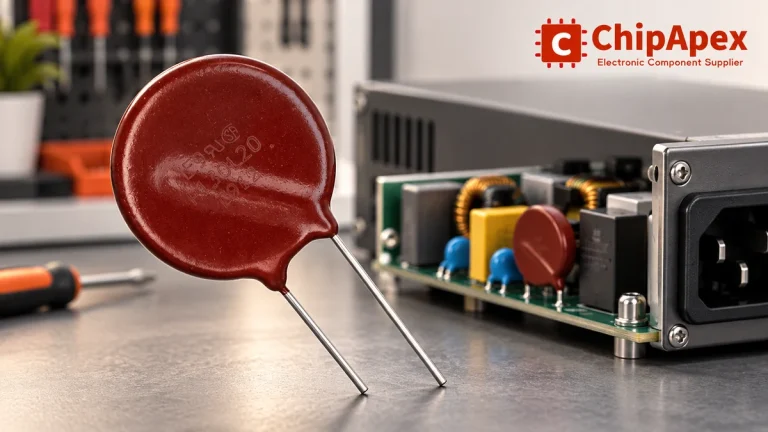
Select MOV varistors by continuous voltage, clamping behavior, surge waveform and repetition. Check thermal disconnection, fuse coordination and replacements.
Read More
Compare RC, crystal and MEMS oscillator circuits. Check ppm, jitter, load capacitance, startup margin and output compatibility before choosing a clock source.
Read More
In the world of embedded electronics, getting a device to “think” is only half the battle. The other half is getting it to communicate…
Read More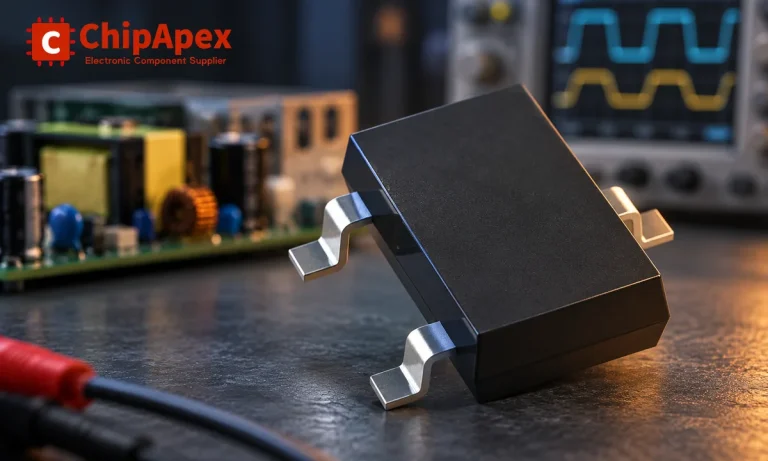
Learn how rectifiers convert AC to DC, compare half-wave and bridge circuits, and select voltage, current, recovery and thermal ratings for your design.
Read More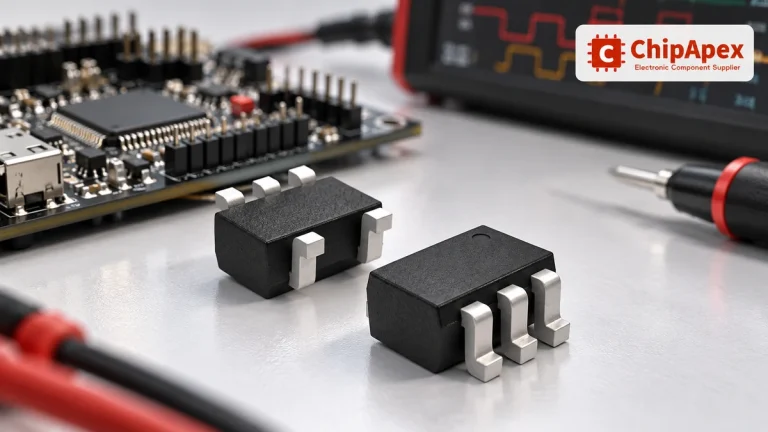
Choose logic inverter ICs by thresholds, supply, output drive and delay. Compare standard and Schmitt-trigger inputs, power sequencing and replacement checks.
Read More
Recently, a survey by the Electronic Components Industry Association (ECIA) revealed that the sales sentiment of global electronic components remained optimistic in the third…
Read More
See how a MEMS gyroscope measures angular rate, why its angle estimate drifts, and which range, noise, interface and temperature specs to compare.
Read More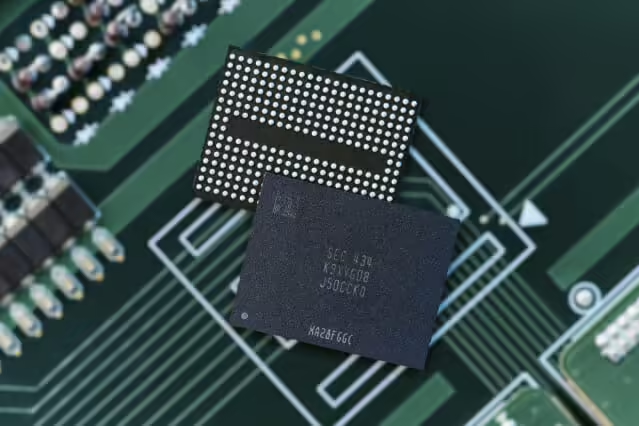
Recently, the global electronic component market has witnessed complex and changeable trends. In the memory chip sector, the wave of price increases continues to…
Read More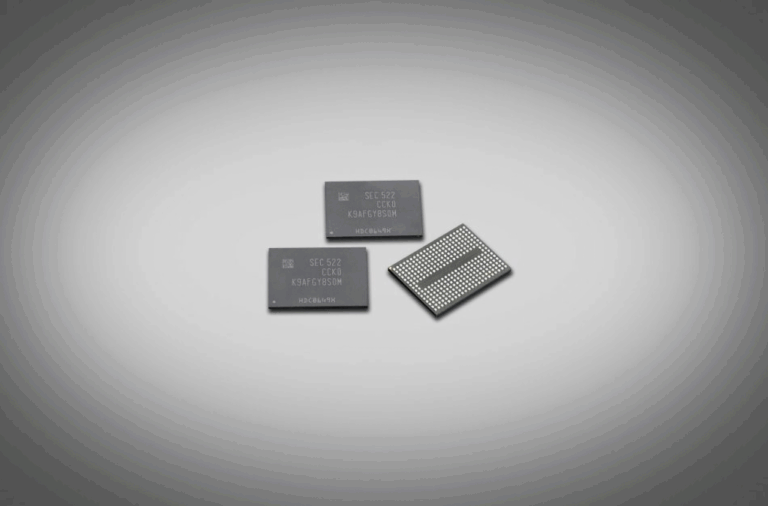
Date: May 13, 2026 The global memory industry is facing an unprecedented supply crunch in legacy MLC NAND Flash. Leading manufacturers including Samsung Electronics…
Read More
WILMINGTON, Mass. – July 3, 2026 – Analog Devices, Inc. (ADI), the global leading supplier of high-performance analog, mixed-signal and signal processing semiconductors, has…
Read More
If you’ve spent any time staring at a schematic, you’ve seen the triangle. Two inputs, one output, and a gain symbol that looks deceptively…
Read More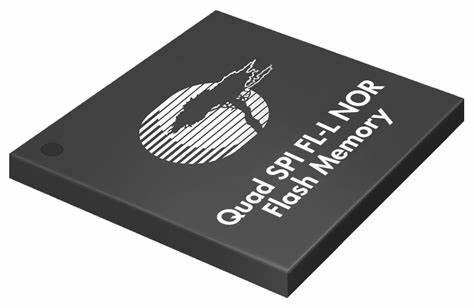
What Is NOR Flash? Why It Still Powers Critical Embedded Systems When your car’s engine control unit boots in milliseconds…When a medical device executes…
Read More
The activity of extra discounts on wholesale prices is in full swing…
Please fill in your contact information and we will send you the latest wholesale price list.




