 ChipApex | Global Electronic Components Supplier

SEARCH
Search Product
Search Post
— IC芯片 | 连接器 | 传感器 | 被动器件 —
Search productSearch post
— IC芯片 | 连接器 | 传感器 | 被动器件 —
Consult the customer manager about the wholesale price.
consultation hotline:86-132-6715-2157
email:[email protected]
Contact the product manager for consultation. One-stop consultation is available.
Do you want a lower wholesale price? Please send us your inquiry and we will reply immediately.
290CAX is listed in the Power Transformers range at ChipApex. The manufacturer field lists Hammond Manufacturing. Its product description is POWER TRANSFORMER, REPLACEMENT F. Review the specifications below when checking this part for your BOM.
The Hammond Manufacturing 290CAX is a power transformer designed for tube guitar amplifier applications, specifically serving as a replacement for Fender models. It features a single primary winding rated for 115 VAC input and triple secondary windings providing high voltage plate and filament outputs. The primary high voltage output is 630V or 550V center-tapped at 115 mA. Additional secondary outputs include low voltage filaments of 6.3V at 4A and 5V at 3A. The unit utilizes chassis mounting with wire lead termination.
Verify the exact secondary voltage configuration required by the target equipment before procurement. Confirm that the 630V/550Vct specification matches the original transformer's output to ensure proper biasing and operation. Check physical dimensions and mounting hole patterns to guarantee compatibility with the existing chassis enclosure. Ensure wire lead lengths are sufficient for the intended installation layout.
Select this component when a direct functional equivalent for vintage-style tube amplifiers is needed. Compare the current ratings of the filament windings against the total load of the vacuum tubes in the circuit. Ensure the input voltage rating aligns with the local mains frequency and voltage standards. Consider the physical size constraints if replacing an older model with different dimensional tolerances.
This part belongs to the Hammond 290 series, which specializes in power transformers for audio and tube applications. The series includes various configurations tailored for different amplifier brands and power levels. The 290CAX represents a specific variant optimized for lower current high-voltage requirements compared to higher-power models in the same family.
Explore related parts through Transformers, all product categories, ChipApex homepage.
 290CAX

290CAX is listed in the Power Transformers range at ChipApex. The manufacturer field lists Hammond Manufacturing. Its product description is POWER TRANSFORMER, REPLACEMENT F.…
Read More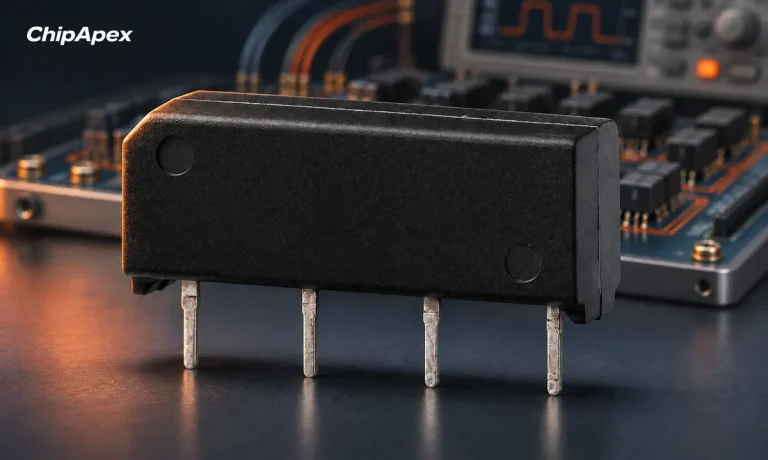
Choose a reed relay for signal switching. Understand hot and cold switching, leakage, contact resistance, isolation and measurement settling requirements.
Read More
290CAX is listed in the Power Transformers range at ChipApex. The manufacturer field lists Hammond Manufacturing. Its product description is POWER TRANSFORMER, REPLACEMENT F.…
Read More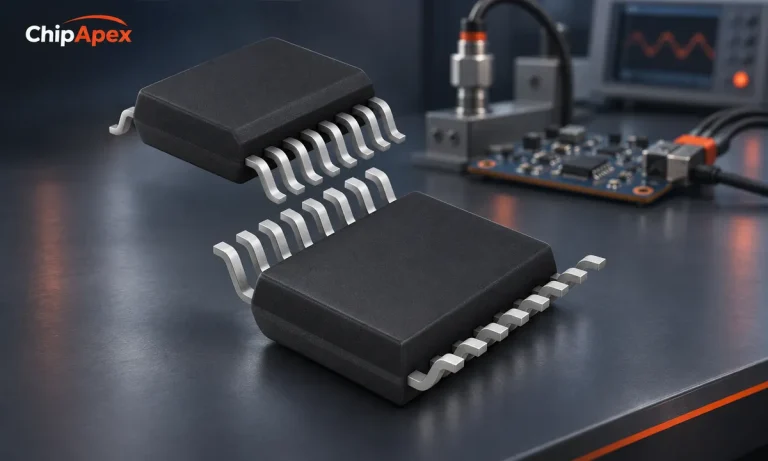
Choose an ADC converter by resolution, sample rate, noise and input design. Review practical tradeoffs and prepare component requirements for ChipApex.
Read More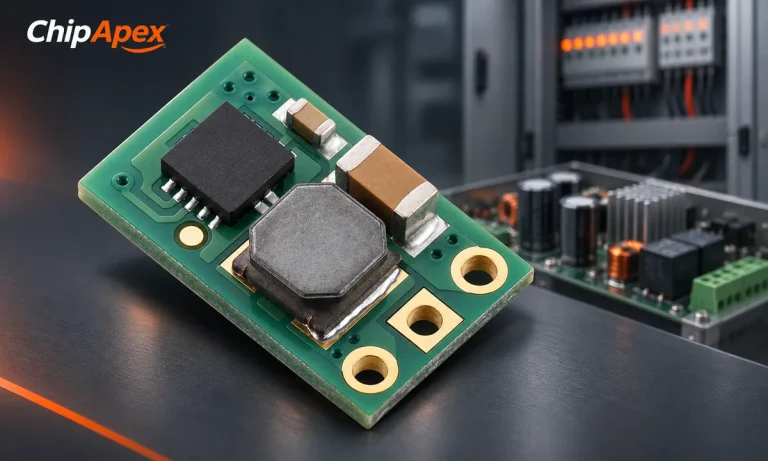
Select a DC-DC converter by input range, topology, isolation and temperature. Compare ripple, efficiency and load limits before choosing a component.
Read More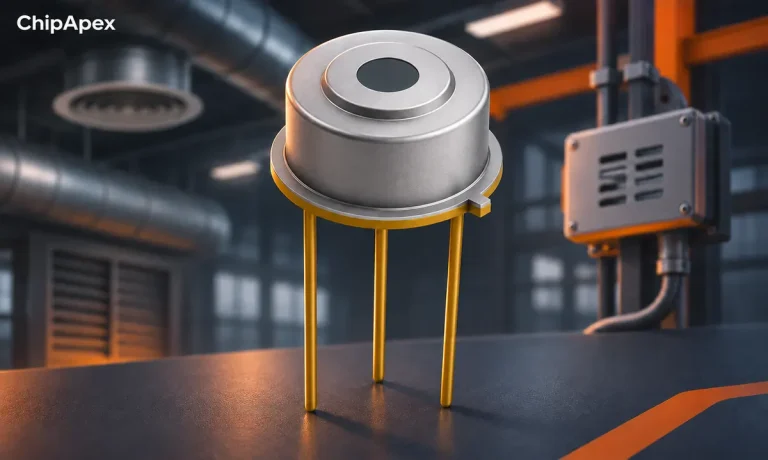
Compare gas sensor technologies, cross-sensitivity and calibration needs. Define the gas, range and environment before choosing a sensing component.
Read More
290CAX is listed in the Power Transformers range at ChipApex. The manufacturer field lists Hammond Manufacturing. Its product description is POWER TRANSFORMER, REPLACEMENT F.…
Read More
Compare RC, crystal and MEMS oscillator circuits. Check ppm, jitter, load capacitance, startup margin and output compatibility before choosing a clock source.
Read More
290CAX is listed in the Power Transformers range at ChipApex. The manufacturer field lists Hammond Manufacturing. Its product description is POWER TRANSFORMER, REPLACEMENT F.…
Read More
290CAX is listed in the Power Transformers range at ChipApex. The manufacturer field lists Hammond Manufacturing. Its product description is POWER TRANSFORMER, REPLACEMENT F.…
Read More
Compare Hall, shunt, current transformer and Rogowski sensing. Check AC/DC capability, accuracy, isolation, heat and response before selecting a sensor.
Read More
Learn how a JFET works and how to compare bias, leakage, noise and pinout. Review practical selection questions for high-impedance analog circuits.
Read More
The activity of extra discounts on wholesale prices is in full swing…
Please fill in your contact information and we will send you the latest wholesale price list.




