 ChipApex | Global Electronic Components Supplier

SEARCH
Search Product
Search Post
— IC芯片 | 连接器 | 传感器 | 被动器件 —
Search productSearch post
— IC芯片 | 连接器 | 传感器 | 被动器件 —
Consult the customer manager about the wholesale price.
consultation hotline:86-132-6715-2157
email:[email protected]
Contact the product manager for consultation. One-stop consultation is available.
Do you want a lower wholesale price? Please send us your inquiry and we will reply immediately.
9DBL411BKLFT is listed in the Application Specific Clock/Timing range at ChipApex. The manufacturer field lists Renesas Electronics Corporation. Its product description is IC FAN/BUFFER DIFF 20VFQFPN. Review the specifications below when checking this part for your BOM.
The 9DBL411BKLFT is a single-circuit, four-output fanout buffer manufactured by Renesas Electronics Corporation. Designed for Intel QPI and PCI Express (PCIe) applications, it accepts an HCSL differential input and provides four LP-HCSL differential outputs. The device operates at a maximum frequency of 150MHz with a supply voltage range of 3V to 3.6V. It features individual output enable pins and lacks an internal PLL. The component is housed in a 20-VFQFPN package with exposed pad, suitable for surface mount installation within an operating temperature range of 0°C to 70°C.
Verify the RoHS3 compliance status and ensure the specific suffix KLFT corresponds to the required tape and reel packaging quantity of 2,500 units. Confirm that the commercial temperature range (0°C to 70°C) meets the design requirements, as industrial variants like the BKILFT offer extended temperature ranges.
Select this component when a low-power, non-programmable fanout buffer is required for PCIe or QPI interfaces. Ensure the system design accommodates the 3V to 3.6V supply voltage. If spread spectrum clocking support is needed, verify compatibility with the HCSL input stage, as the datasheet indicates acceptance of spread spectrum inputs.
This part belongs to the 9DBL411 family of four-output differential buffers. Variants such as the 9DBL411AKLFT operate up to 400MHz but are discontinued. The 9DBL411BGILFT offers the same electrical performance but utilizes a 20-TSSOP package instead of the VFQFPN form factor found in the BKLFT version.
The 9DBL411BKILFT is a verified manufacturer replacement offering an extended operating temperature range (-40°C to 85°C) while maintaining identical electrical specifications and pinout compatibility.
Explore related parts through Clock/Timing, Integrated Circuits (ICs), all product categories, ChipApex homepage.
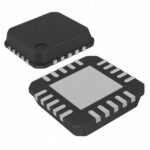 9DBL411BKLFT
See how a MEMS gyroscope measures angular rate, why its angle estimate drifts, and which range, noise, interface and temperature specs to compare.
Read More
9DBL411BKLFT is listed in the Application Specific Clock/Timing range at ChipApex. The manufacturer field lists Renesas Electronics Corporation. Its product description is IC FAN/BUFFER…
Read More
9DBL411BKLFT is listed in the Application Specific Clock/Timing range at ChipApex. The manufacturer field lists Renesas Electronics Corporation. Its product description is IC FAN/BUFFER…
Read More
Compare thermistors, RTDs, thermocouples and temperature ICs. Learn how range, accuracy, response, interfaces and mounting affect component selection.
Read More
9DBL411BKLFT is listed in the Application Specific Clock/Timing range at ChipApex. The manufacturer field lists Renesas Electronics Corporation. Its product description is IC FAN/BUFFER…
Read More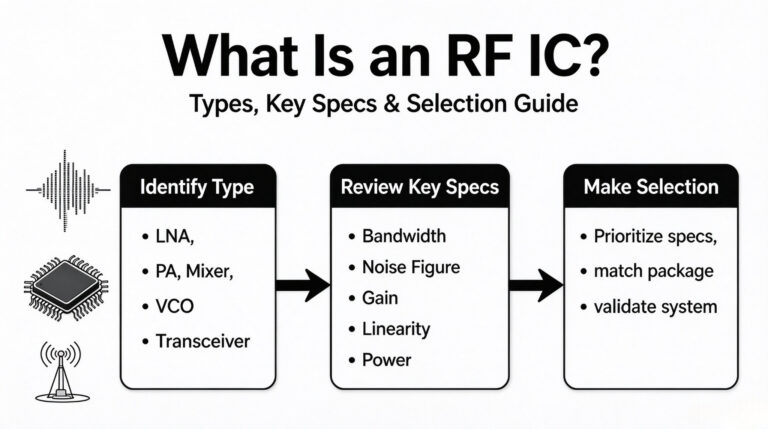
9DBL411BKLFT is listed in the Application Specific Clock/Timing range at ChipApex. The manufacturer field lists Renesas Electronics Corporation. Its product description is IC FAN/BUFFER…
Read More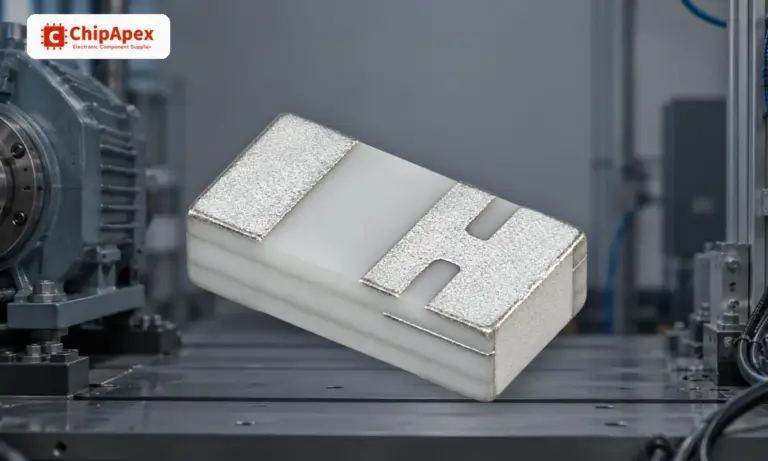
Find out when a bare shock switch needs a pull resistor, when an MCU internal pull-up is enough, and why sensor modules and piezo…
Read More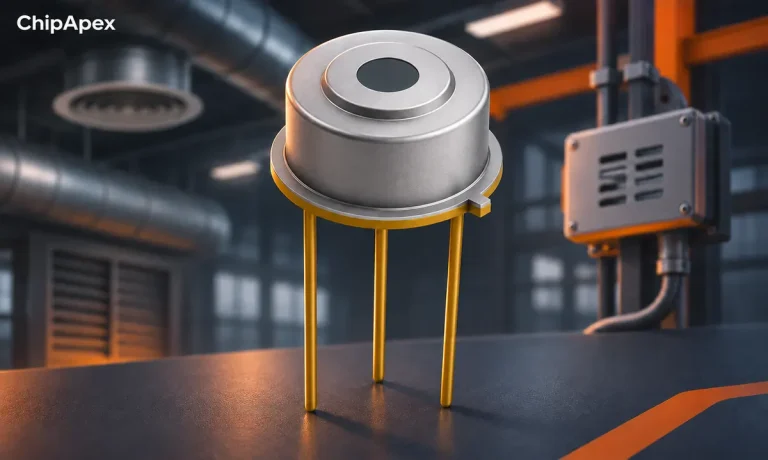
Compare gas sensor technologies, cross-sensitivity and calibration needs. Define the gas, range and environment before choosing a sensing component.
Read More
9DBL411BKLFT is listed in the Application Specific Clock/Timing range at ChipApex. The manufacturer field lists Renesas Electronics Corporation. Its product description is IC FAN/BUFFER…
Read More
Learn what a shift register does, how bits move and when to use SIPO or PISO devices. Review latch timing, logic levels, output drive…
Read More
Understand how oscillators generate timing signals, how they differ from crystals, and which frequency, output and stability specs matter when choosing one.
Read More
Learn why PTC resistance rises with temperature, how it differs from NTC, and which ratings matter for sensing and protection.
Read More
The activity of extra discounts on wholesale prices is in full swing…
Please fill in your contact information and we will send you the latest wholesale price list.






