ChipApex | Global Electronic Components Supplier

SEARCH
Search Product
Search Post
— IC芯片 | 连接器 | 传感器 | 被动器件 —
Search productSearch post
— IC芯片 | 连接器 | 传感器 | 被动器件 —
Consult the customer manager about the wholesale price.
consultation hotline:86-132-6715-2157
email:[email protected]
Contact the product manager for consultation. One-stop consultation is available.
Do you want a lower wholesale price? Please send us your inquiry and we will reply immediately.
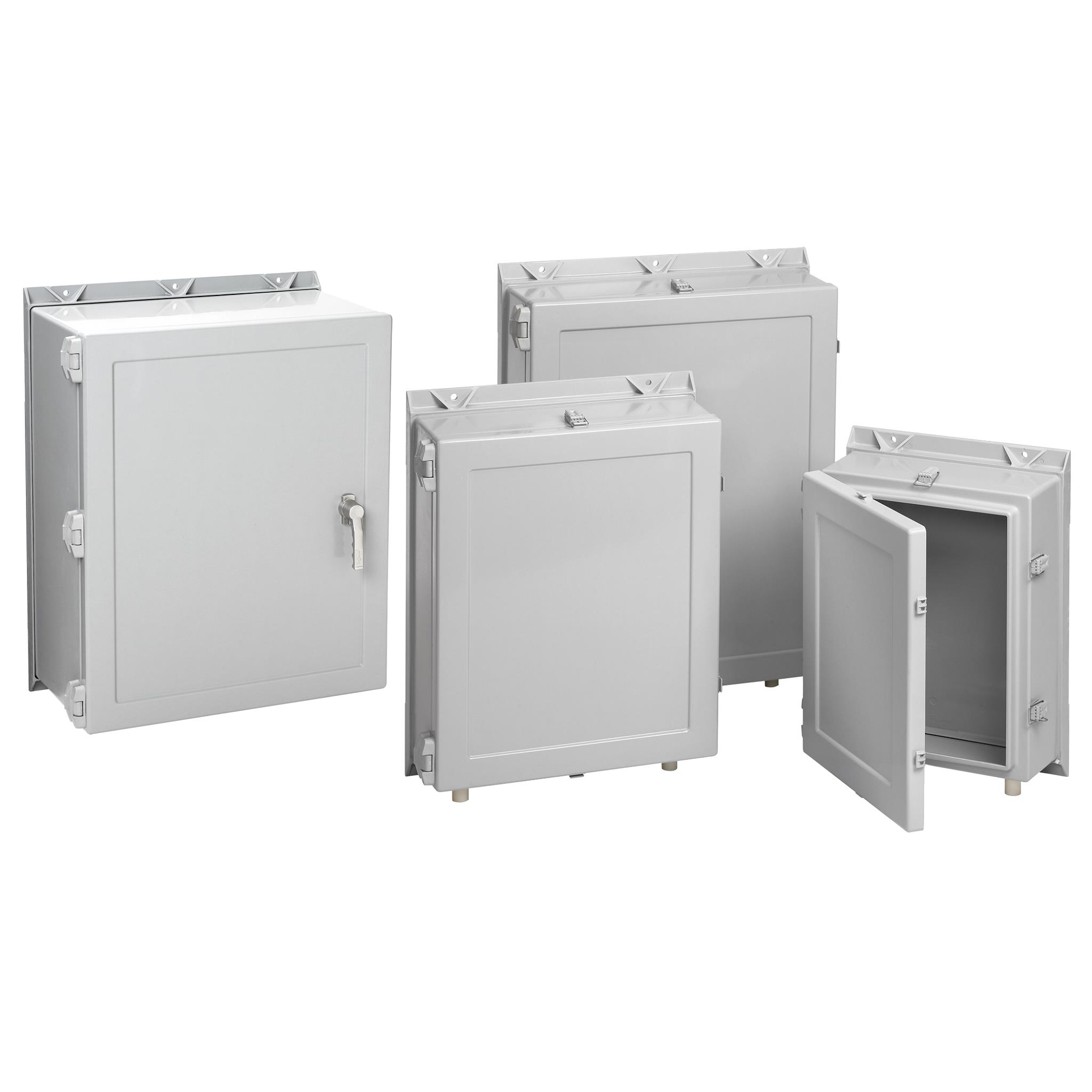
The Hoffman A24H2412GQRLP is a wall-mount enclosure constructed from galvanized steel with a gray powder-coat finish. It features dimensions of 24 inches in height, 24 inches in width, and 12 inches in depth. The unit includes a hinged door with a quarter-turn latch mechanism for secure access. Standard mounting provisions are integrated into the frame to facilitate installation on vertical surfaces. The design supports internal component organization while providing environmental protection for electrical equipment.
Verify exact dimensional tolerances and finish specifications against the official Hoffman Enclosures datasheet prior to procurement. Confirm that the galvanized steel material meets required corrosion resistance standards for the intended indoor environment. Ensure mounting hardware compatibility with existing structural supports. Cross-reference the specific suffix codes to confirm included accessories such as gaskets or knockouts.
Select this model when a mid-size galvanized steel enclosure is required for indoor use. The 24x24x12 configuration offers balanced volume for moderate component density. Consider the powder-coat finish for aesthetic consistency in visible installations. Verify internal space requirements against the external dimensions to ensure adequate clearance for wiring and heat dissipation.
This model belongs to the Hoffman A-series wall-mount enclosures, designed for general-purpose electrical protection. The series emphasizes standardized dimensions and robust steel construction. The A24H2412GQRLP variant specifically denotes the 24-inch height and width with 12-inch depth. It serves as a foundational housing solution for commercial and light industrial applications requiring reliable physical protection.
Consult official Hoffman cross-reference guides for direct replacements. Verify that substitute models maintain identical external dimensions and mounting hole patterns. Ensure replacement units offer equivalent ingress protection ratings and material thickness. Confirm that latch mechanisms and door hinge orientations match existing infrastructure constraints.
 A24H2412GQRLP

Choose an AC to DC converter by input range, output demand, isolation, efficiency and thermal derating. Compare architectures and check installation needs.
Read More
If you’ve spent any time staring at a schematic, you’ve seen the triangle. Two inputs, one output, and a gain symbol that looks deceptively…
Read More
Choose logic inverter ICs by thresholds, supply, output drive and delay. Compare standard and Schmitt-trigger inputs, power sequencing and replacement checks.
Read More
Learn how a diode conducts, how to identify anode and cathode, and when to choose rectifier, TVS, Zener or photodiode types for a circuit.
Read More
Recently, global semiconductor manufacturers have been constantly making moves in aspects such as technological cooperation, product manufacturing processes, and market layout, demonstrating the rapid…
Read More
The rapid advancement of artificial intelligence (AI) is transforming industries across the globe, and the world of electronic components is no exception. From smarter…
Read More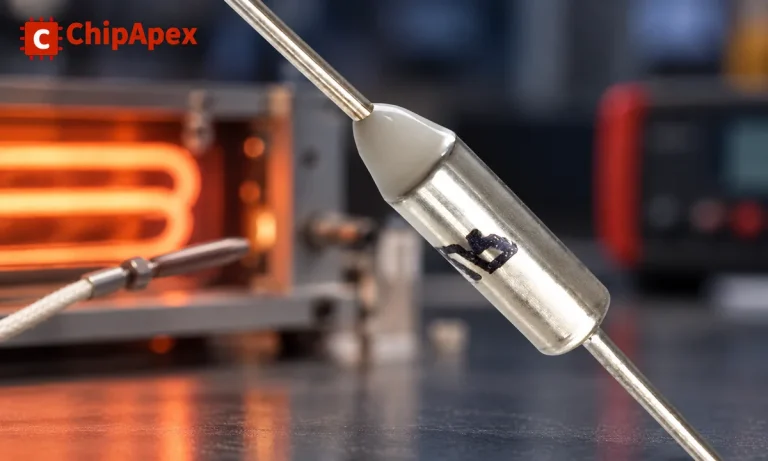
Understand thermal fuse operation, Tf, Th and Tm, electrical ratings and mounting. Check temperature limits and replacement requirements for your design.
Read More
See how a MEMS gyroscope measures angular rate, why its angle estimate drifts, and which range, noise, interface and temperature specs to compare.
Read More
In the world of electronics, memory components play a critical role in system performance—and DRAM (Dynamic Random-Access Memory) is one of the most widely…
Read More
Learn how rectifiers convert AC to DC, compare half-wave and bridge circuits, and select voltage, current, recovery and thermal ratings for your design.
Read More
On September 22nd, it was reported that Samsung Electronics, the South Korean tech giant, had successfully passed NVIDIA’s certification test for its 12-layer HBM3E…
Read More
Learn why PTC resistance rises with temperature, how it differs from NTC, and which ratings matter for sensing and protection.
Read More
The activity of extra discounts on wholesale prices is in full swing…
Please fill in your contact information and we will send you the latest wholesale price list.