 ChipApex | Global Electronic Components Supplier

SEARCH
Search Product
Search Post
— IC芯片 | 连接器 | 传感器 | 被动器件 —
Search productSearch post
— IC芯片 | 连接器 | 传感器 | 被动器件 —
Consult the customer manager about the wholesale price.
consultation hotline:86-132-6715-2157
email:[email protected]
Contact the product manager for consultation. One-stop consultation is available.
Do you want a lower wholesale price? Please send us your inquiry and we will reply immediately.
ADC3662IRSBR is listed in the Analog To Digital Converters (ADC) range at ChipApex. The manufacturer field lists Texas Instruments. Its product description is DUAL-CHANNEL, 16-BIT, 25-MSPS, L. Review the specifications below when checking this part for your BOM.
The ADC3662IRSBR is a dual-channel, 16-bit analog-to-digital converter with a sampling rate of 25 MSPS. It operates on 1.8 V analog and digital supplies within an industrial temperature range of -40°C to +105°C. Key electrical specifications include a typical Signal-to-Noise Ratio (SNR) of 81.9 dBFS at a 10 MHz input frequency, a Spur-Free Dynamic Range (SFDR) of 89 dBc, and an Effective Number of Bits (ENOB) of 13.3 bits. The device features a differential input full-scale voltage of 3.2 Vpp and supports external or internal voltage references.
Verify the specific ordering suffix against the manufacturer's current orderable addendum to ensure package and temperature grade alignment. Confirm that the component meets RoHS compliance requirements for the intended deployment region. Cross-reference the datasheet revision history to validate that all technical parameters match the production version being procured.
Select this model when a 25 MSPS sampling rate is required alongside 16-bit resolution. Compare power consumption metrics against the ADC3661 and ADC3663 variants if system energy efficiency is critical. Ensure the host processor supports the selected SLVDS interface configuration, whether utilizing one-lane or two-lane data output modes.
This component belongs to the Texas Instruments ADC366x family, which includes the ADC3661, ADC3662, ADC3663, and ADC3664. These devices share pin compatibility and architectural similarities while differing in maximum sampling speeds and resolution grades. The family is designed for applications demanding low noise and high dynamic range in a compact footprint.
The ADC3661 and ADC3663 are pin-compatible alternatives within the same family. Selection depends on whether a lower 10 MSPS or higher 65 MSPS sampling rate better suits the application requirements compared to the 25 MSPS specification of the ADC3662.
Explore related parts through Data Acquisition, Integrated Circuits (ICs), all product categories, ChipApex homepage.
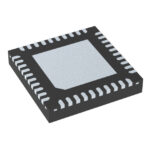 ADC3662IRSBR
Choose a rocker switch by AC/DC ratings, contact arrangement, illumination, panel fit and sealing. Get practical checks for engineering and component sourcing.
Read More
ADC3662IRSBR is listed in the Analog To Digital Converters (ADC) range at ChipApex. The manufacturer field lists Texas Instruments. Its product description is DUAL-CHANNEL,…
Read More
See how a MEMS gyroscope measures angular rate, why its angle estimate drifts, and which range, noise, interface and temperature specs to compare.
Read More
ADC3662IRSBR is listed in the Analog To Digital Converters (ADC) range at ChipApex. The manufacturer field lists Texas Instruments. Its product description is DUAL-CHANNEL,…
Read More
ADC3662IRSBR is listed in the Analog To Digital Converters (ADC) range at ChipApex. The manufacturer field lists Texas Instruments. Its product description is DUAL-CHANNEL,…
Read More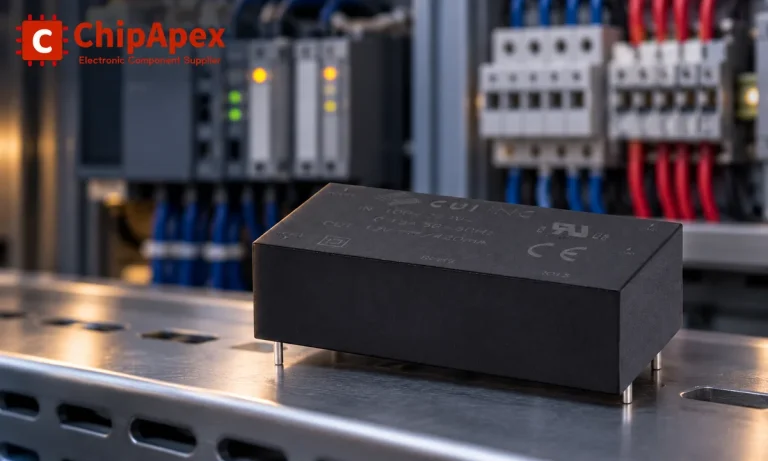
Choose an AC to DC converter by input range, output demand, isolation, efficiency and thermal derating. Compare architectures and check installation needs.
Read More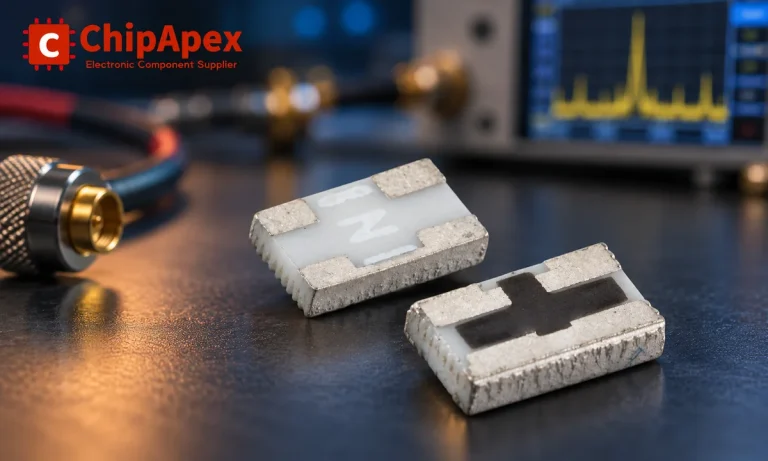
Understand RF attenuator dB values, fixed and programmable types, impedance, power limits and noise tradeoffs before choosing parts for an RF signal path.
Read More
ADC3662IRSBR is listed in the Analog To Digital Converters (ADC) range at ChipApex. The manufacturer field lists Texas Instruments. Its product description is DUAL-CHANNEL,…
Read More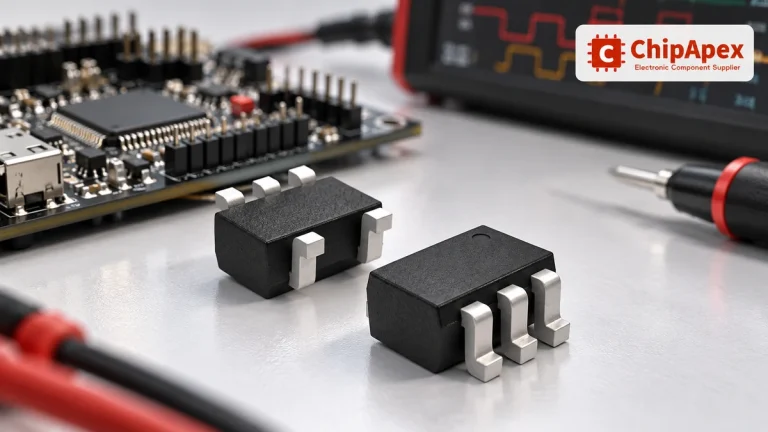
Choose logic inverter ICs by thresholds, supply, output drive and delay. Compare standard and Schmitt-trigger inputs, power sequencing and replacement checks.
Read More
Choose a DIP switch by contact type, coded positions, footprint and signal ratings. Check logic polarity, assembly conditions and PCB configuration behavior.
Read More
Learn the relay definition, coil and contact operation, NO and NC forms, load ratings and suppression choices. Compare mechanical, reed and solid-state types.
Read More
Understand how oscillators generate timing signals, how they differ from crystals, and which frequency, output and stability specs matter when choosing one.
Read More
The activity of extra discounts on wholesale prices is in full swing…
Please fill in your contact information and we will send you the latest wholesale price list.





