 ChipApex | Global Electronic Components Supplier

SEARCH
Search Product
Search Post
— IC芯片 | 连接器 | 传感器 | 被动器件 —
Search productSearch post
— IC芯片 | 连接器 | 传感器 | 被动器件 —
Consult the customer manager about the wholesale price.
consultation hotline:86-132-6715-2157
email:[email protected]
Contact the product manager for consultation. One-stop consultation is available.
Do you want a lower wholesale price? Please send us your inquiry and we will reply immediately.
D4I1840-3 is listed in the RF Circulators And Isolators range at ChipApex. The manufacturer field lists DiTom Microwave. Its product description is 18.00 - 40.00 GHZ ISOLATOR. Review the specifications below when checking this part for your BOM.
The D4I1840-3 is a single-junction RF isolator manufactured by DiTom Microwave, designed for operation within the 18 GHz to 40 GHz frequency range. It features Type-K female connectors and is housed in a module package measuring 0.5 inches by 0.5 inches by 0.7 inches. Key electrical specifications include an isolation of 18 dB, a maximum insertion loss of 4.2 dB, and a voltage standing wave ratio (VSWR) of 2.1. The device supports an average forward power handling capacity of 5 W and operates reliably within a temperature range of -20°C to +65°C.
Verify component authenticity through authorized DiTom Microwave channels or certified distributors. Confirm that the specific unit matches the D4I1840-3 designation and includes relevant RoHS compliance documentation. Ensure storage conditions maintain integrity prior to installation, as ferrite components require protection from physical shock and moisture exposure during handling.
Select this model when a 18 dB isolation level and 5 W power rating are required within the 18-40 GHz band. The Type-K female interface dictates compatibility with existing system cabling. Evaluate thermal management requirements against the specified operating temperature limits to ensure stable performance under continuous load conditions without exceeding junction temperature thresholds.
This component belongs to the D4I1840 series of RF isolators produced by DiTom Microwave. The series covers the 18 GHz to 40 GHz spectrum, offering various connector configurations and power ratings. The D4I1840-3 specifically utilizes Type-K female connectors and a single-junction architecture, distinguishing it from multi-junction variants or different connector types within the same product family.
Direct substitutes within the same series include the D4I1840-1 and D4I1840-2. These alternatives share identical frequency ranges and core electrical characteristics but may differ in connector configuration or specific mechanical tolerances. Verify interface compatibility before substitution.
Explore related parts through RF and Wireless, all product categories, ChipApex homepage.
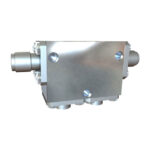 D4I1840-3

See when an inductor behaves linearly, how DC bias and saturation reduce inductance, and which current and temperature curves to check.
Read More
D4I1840-3 is listed in the RF Circulators And Isolators range at ChipApex. The manufacturer field lists DiTom Microwave. Its product description is 18.00 -…
Read More
D4I1840-3 is listed in the RF Circulators And Isolators range at ChipApex. The manufacturer field lists DiTom Microwave. Its product description is 18.00 -…
Read More
D4I1840-3 is listed in the RF Circulators And Isolators range at ChipApex. The manufacturer field lists DiTom Microwave. Its product description is 18.00 -…
Read More
D4I1840-3 is listed in the RF Circulators And Isolators range at ChipApex. The manufacturer field lists DiTom Microwave. Its product description is 18.00 -…
Read More
D4I1840-3 is listed in the RF Circulators And Isolators range at ChipApex. The manufacturer field lists DiTom Microwave. Its product description is 18.00 -…
Read More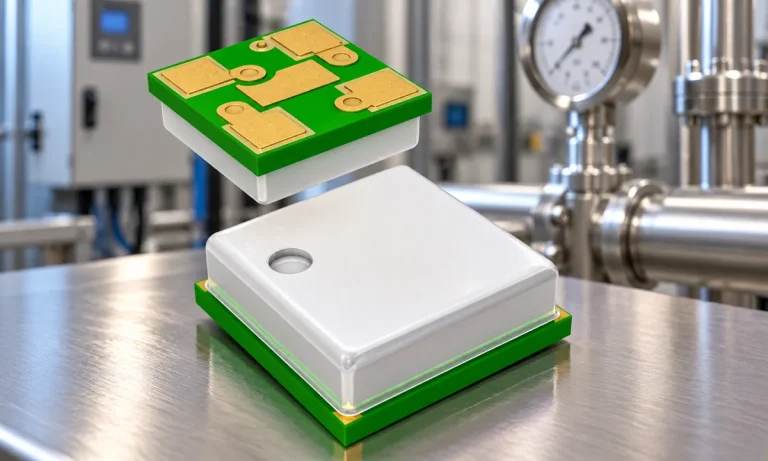
Learn how a pressure transducer converts pressure into voltage, current, or digital output, and compare pressure references and key selection specs.
Read More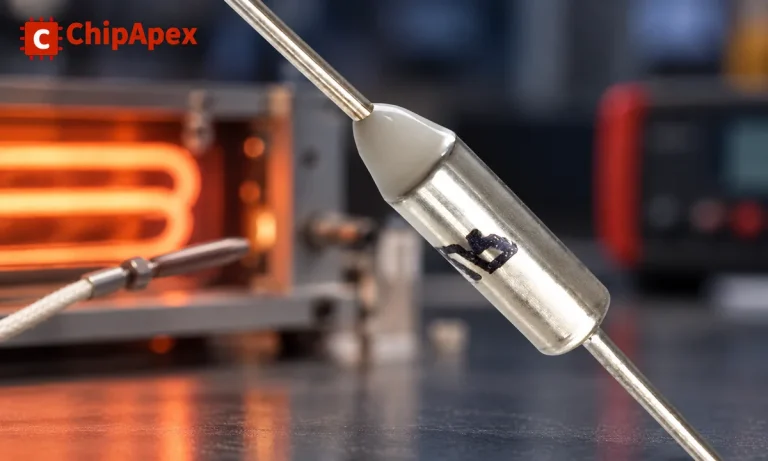
Understand thermal fuse operation, Tf, Th and Tm, electrical ratings and mounting. Check temperature limits and replacement requirements for your design.
Read More
D4I1840-3 is listed in the RF Circulators And Isolators range at ChipApex. The manufacturer field lists DiTom Microwave. Its product description is 18.00 -…
Read More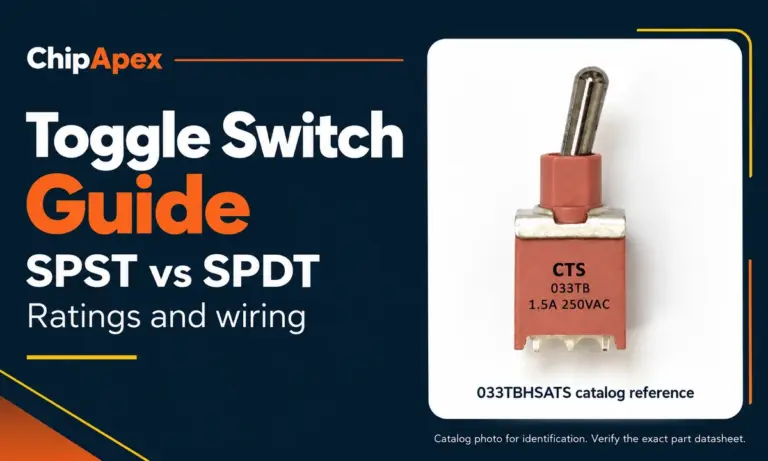
Compare SPST and SPDT toggle switches, understand AC/DC ratings, and follow wiring examples. Check contact action, mounting and parts in the ChipApex catalog.
Read More
Understand how oscillators generate timing signals, how they differ from crystals, and which frequency, output and stability specs matter when choosing one.
Read More
Find out when a bare shock switch needs a pull resistor, when an MCU internal pull-up is enough, and why sensor modules and piezo…
Read More
The activity of extra discounts on wholesale prices is in full swing…
Please fill in your contact information and we will send you the latest wholesale price list.





