 ChipApex | Global Electronic Components Supplier

SEARCH
Search Product
Search Post
— IC芯片 | 连接器 | 传感器 | 被动器件 —
Search productSearch post
— IC芯片 | 连接器 | 传感器 | 被动器件 —
Consult the customer manager about the wholesale price.
consultation hotline:86-132-6715-2157
email:[email protected]
Contact the product manager for consultation. One-stop consultation is available.
Do you want a lower wholesale price? Please send us your inquiry and we will reply immediately.
DPAD50 TO-72 4L ROHS is listed in the Diode Arrays range at ChipApex. The manufacturer field lists Linear Integrated Systems, Inc.. Its product description is DIODE ARRAY GP 45V 50MA TO-72-4. Review the specifications below when checking this part for your BOM.
The DPAD50 is a picoampere diode from the PAD series, designed as a direct replacement for the Siliconix PAD series. It features a reverse breakdown voltage of at least -30V and a maximum reverse leakage current of -50pA at -20V. The device offers low reverse capacitance, typically 1.5pF to 2pF, making it suitable for high-impedance applications. It operates within a junction temperature range of -55°C to +150°C and supports continuous power dissipation up to 350mW in J/SSTPAD configurations.
Verify the specific package variant (TO-72, SOT-23, or JPAD) required for your design, as the datasheet covers multiple form factors under the PAD series. Confirm that the -50pA leakage rating meets your system's noise floor requirements at the intended operating voltage. Ensure thermal derating calculations account for the 2.8mW/°C limit above 25°C if using the J/SSTPAD configuration.
Select this component when ultra-low leakage is critical, such as in precision analog front ends or charge amplifiers. The DPAD50 provides a robust alternative to older Siliconix parts without redesigning the footprint. Consider the TO-72 package for through-hole mounting or SOT-23 for surface mount needs. Verify that the -45V breakdown voltage of the standard PAD variant aligns with your circuit's transient protection requirements.
Linear Integrated Systems manufactures the PAD series of picoampere diodes, leveraging expertise from companies like Intersil and Union Carbide. These devices are engineered for precision semiconductor applications requiring minimal leakage currents. The series includes various packages and leakage grades to suit different isolation and protection needs in analog circuits.
This part is explicitly documented as a direct replacement for the Siliconix PAD series. No other substitute part numbers are listed in the official documentation.
Explore related parts through Rectifiers, Diodes, Discrete Semiconductor Products, all product categories.
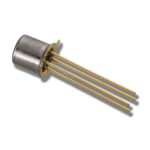 DPAD50 TO-72 4L ROHS
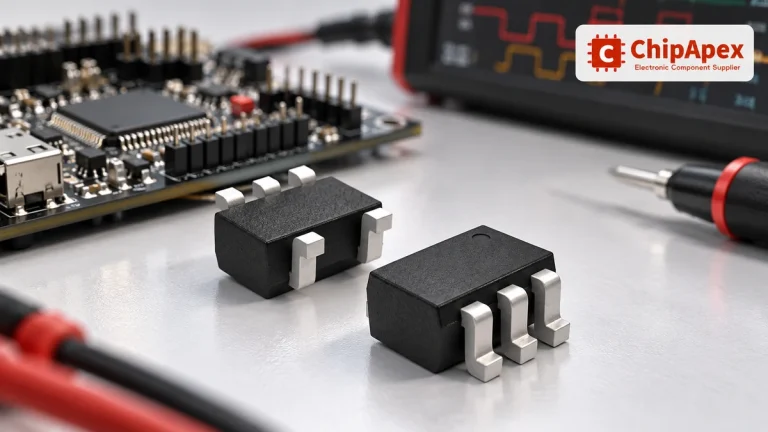
Choose logic inverter ICs by thresholds, supply, output drive and delay. Compare standard and Schmitt-trigger inputs, power sequencing and replacement checks.
Read More
DPAD50 TO-72 4L ROHS is listed in the Diode Arrays range at ChipApex. The manufacturer field lists Linear Integrated Systems, Inc.. Its product description…
Read More
DPAD50 TO-72 4L ROHS is listed in the Diode Arrays range at ChipApex. The manufacturer field lists Linear Integrated Systems, Inc.. Its product description…
Read More
Find out when a bare shock switch needs a pull resistor, when an MCU internal pull-up is enough, and why sensor modules and piezo…
Read More
DPAD50 TO-72 4L ROHS is listed in the Diode Arrays range at ChipApex. The manufacturer field lists Linear Integrated Systems, Inc.. Its product description…
Read More
DPAD50 TO-72 4L ROHS is listed in the Diode Arrays range at ChipApex. The manufacturer field lists Linear Integrated Systems, Inc.. Its product description…
Read More
DPAD50 TO-72 4L ROHS is listed in the Diode Arrays range at ChipApex. The manufacturer field lists Linear Integrated Systems, Inc.. Its product description…
Read More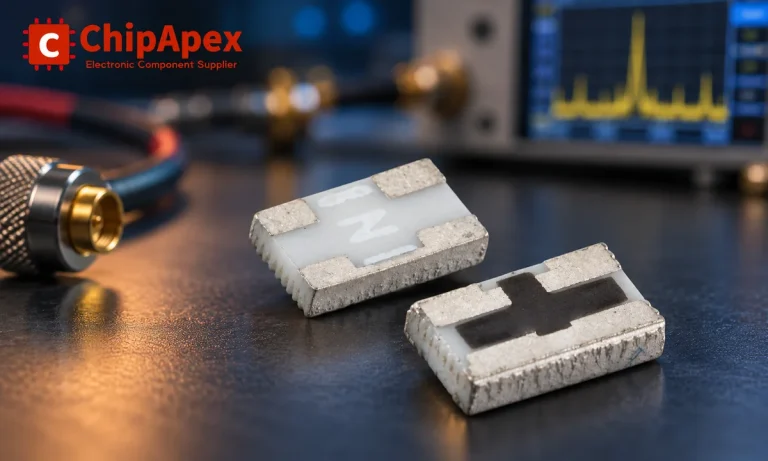
Understand RF attenuator dB values, fixed and programmable types, impedance, power limits and noise tradeoffs before choosing parts for an RF signal path.
Read More
DPAD50 TO-72 4L ROHS is listed in the Diode Arrays range at ChipApex. The manufacturer field lists Linear Integrated Systems, Inc.. Its product description…
Read More
DPAD50 TO-72 4L ROHS is listed in the Diode Arrays range at ChipApex. The manufacturer field lists Linear Integrated Systems, Inc.. Its product description…
Read More
Compare Pt100 and Pt1000 RTDs, two-, three- and four-wire connections, excitation and self-heating. Build an error budget from element to reported temperature.
Read More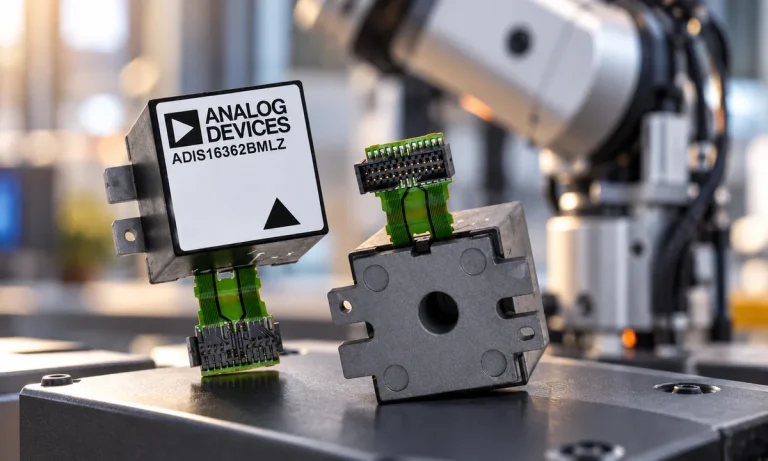
Learn what an IMU measures, how accelerometers and gyroscopes work together, why orientation estimates drift, and what to compare.
Read More
The activity of extra discounts on wholesale prices is in full swing…
Please fill in your contact information and we will send you the latest wholesale price list.





