 ChipApex | Global Electronic Components Supplier

SEARCH
Search Product
Search Post
— IC芯片 | 连接器 | 传感器 | 被动器件 —
Search productSearch post
— IC芯片 | 连接器 | 传感器 | 被动器件 —
Consult the customer manager about the wholesale price.
consultation hotline:86-132-6715-2157
email:[email protected]
Contact the product manager for consultation. One-stop consultation is available.
Do you want a lower wholesale price? Please send us your inquiry and we will reply immediately.
The Hoffman Enclosures G280446G219 is a SpectraCool outdoor-indoor air conditioner designed for rack thermal management. It operates on 460 VAC at 60 Hz, delivering cooling capacities of 4600 BTU and 4900 BTU with power consumption of 1347 Watts and 1435 Watts respectively. The unit draws 17.7 Amps and features a 316 stainless steel construction suitable for Type 4X environments. Physical dimensions are 28.55 inches in height, 16.97 inches in width, and 10.1 inches in depth, utilizing terminal block connections.
Verify the specific voltage requirement of 460 VAC matches your facility's power supply before procurement. Confirm that the physical mounting dimensions of 28.55 x 16.97 x 10.1 inches fit within the designated enclosure space. Ensure the application environment meets Type 4X standards to utilize the 316 stainless steel construction effectively. Check for compatible terminal block wiring configurations during installation planning.
Select this model when high-capacity cooling is required for large enclosures in harsh environments. The 316 stainless steel material provides superior durability compared to standard steel options. Consider the 460 VAC power requirement to ensure compatibility with existing electrical infrastructure. This unit is appropriate for applications demanding robust outdoor-indoor versatility and significant heat dissipation capabilities.
This component belongs to the Hoffman SpectraCool series, which specializes in environmental control solutions. It is categorized under rack thermal management products manufactured by nVent Hoffman. The series focuses on providing reliable cooling for electronic enclosures exposed to challenging conditions. The product line emphasizes durability and efficient heat exchange for industrial applications.
Publicly confirmed substitute part numbers are not available in the provided documentation. Verify compatibility with existing mounting hardware and electrical connections if considering alternative models from the same manufacturer.
 G280446G219

In the world of electronics, memory components play a critical role in system performance—and DRAM (Dynamic Random-Access Memory) is one of the most widely…
Read More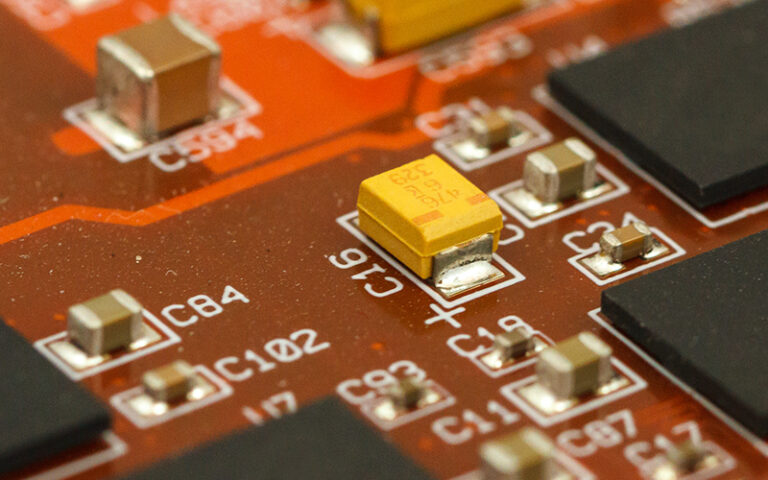
The global electronics industry is facing an escalating shortage of tantalum capacitors, a critical passive component, as surging demand from AI servers, automotive electronics,…
Read More
Recently, global semiconductor manufacturers have been constantly making moves in aspects such as technological cooperation, product manufacturing processes, and market layout, demonstrating the rapid…
Read More
Find out when a bare shock switch needs a pull resistor, when an MCU internal pull-up is enough, and why sensor modules and piezo…
Read More
See when an inductor behaves linearly, how DC bias and saturation reduce inductance, and which current and temperature curves to check.
Read More
Understand how oscillators generate timing signals, how they differ from crystals, and which frequency, output and stability specs matter when choosing one.
Read More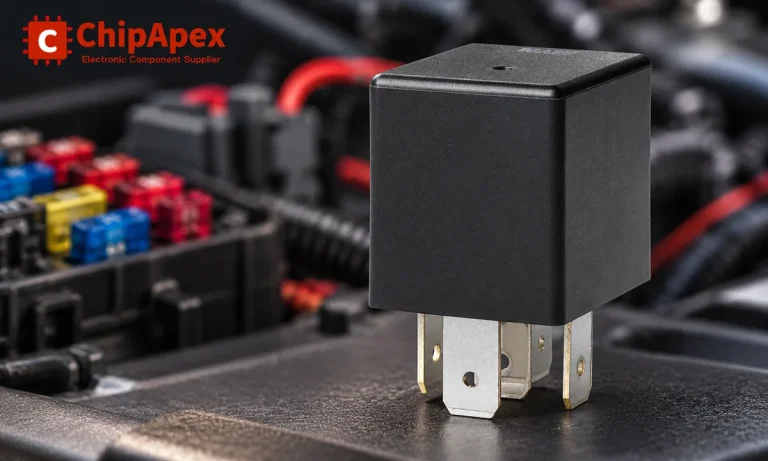
Learn the relay definition, coil and contact operation, NO and NC forms, load ratings and suppression choices. Compare mechanical, reed and solid-state types.
Read More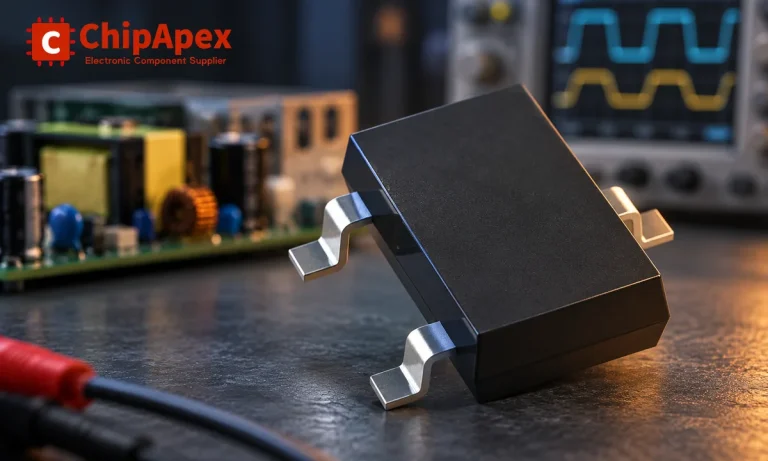
Learn how rectifiers convert AC to DC, compare half-wave and bridge circuits, and select voltage, current, recovery and thermal ratings for your design.
Read More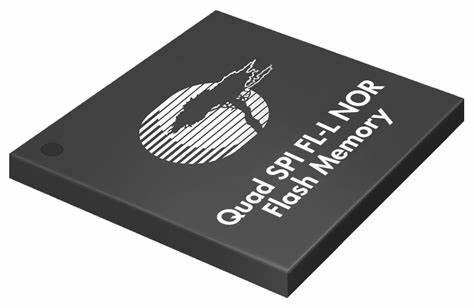
What Is NOR Flash? Why It Still Powers Critical Embedded Systems When your car’s engine control unit boots in milliseconds…When a medical device executes…
Read More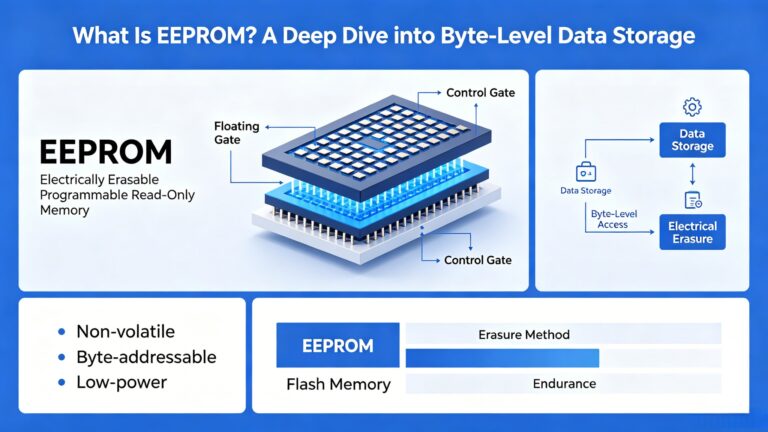
In the vast landscape of memory technology, EEPROM (Electrically Erasable Programmable Read-Only Memory) often plays the unsung hero. While NAND Flash grabs headlines for…
Read More
Choose tactile switches by operating force, travel, actuator height, footprint and lifetime. Check debounce, sealing and the assembled button mechanism.
Read More
In embedded design, the tug-of-war between cost and performance is constant. On one side, you have Microcontrollers (MCUs)—cheap, simple, and efficient. On the other,…
Read More
The activity of extra discounts on wholesale prices is in full swing…
Please fill in your contact information and we will send you the latest wholesale price list.




