ChipApex | Global Electronic Components Supplier

SEARCH
Search Product
Search Post
— IC芯片 | 连接器 | 传感器 | 被动器件 —
Search productSearch post
— IC芯片 | 连接器 | 传感器 | 被动器件 —
Consult the customer manager about the wholesale price.
consultation hotline:86-132-6715-2157
email:[email protected]
Contact the product manager for consultation. One-stop consultation is available.
Do you want a lower wholesale price? Please send us your inquiry and we will reply immediately.
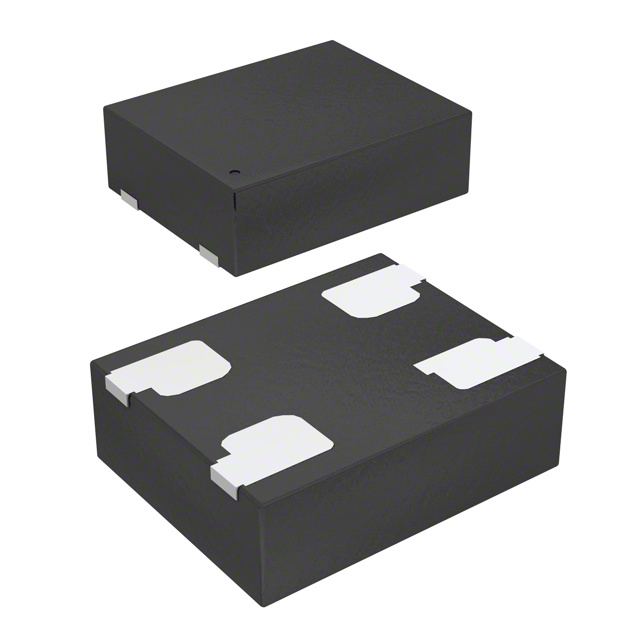
SIT8208AI-GF-28E-66.666660X is listed in the Oscillators range at ChipApex. The manufacturer field lists SiTime. Its product description is MEMS OSC XO 66.66666MHZ LVCMOS. Review the specifications below when checking this part for your BOM.
The SIT8208AI-GF-28E-66.666660X is a MEMS-based standard clock oscillator manufactured by SiTime, operating at a nominal frequency of 66.66666 MHz. It utilizes LVCMOS/LVTTL output logic and requires a 2.8V supply voltage with a maximum current consumption of 33mA. The device features ±10ppm frequency stability and supports enable/disable functionality. Packaged in a compact 4-SMD (2.5mm x 2.0mm) surface-mount footprint, it operates within a temperature range of -40°C to 85°C.
Verify the specific package dimensions against your PCB layout requirements, as this model uses a 2.5mm x 2.0mm footprint which differs from other variants in the series. Confirm that the 2.8V supply voltage aligns with your system power rails before finalizing the design. Ensure the ±10ppm stability meets your application's jitter and drift specifications.
Select this component when a small form factor is required alongside MEMS reliability. Compare against larger packages like the 7x5mm variant if space permits but higher thermal mass is needed. Consider the enable/disable feature if power management during idle states is critical for your specific embedded design constraints.
This part belongs to the SiT8208 series of MEMS oscillators, designed to replace traditional quartz crystals. It offers superior shock resistance and lower vibration sensitivity compared to ceramic or glass resonators. The series provides programmable options for various frequencies and packages, ensuring supply chain flexibility for modern electronics manufacturing.
Direct substitutes include SIT8208AI-2F-28E-66.666660X and SIT8208AI-GF-28E-66.666660T, though package dimensions vary. Verify pin compatibility and electrical parameters before swapping between different package sizes in existing designs.
Explore related parts through Crystals, Oscillators, Resonators, all product categories, ChipApex homepage.
 SIT8208AI-GF-28E-66.666660X

Understand how a comparator switches at a voltage threshold, why hysteresis prevents chatter, and which output and input specs matter.
Read More
Learn what an IMU measures, how accelerometers and gyroscopes work together, why orientation estimates drift, and what to compare.
Read More
SIT8208AI-GF-28E-66.666660X is listed in the Oscillators range at ChipApex. The manufacturer field lists SiTime. Its product description is MEMS OSC XO 66.66666MHZ LVCMOS. Review…
Read More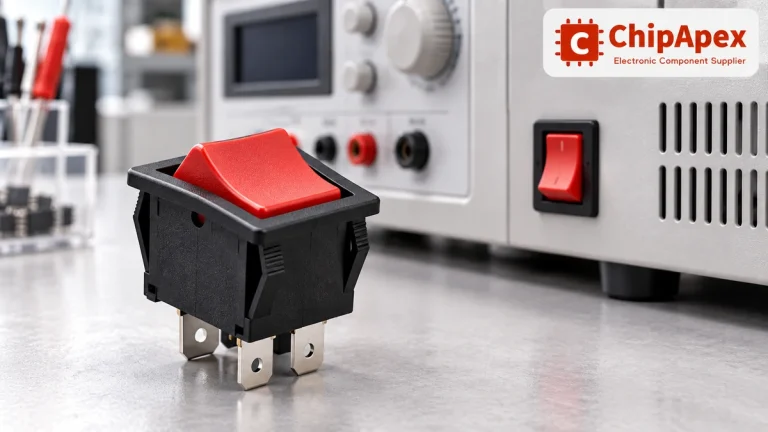
Choose a rocker switch by AC/DC ratings, contact arrangement, illumination, panel fit and sealing. Get practical checks for engineering and component sourcing.
Read More
SIT8208AI-GF-28E-66.666660X is listed in the Oscillators range at ChipApex. The manufacturer field lists SiTime. Its product description is MEMS OSC XO 66.66666MHZ LVCMOS. Review…
Read More
SIT8208AI-GF-28E-66.666660X is listed in the Oscillators range at ChipApex. The manufacturer field lists SiTime. Its product description is MEMS OSC XO 66.66666MHZ LVCMOS. Review…
Read More
SIT8208AI-GF-28E-66.666660X is listed in the Oscillators range at ChipApex. The manufacturer field lists SiTime. Its product description is MEMS OSC XO 66.66666MHZ LVCMOS. Review…
Read More
SIT8208AI-GF-28E-66.666660X is listed in the Oscillators range at ChipApex. The manufacturer field lists SiTime. Its product description is MEMS OSC XO 66.66666MHZ LVCMOS. Review…
Read More
Compare RC, crystal and MEMS oscillator circuits. Check ppm, jitter, load capacitance, startup margin and output compatibility before choosing a clock source.
Read More
SIT8208AI-GF-28E-66.666660X is listed in the Oscillators range at ChipApex. The manufacturer field lists SiTime. Its product description is MEMS OSC XO 66.66666MHZ LVCMOS. Review…
Read More
Learn how a diode conducts, how to identify anode and cathode, and when to choose rectifier, TVS, Zener or photodiode types for a circuit.
Read More
Understand how oscillators generate timing signals, how they differ from crystals, and which frequency, output and stability specs matter when choosing one.
Read More
The activity of extra discounts on wholesale prices is in full swing…
Please fill in your contact information and we will send you the latest wholesale price list.