 ChipApex | Global Electronic Components Supplier

SEARCH
Search Product
Search Post
— IC芯片 | 连接器 | 传感器 | 被动器件 —
Search productSearch post
— IC芯片 | 连接器 | 传感器 | 被动器件 —
Consult the customer manager about the wholesale price.
consultation hotline:86-132-6715-2157
email:[email protected]
Contact the product manager for consultation. One-stop consultation is available.
Do you want a lower wholesale price? Please send us your inquiry and we will reply immediately.
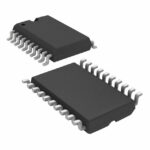
SN74ALS639ADWR is listed in the Buffers, Drivers, Receivers, Transceivers range at ChipApex. The manufacturer field lists Texas Instruments. Its product description is IC TXRX NON-INVERT 5.5V 20SOIC. Review the specifications below when checking this part for your BOM.
The SN74ALS639ADWR is an octal transparent latch manufactured by Texas Instruments, belonging to the ALS logic family. It features eight D-type latches with inverting outputs and includes a dedicated strobe input for data capture. The device operates within a supply voltage range of 4.5 V to 5.5 V and supports a low-level output current of 24 mA. It is housed in a 20-pin SOIC package and functions reliably across an industrial temperature range from -40°C to +85°C.
Verify the specific suffix 'DWR' confirms the SOIC-20 package and tape-and-reel delivery format. Confirm the ALS logic family designation matches system requirements for speed and power consumption. Ensure the operating temperature range aligns with the intended environmental conditions. Cross-reference the manufacturer part number against official datasheets to validate pinout compatibility.
Select this component when an octal latch with inverting outputs is required for bus interfacing or data storage. The ALS family offers a balance between propagation delay and power dissipation compared to standard TTL. Consider the 24 mA sink capability for driving moderate loads directly without additional buffering stages.
This part belongs to the Texas Instruments SN74ALS series, which utilizes advanced small-signal bipolar technology. The series is designed to replace older LS logic devices while offering improved speed and lower power consumption. The octal latch configuration allows for efficient management of multiple data lines in complex digital architectures.
Compatible substitutes include the SN74ALS639APW (TSSOP-20 package) or SN74ALS639N (PDIP-20 package). Verify that alternative packages maintain identical electrical characteristics and pin configurations for direct replacement.
Explore related parts through Logic, Integrated Circuits (ICs), all product categories, ChipApex homepage.
 SN74ALS639ADWR
SN74ALS639ADWR is listed in the Buffers, Drivers, Receivers, Transceivers range at ChipApex. The manufacturer field lists Texas Instruments. Its product description is IC TXRX…
Read More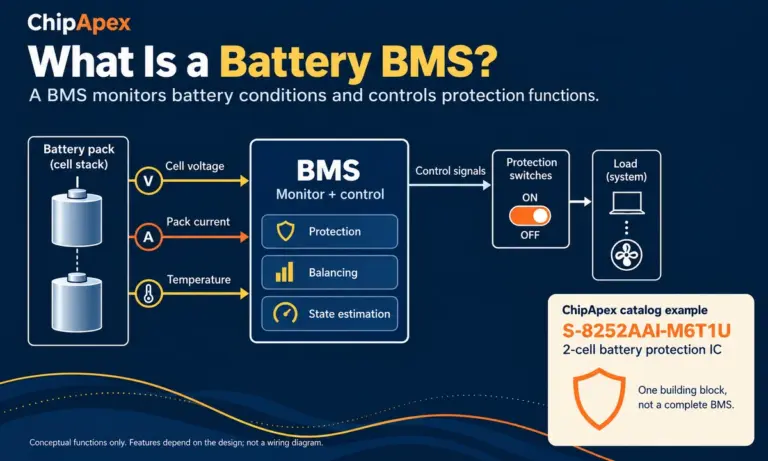
Learn what a battery BMS does, how protection differs from charging, and which pack specifications to check when sourcing BMS components through ChipApex.
Read More
SN74ALS639ADWR is listed in the Buffers, Drivers, Receivers, Transceivers range at ChipApex. The manufacturer field lists Texas Instruments. Its product description is IC TXRX…
Read More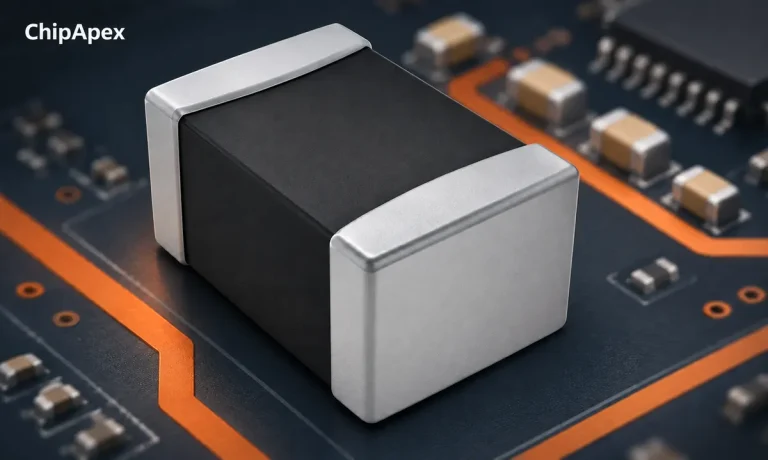
Learn how to use ferrite beads for noise filtering. Check impedance, DC bias, placement, resonance and load-step behavior before selecting a part.
Read More
SN74ALS639ADWR is listed in the Buffers, Drivers, Receivers, Transceivers range at ChipApex. The manufacturer field lists Texas Instruments. Its product description is IC TXRX…
Read More
SN74ALS639ADWR is listed in the Buffers, Drivers, Receivers, Transceivers range at ChipApex. The manufacturer field lists Texas Instruments. Its product description is IC TXRX…
Read More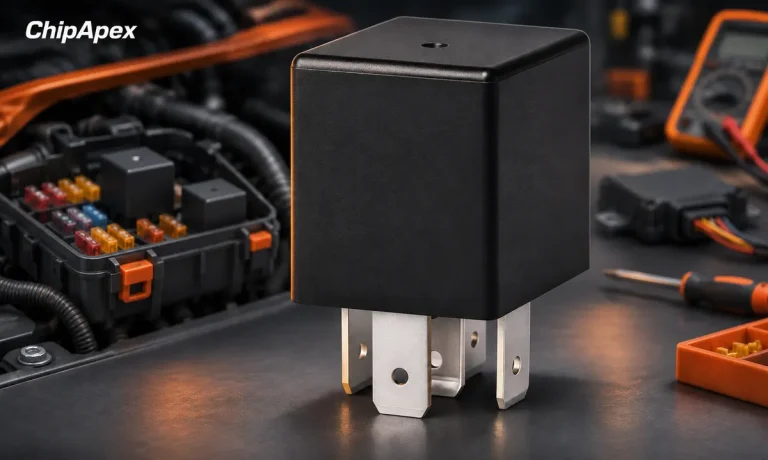
Understand automotive relay terminals, coil suppression and load ratings. Check inrush, socket compatibility and temperature before selecting a replacement.
Read More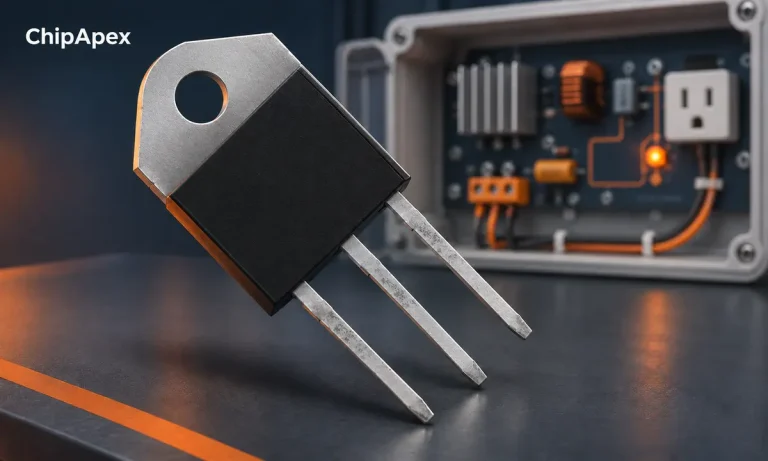
Learn how a TRIAC switches AC loads. Understand triggering, latching, holding current, phase control and thermal limits before choosing a component.
Read More
SN74ALS639ADWR is listed in the Buffers, Drivers, Receivers, Transceivers range at ChipApex. The manufacturer field lists Texas Instruments. Its product description is IC TXRX…
Read More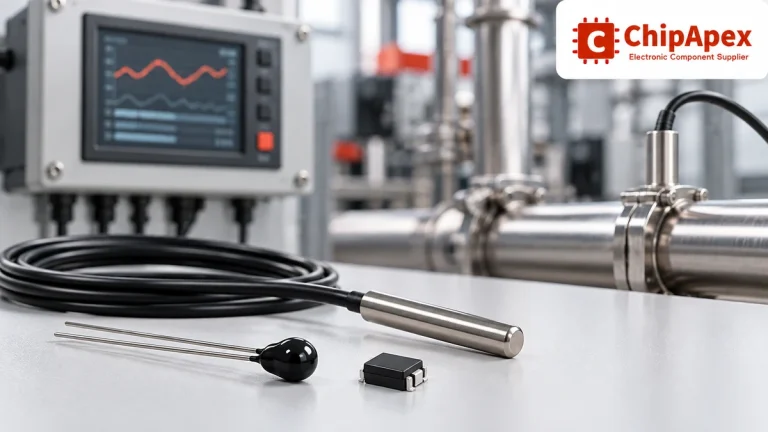
Compare thermistors, RTDs, thermocouples and temperature ICs. Learn how range, accuracy, response, interfaces and mounting affect component selection.
Read More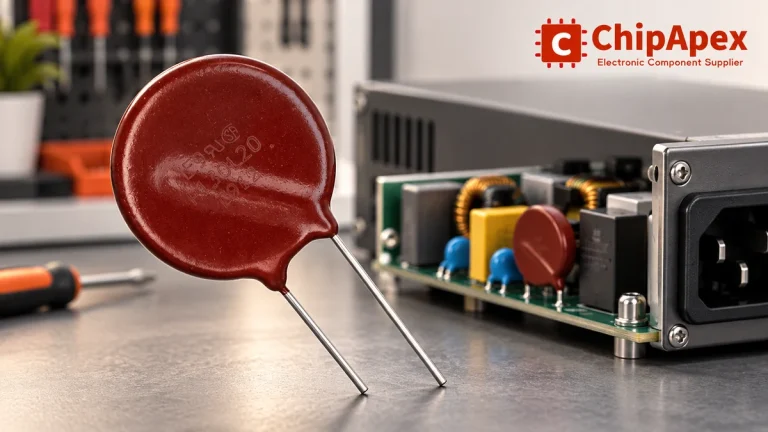
Select MOV varistors by continuous voltage, clamping behavior, surge waveform and repetition. Check thermal disconnection, fuse coordination and replacements.
Read More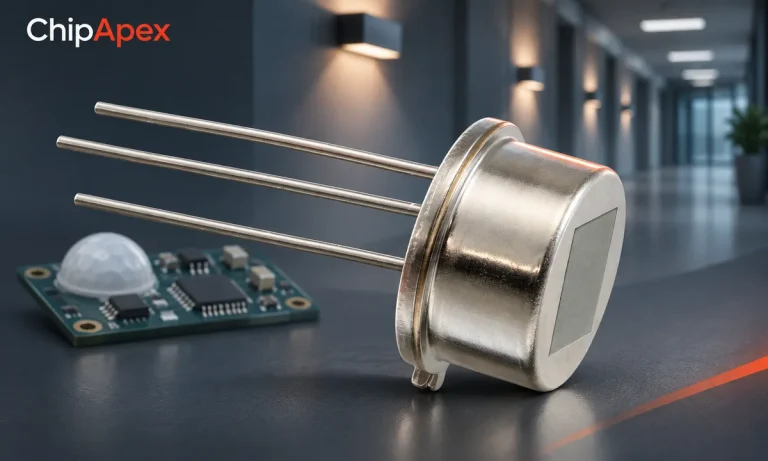
Understand how motion sensors work. Compare PIR, radar and ultrasonic sensing, then check presence detection, false triggers, optics and signal conditioning.
Read More
The activity of extra discounts on wholesale prices is in full swing…
Please fill in your contact information and we will send you the latest wholesale price list.




