 ChipApex | Global Electronic Components Supplier

SEARCH
Search Product
Search Post
— IC芯片 | 连接器 | 传感器 | 被动器件 —
Search productSearch post
— IC芯片 | 连接器 | 传感器 | 被动器件 —
Consult the customer manager about the wholesale price.
consultation hotline:86-132-6715-2157
email:[email protected]
Contact the product manager for consultation. One-stop consultation is available.
Do you want a lower wholesale price? Please send us your inquiry and we will reply immediately.
SN74AUP3G17DQER is listed in the Buffers, Drivers, Receivers, Transceivers range at ChipApex. The manufacturer field lists Texas Instruments. Its product description is IC BUF NON-INVERT 3.6V 8X2SON. Review the specifications below when checking this part for your BOM.
The SN74AUP3G17DQER is a low-power triple Schmitt-trigger buffer manufactured by Texas Instruments. It operates within a supply voltage range of 0.8 V to 3.6 V, featuring I/O tolerance up to 3.6 V for mixed-mode system applications. The device provides three non-inverting channels with Schmitt-trigger inputs to ensure clean signal transitions. It exhibits low static power consumption, with maximum ICC of 0.9 μA. The component is housed in an 8-pin X2SON package and supports surface-mount installation.
Verify the complete part number including the DQER suffix to confirm the specific tape-and-reel packaging and temperature grade. Ensure the design accommodates the 0.8 V minimum supply voltage and 3.6 V maximum rating. Confirm that the X2SON-8 footprint matches the PCB layout requirements. Cross-reference the datasheet revision date to ensure compliance with current electrical specifications.
Select this component when three buffered channels with Schmitt-trigger hysteresis are required in a minimal footprint. It is appropriate for designs prioritizing ultra-low standby power over high drive strength. Compare against standard AUP buffers if hysteresis is not needed. Verify that the 3.6 V I/O tolerance meets the highest voltage level of connected peripherals.
This device belongs to the SN74AUP family of advanced ultra-low-power CMOS logic devices. It complements other members like the SN74AUP2G17 (dual channel) and SN74AUP3G34 (non-Schmitt triple buffer). The X2SON package offers a compact solution compared to traditional SOIC or TSSOP options, facilitating dense board layouts for portable electronics.
Yes, it is a triple Schmitt-trigger buffer, meaning all three input channels feature hysteresis to filter noise.
The maximum supply voltage (VCC) is 3.6 V.
Explore related parts through Logic, Integrated Circuits (ICs), all product categories, ChipApex homepage.
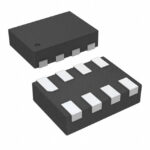 SN74AUP3G17DQER
Choose LED drivers by current, string voltage, dimming and thermal limits. Understand constant-current operation and the checks needed for your load.
Read More
SN74AUP3G17DQER is listed in the Buffers, Drivers, Receivers, Transceivers range at ChipApex. The manufacturer field lists Texas Instruments. Its product description is IC BUF…
Read More
Learn how an analog front end conditions sensor signals. Compare gain, noise, filtering, ADC settling and integration options before selecting components.
Read More
Learn what an integrated circuit is, how ICs work, the main types and the specs to check before choosing a part for your design…
Read More
SN74AUP3G17DQER is listed in the Buffers, Drivers, Receivers, Transceivers range at ChipApex. The manufacturer field lists Texas Instruments. Its product description is IC BUF…
Read More
SN74AUP3G17DQER is listed in the Buffers, Drivers, Receivers, Transceivers range at ChipApex. The manufacturer field lists Texas Instruments. Its product description is IC BUF…
Read More
Find out when a bare shock switch needs a pull resistor, when an MCU internal pull-up is enough, and why sensor modules and piezo…
Read More
SN74AUP3G17DQER is listed in the Buffers, Drivers, Receivers, Transceivers range at ChipApex. The manufacturer field lists Texas Instruments. Its product description is IC BUF…
Read More
SN74AUP3G17DQER is listed in the Buffers, Drivers, Receivers, Transceivers range at ChipApex. The manufacturer field lists Texas Instruments. Its product description is IC BUF…
Read More
SN74AUP3G17DQER is listed in the Buffers, Drivers, Receivers, Transceivers range at ChipApex. The manufacturer field lists Texas Instruments. Its product description is IC BUF…
Read More
Compare gas sensor technologies, cross-sensitivity and calibration needs. Define the gas, range and environment before choosing a sensing component.
Read More
Understand how oscillators generate timing signals, how they differ from crystals, and which frequency, output and stability specs matter when choosing one.
Read More
The activity of extra discounts on wholesale prices is in full swing…
Please fill in your contact information and we will send you the latest wholesale price list.





