 ChipApex | Global Electronic Components Supplier

SEARCH
Search Product
Search Post
— IC芯片 | 连接器 | 传感器 | 被动器件 —
Search productSearch post
— IC芯片 | 连接器 | 传感器 | 被动器件 —
Consult the customer manager about the wholesale price.
consultation hotline:86-132-6715-2157
email:[email protected]
Contact the product manager for consultation. One-stop consultation is available.
Do you want a lower wholesale price? Please send us your inquiry and we will reply immediately.
SN74GTLP1395DWG4 is listed in the Translators, Level Shifters range at ChipApex. The manufacturer field lists Texas Instruments. Its product description is IC TRANSLTR BIDIRECTIONAL 20SOIC. Review the specifications below when checking this part for your BOM.
The SN74GTLP1395DWG4 is a dual 1-bit LVTTL-to-GTLP bus transceiver in a 20-pin SOIC package. It operates at VCC and BIAS VCC of 3.15V to 3.45V, with GTLP termination voltage (VTT) of 1.35V to 1.65V and reference voltage (VREF) of 0.87V to 1.1V. Propagation delay from A to B ranges from 1.6ns to 6.3ns depending on edge rate. The device supports adjustable edge-rate control, split LVTTL ports for feedback, and selectable polarity.
Verify the G4 suffix indicates RoHS compliance and halogen-free manufacturing status as per Texas Instruments standards. Confirm the specific DW package variant matches the required PCB footprint dimensions and thermal characteristics. Ensure the ordering part number aligns with the tube packaging format specified for this package type.
Select this component when designing interfaces requiring separate control and data paths for diagnostic feedback. The adjustable edge-rate control allows optimization of signal integrity against varying backplane loads. Verify compatibility with the target system's termination voltage requirements and ensure sufficient drive current capability for the connected load impedance.
This device belongs to the SN74GTLP family of Gunning-transceiver-logic-plus devices designed for high-speed telecommunications and datacom backplanes. It serves as a bridge between standard LVTTL logic and the reduced-swing GTLP signaling standard, facilitating faster data transfer rates while maintaining signal integrity in distributed load environments.
SN74GTLP1395DW is the non-RoHS equivalent. SN74GTLP1395DWR is the tape-and-reel version of the same functional device. SN74GTLP1395PWR offers identical functionality in a TSSOP-20 package.
Explore related parts through Logic, Integrated Circuits (ICs), all product categories, ChipApex homepage.
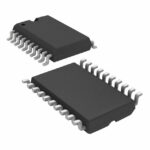 SN74GTLP1395DWG4
Choose a reed relay for signal switching. Understand hot and cold switching, leakage, contact resistance, isolation and measurement settling requirements.
Read More
Understand load cell sensor output, bridge wiring and calibration. Learn how mV/V sensitivity, mechanics and ADC noise affect measurement accuracy.
Read More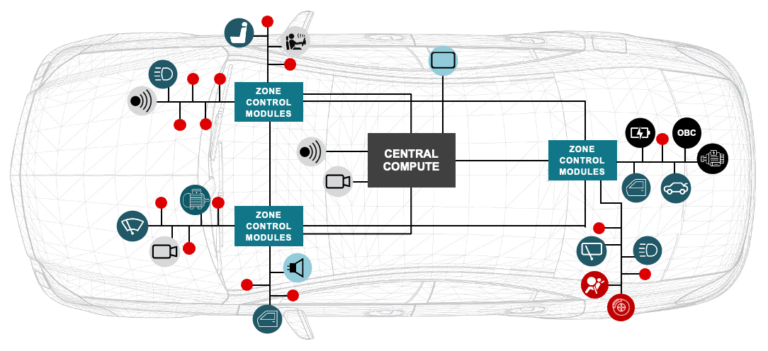
SN74GTLP1395DWG4 is listed in the Translators, Level Shifters range at ChipApex. The manufacturer field lists Texas Instruments. Its product description is IC TRANSLTR BIDIRECTIONAL…
Read More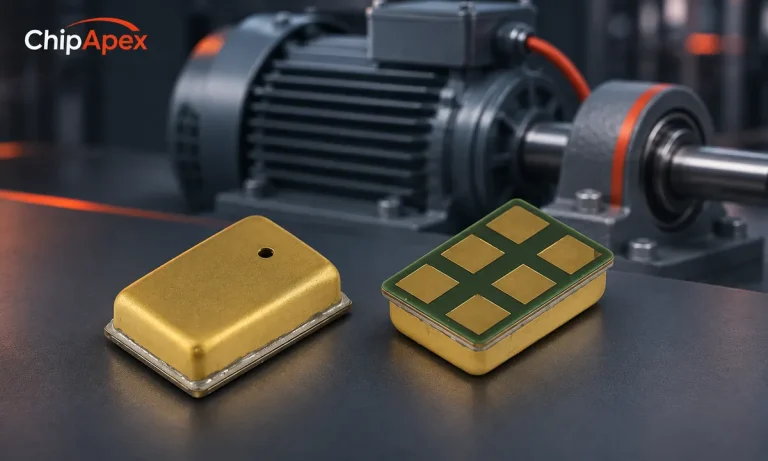
Choose a vibration sensor for machine monitoring. Compare sensing methods, bandwidth, noise and mounting, then define the signal-chain requirements.
Read More
SN74GTLP1395DWG4 is listed in the Translators, Level Shifters range at ChipApex. The manufacturer field lists Texas Instruments. Its product description is IC TRANSLTR BIDIRECTIONAL…
Read More
Learn how to use ferrite beads for noise filtering. Check impedance, DC bias, placement, resonance and load-step behavior before selecting a part.
Read More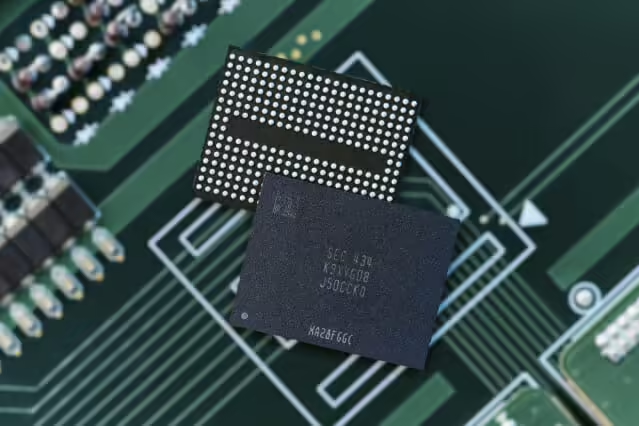
SN74GTLP1395DWG4 is listed in the Translators, Level Shifters range at ChipApex. The manufacturer field lists Texas Instruments. Its product description is IC TRANSLTR BIDIRECTIONAL…
Read More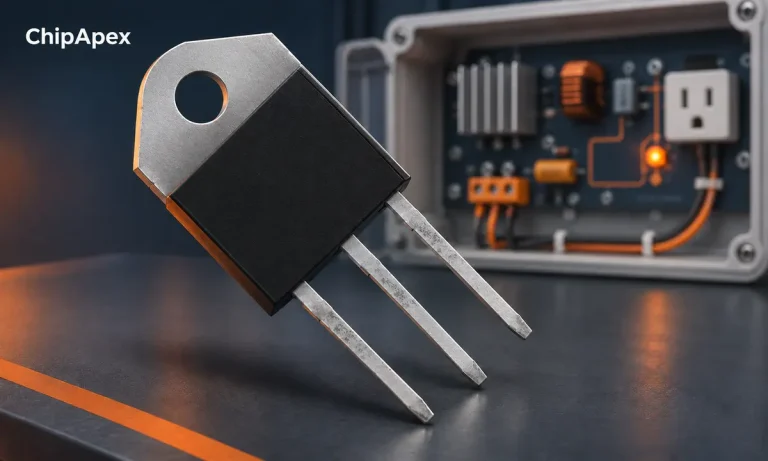
Learn how a TRIAC switches AC loads. Understand triggering, latching, holding current, phase control and thermal limits before choosing a component.
Read More
Compare Pt100 and Pt1000 RTDs, two-, three- and four-wire connections, excitation and self-heating. Build an error budget from element to reported temperature.
Read More
SN74GTLP1395DWG4 is listed in the Translators, Level Shifters range at ChipApex. The manufacturer field lists Texas Instruments. Its product description is IC TRANSLTR BIDIRECTIONAL…
Read More
SN74GTLP1395DWG4 is listed in the Translators, Level Shifters range at ChipApex. The manufacturer field lists Texas Instruments. Its product description is IC TRANSLTR BIDIRECTIONAL…
Read More
See when an inductor behaves linearly, how DC bias and saturation reduce inductance, and which current and temperature curves to check.
Read More
The activity of extra discounts on wholesale prices is in full swing…
Please fill in your contact information and we will send you the latest wholesale price list.





