 ChipApex | Global Electronic Components Supplier

SEARCH
Search Product
Search Post
— IC芯片 | 连接器 | 传感器 | 被动器件 —
Search productSearch post
— IC芯片 | 连接器 | 传感器 | 被动器件 —
Consult the customer manager about the wholesale price.
consultation hotline:86-132-6715-2157
email:[email protected]
Contact the product manager for consultation. One-stop consultation is available.
Do you want a lower wholesale price? Please send us your inquiry and we will reply immediately.
SN74HCT540DWR is listed in the Buffers, Drivers, Receivers, Transceivers range at ChipApex. The manufacturer field lists Texas Instruments. Its product description is IC BUFFER INVERT 5.5V 20SOIC. Review the specifications below when checking this part for your BOM.
The SN74HCT540DWR is an octal buffer and line driver with 3-state outputs manufactured by Texas Instruments. It operates within a supply voltage range of 4.5 V to 5.5 V and features low power consumption with a maximum ICC of 80 µA. The device provides ±6 mA output drive at 5 V and typical propagation delay (tpd) of 12 ns. Inputs are TTL-voltage compatible, and the high-current 3-state outputs can interface directly with system buses or drive up to 15 LSTTL loads. It utilizes a data flow-through pinout arrangement in a 20-pin SOIC package.
Verify the specific ordering suffix 'DWR' corresponds to the tape-and-reel packaging format rather than tube packaging. Confirm that the RoHS compliance status aligns with current environmental regulations for your region. Ensure the operating temperature range of -40°C to 85°C meets your application requirements. Check for any recent product change notices regarding material composition or manufacturing location changes.
Select this component when an octal buffer with inverted outputs and 3-state capability is required. The HCT series ensures compatibility with TTL logic levels while maintaining CMOS low-power characteristics. Consider the 20-pin SOIC package dimensions for PCB layout constraints. Verify that the input transition times do not exceed 500 ns to maintain proper device operation.
This part belongs to the SN74HCT540 family of octal buffers and line drivers. It shares functional similarities with the SN54HCT540 but differs in operating temperature range and availability. The device is distinct from non-inverting counterparts like the SN74HCT240 due to its inverted output configuration. It is commonly used in digital systems requiring bus isolation and signal buffering.
SN74HCT540DW is available in tube packaging instead of tape-and-reel. SN74HCT540N offers a PDIP-20 through-hole package option. CD74HCT540M96 is a similar octal buffer with 3-state outputs from Texas Instruments.
Explore related parts through Logic, Integrated Circuits (ICs), all product categories, ChipApex homepage.
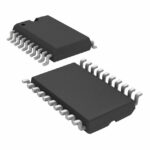 SN74HCT540DWR
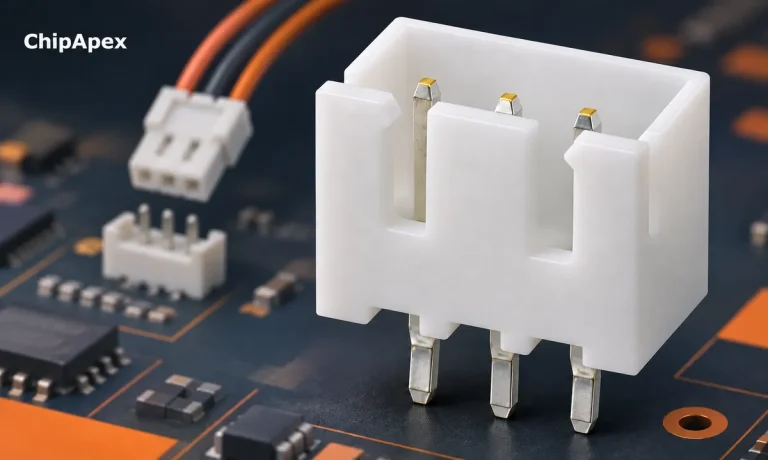
Choose a pin header by pitch, mating geometry, current rating and mounting. Learn why matching pin count and spacing does not guarantee compatibility.
Read More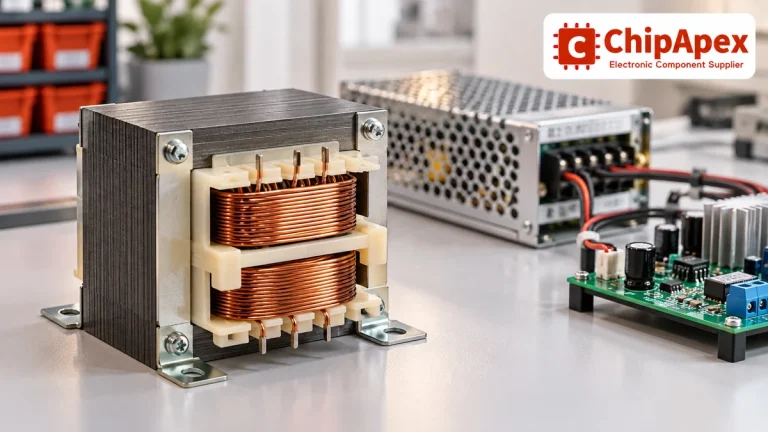
Select power transformers by input frequency, secondary VA, rectifier load, isolation, regulation and inrush. Build a clearer specification for your next RFQ.
Read More
SN74HCT540DWR is listed in the Buffers, Drivers, Receivers, Transceivers range at ChipApex. The manufacturer field lists Texas Instruments. Its product description is IC BUFFER…
Read More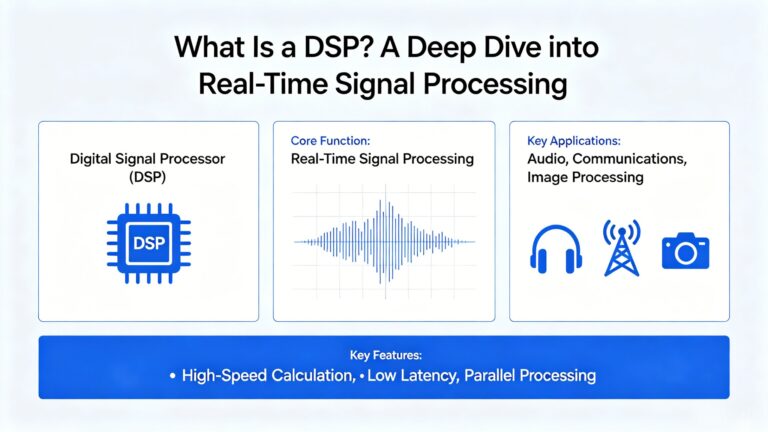
SN74HCT540DWR is listed in the Buffers, Drivers, Receivers, Transceivers range at ChipApex. The manufacturer field lists Texas Instruments. Its product description is IC BUFFER…
Read More
SN74HCT540DWR is listed in the Buffers, Drivers, Receivers, Transceivers range at ChipApex. The manufacturer field lists Texas Instruments. Its product description is IC BUFFER…
Read More
SN74HCT540DWR is listed in the Buffers, Drivers, Receivers, Transceivers range at ChipApex. The manufacturer field lists Texas Instruments. Its product description is IC BUFFER…
Read More
SN74HCT540DWR is listed in the Buffers, Drivers, Receivers, Transceivers range at ChipApex. The manufacturer field lists Texas Instruments. Its product description is IC BUFFER…
Read More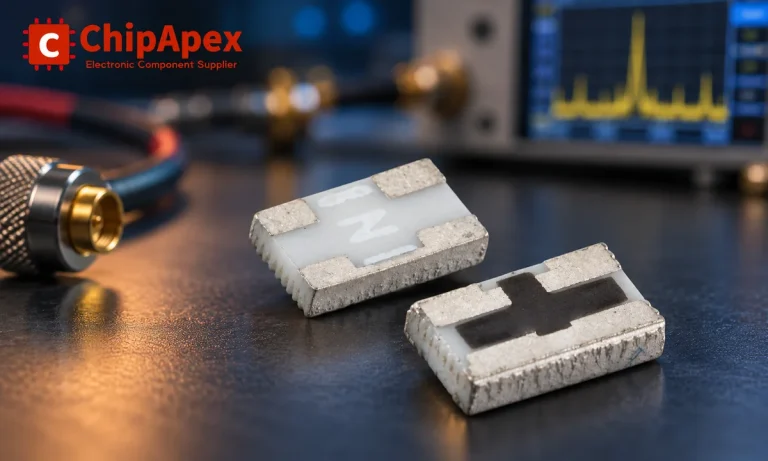
Understand RF attenuator dB values, fixed and programmable types, impedance, power limits and noise tradeoffs before choosing parts for an RF signal path.
Read More
Select a bridge rectifier by reverse voltage, capacitor charging current, startup surge and cooling. Work through a stated DC voltage and ripple example.
Read More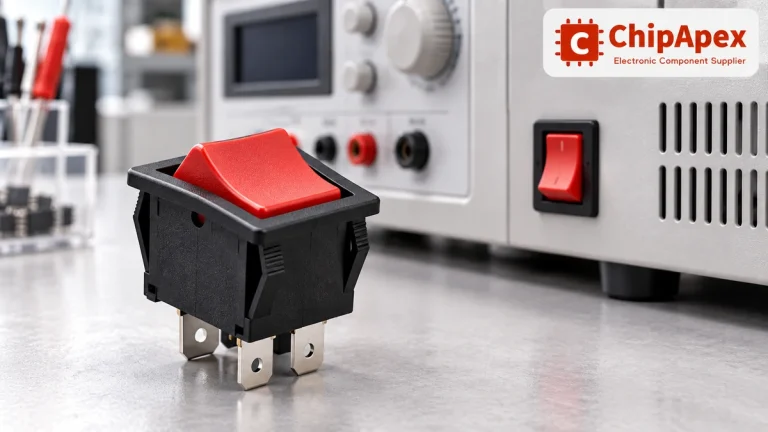
Choose a rocker switch by AC/DC ratings, contact arrangement, illumination, panel fit and sealing. Get practical checks for engineering and component sourcing.
Read More
Select MOV varistors by continuous voltage, clamping behavior, surge waveform and repetition. Check thermal disconnection, fuse coordination and replacements.
Read More
Compare RC, crystal and MEMS oscillator circuits. Check ppm, jitter, load capacitance, startup margin and output compatibility before choosing a clock source.
Read More
The activity of extra discounts on wholesale prices is in full swing…
Please fill in your contact information and we will send you the latest wholesale price list.





