 ChipApex | Global Electronic Components Supplier

SEARCH
Search Product
Search Post
— IC芯片 | 连接器 | 传感器 | 被动器件 —
Search productSearch post
— IC芯片 | 连接器 | 传感器 | 被动器件 —
Consult the customer manager about the wholesale price.
consultation hotline:86-132-6715-2157
email:[email protected]
Contact the product manager for consultation. One-stop consultation is available.
Do you want a lower wholesale price? Please send us your inquiry and we will reply immediately.
SN74LS540DWR is listed in the Buffers, Drivers, Receivers, Transceivers range at ChipApex. The manufacturer field lists Texas Instruments. Its product description is IC BUFFER INVERT 5.25V 20SOIC. Review the specifications below when checking this part for your BOM.
The SN74LS540DWR is an octal buffer and line driver manufactured by Texas Instruments, belonging to the SN74LS logic series. It features eight inverting inputs with three-state outputs housed in a 20-pin SOIC package. The device operates within a supply voltage range of 4.75 V to 5.25 V. Key electrical characteristics include a high-level output current of -15 mA and a low-level output current of 24 mA. Propagation delay is specified at 15 ns when operating at 5 V. The component supports surface-mount installation and functions reliably within a temperature range of 0°C to +70°C.
Verify the specific datasheet revision and manufacturing date code upon procurement. Confirm that the SOIC-20 package dimensions match the target PCB footprint requirements. Ensure the supply voltage remains strictly within the 4.75 V to 5.25 V limits to prevent device malfunction or damage. Check for any RoHS compliance documentation if required by the final assembly specifications.
Select this component when inverting octal buffering with three-state capability is required in a standard TTL-compatible environment. The LS series offers a balance of speed and power consumption suitable for general-purpose digital systems. Consider the 15 ns propagation delay against system timing constraints. Verify that the 0°C to +70°C operating temperature range meets the environmental conditions of the intended application.
This part belongs to the widely used SN74LS540 family of octal buffers. It serves as a standard interface component for connecting microprocessors to memory or peripheral devices. The device is designed to drive heavy loads and maintain signal integrity across bus lines. Its three-state feature allows multiple devices to share a common data path without interference.
Explore related parts through Logic, Integrated Circuits (ICs), all product categories, ChipApex homepage.
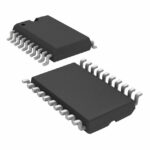 SN74LS540DWR
SN74LS540DWR is listed in the Buffers, Drivers, Receivers, Transceivers range at ChipApex. The manufacturer field lists Texas Instruments. Its product description is IC BUFFER…
Read More
SN74LS540DWR is listed in the Buffers, Drivers, Receivers, Transceivers range at ChipApex. The manufacturer field lists Texas Instruments. Its product description is IC BUFFER…
Read More
See when an inductor behaves linearly, how DC bias and saturation reduce inductance, and which current and temperature curves to check.
Read More
SN74LS540DWR is listed in the Buffers, Drivers, Receivers, Transceivers range at ChipApex. The manufacturer field lists Texas Instruments. Its product description is IC BUFFER…
Read More
SN74LS540DWR is listed in the Buffers, Drivers, Receivers, Transceivers range at ChipApex. The manufacturer field lists Texas Instruments. Its product description is IC BUFFER…
Read More
SN74LS540DWR is listed in the Buffers, Drivers, Receivers, Transceivers range at ChipApex. The manufacturer field lists Texas Instruments. Its product description is IC BUFFER…
Read More
SN74LS540DWR is listed in the Buffers, Drivers, Receivers, Transceivers range at ChipApex. The manufacturer field lists Texas Instruments. Its product description is IC BUFFER…
Read More
Understand RF attenuator dB values, fixed and programmable types, impedance, power limits and noise tradeoffs before choosing parts for an RF signal path.
Read More
SN74LS540DWR is listed in the Buffers, Drivers, Receivers, Transceivers range at ChipApex. The manufacturer field lists Texas Instruments. Its product description is IC BUFFER…
Read More
Compare gas sensor technologies, cross-sensitivity and calibration needs. Define the gas, range and environment before choosing a sensing component.
Read More
Learn how to use ferrite beads for noise filtering. Check impedance, DC bias, placement, resonance and load-step behavior before selecting a part.
Read More
Understand how oscillators generate timing signals, how they differ from crystals, and which frequency, output and stability specs matter when choosing one.
Read More
The activity of extra discounts on wholesale prices is in full swing…
Please fill in your contact information and we will send you the latest wholesale price list.





