 ChipApex | Global Electronic Components Supplier

SEARCH
Search Product
Search Post
— IC芯片 | 连接器 | 传感器 | 被动器件 —
Search productSearch post
— IC芯片 | 连接器 | 传感器 | 被动器件 —
Consult the customer manager about the wholesale price.
consultation hotline:86-132-6715-2157
email:[email protected]
Contact the product manager for consultation. One-stop consultation is available.
Do you want a lower wholesale price? Please send us your inquiry and we will reply immediately.
TPS79718DCKT is listed in the Voltage Regulators - Linear, Low Drop Out (LDO) Regulators range at ChipApex. The manufacturer field lists Texas Instruments. Its product description is IC REG LINEAR 1.8V 50MA SC-70-5. Review the specifications below when checking this part for your BOM.
The TPS79718DCKT is a single-output fixed low-dropout (LDO) voltage regulator from the Texas Instruments TPS797 series. It provides a fixed output voltage of 1.8 V with a maximum output current capability of 50 mA. The device operates within an input voltage range of 1.8 V to 5.5 V and maintains a typical dropout voltage of 110 mV at full load. Quiescent current is specified at 2 uA, with an input bias current of 1.2 uA. Line regulation is 0.15 %/V, and load regulation is 5 mV. The unit is housed in a SC-70-5 surface-mount package and supports an operating temperature range from -40 C to +85 C.
Verify the specific suffix DCKT corresponds to the Cut Tape packaging format rather than Reel. Confirm that the component meets RoHS3 compliance standards required by your manufacturing process. Ensure the SC-70-5 footprint matches your PCB layout constraints. Check for any recent Product Change Notifications regarding marking or assembly site updates.
Select this component when a stable 1.8 V rail is required with minimal static power draw. The 50 mA output current suits low-power logic families. Verify that the input voltage remains above the minimum threshold while accounting for dropout characteristics under load conditions. Consider thermal dissipation limits if the voltage differential between input and output is high.
This part belongs to the TPS797 family of micro-power LDO regulators designed for space-constrained applications. The SC-70-5 package offers a compact solution for dense circuit boards. The series emphasizes low noise and high power supply rejection ratio performance suitable for sensitive analog and RF sections.
TPS79718DCKRQ1 serves as a qualified automotive-grade alternative within the same family.
Explore related parts through Power Management (PMIC), Integrated Circuits (ICs), all product categories, ChipApex homepage.
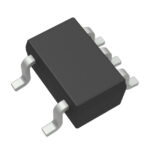 TPS79718DCKT
Understand voltage controlled oscillator tuning, phase noise and PLL operation. Check supply noise, output loading and requirements before selection.
Read More
Select MOV varistors by continuous voltage, clamping behavior, surge waveform and repetition. Check thermal disconnection, fuse coordination and replacements.
Read More
TPS79718DCKT is listed in the Voltage Regulators - Linear, Low Drop Out (LDO) Regulators range at ChipApex. The manufacturer field lists Texas Instruments. Its…
Read More
Learn how to use ferrite beads for noise filtering. Check impedance, DC bias, placement, resonance and load-step behavior before selecting a part.
Read MoreTPS79718DCKT is listed in the Voltage Regulators - Linear, Low Drop Out (LDO) Regulators range at ChipApex. The manufacturer field lists Texas Instruments. Its…
Read More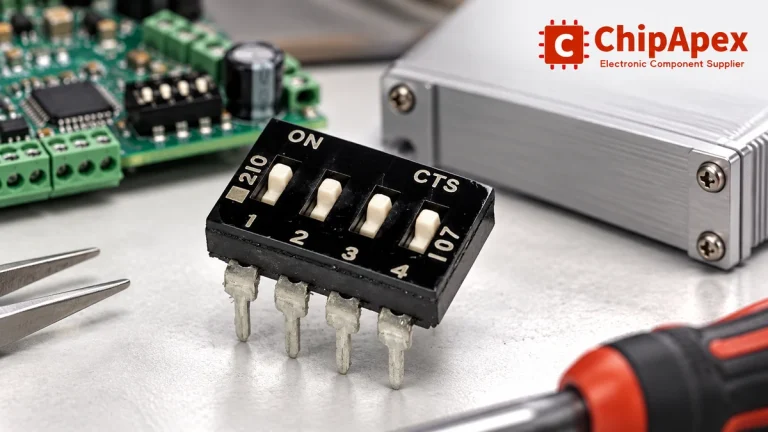
Choose a DIP switch by contact type, coded positions, footprint and signal ratings. Check logic polarity, assembly conditions and PCB configuration behavior.
Read More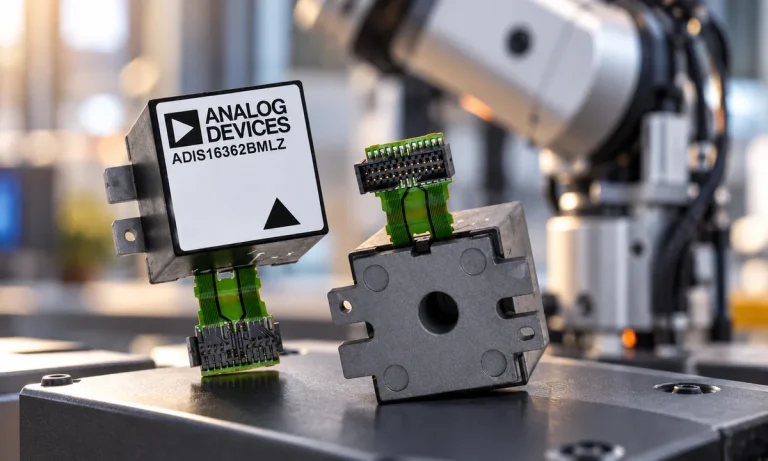
Learn what an IMU measures, how accelerometers and gyroscopes work together, why orientation estimates drift, and what to compare.
Read More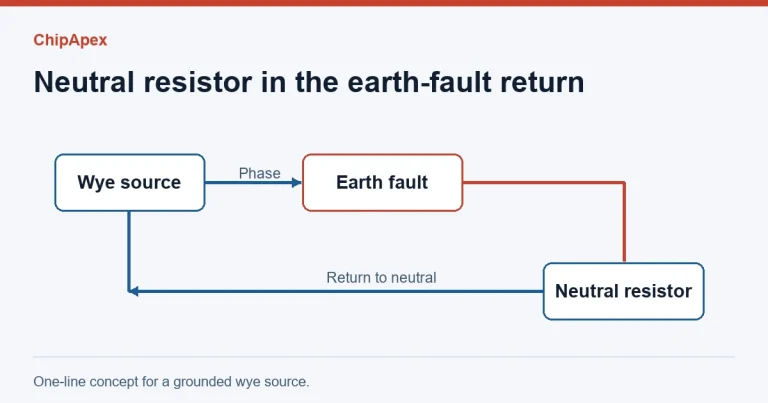
Learn how neutral earthing resistors limit fault current, estimate resistance from phase voltage, and specify voltage, current, duration and protection.
Read More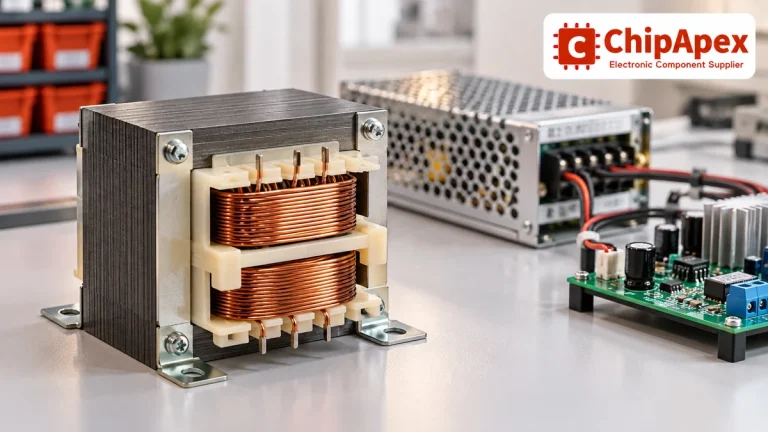
Select power transformers by input frequency, secondary VA, rectifier load, isolation, regulation and inrush. Build a clearer specification for your next RFQ.
Read More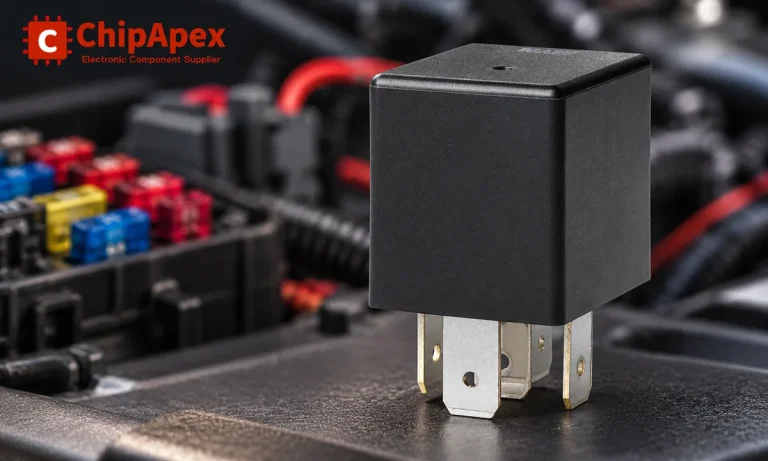
Learn the relay definition, coil and contact operation, NO and NC forms, load ratings and suppression choices. Compare mechanical, reed and solid-state types.
Read More
TPS79718DCKT is listed in the Voltage Regulators - Linear, Low Drop Out (LDO) Regulators range at ChipApex. The manufacturer field lists Texas Instruments. Its…
Read More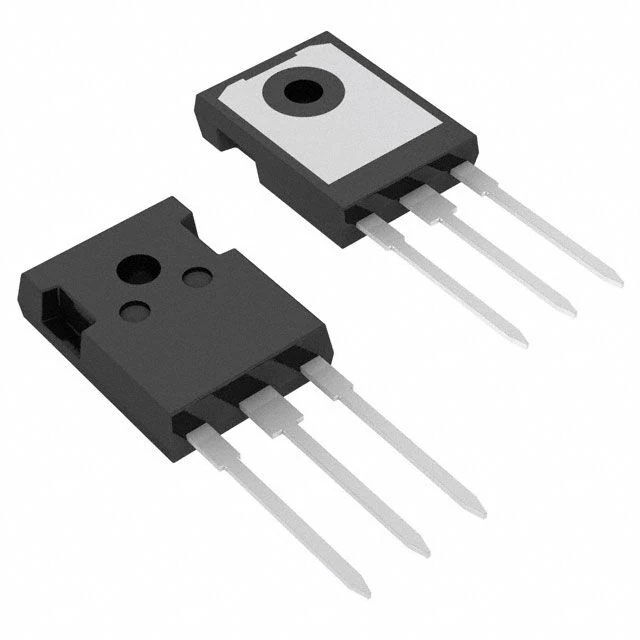
Learn how an IGBT works, compare MOSFET and IGBT losses, and check switching energy, gate drive, thermal limits and protection using a worked example.
Read More
The activity of extra discounts on wholesale prices is in full swing…
Please fill in your contact information and we will send you the latest wholesale price list.




