 ChipApex | Global Electronic Components Supplier

SEARCH
Search Product
Search Post
— IC芯片 | 连接器 | 传感器 | 被动器件 —
Search productSearch post
— IC芯片 | 连接器 | 传感器 | 被动器件 —
Consult the customer manager about the wholesale price.
consultation hotline:86-132-6715-2157
email:[email protected]
Contact the product manager for consultation. One-stop consultation is available.
Do you want a lower wholesale price? Please send us your inquiry and we will reply immediately.
The TXR54AC45-2412AIL is a circular MIL-spec strain relief adapter manufactured by TE Connectivity. It features a Tinel-Lock ring termination for side-entry cable attachment and operates at a 45-degree angle. The unit is constructed from aluminum alloy with cadmium plating compliant with AMS-QQ-P-416, Type II, Class 3 standards. Designed for high environmental resilience, it supports a temperature range of -65 to 175 °C and provides 500 hours of salt spray resistance. This adapter is compatible with connector shell sizes 24 and 25.
Verify the specific suffix 'AIL' against official TE Connectivity documentation to confirm exact plating and material specifications. Ensure compatibility with the target connector shell size and cable diameter range before procurement. Confirm RoHS status and end-of-life availability directly with the manufacturer or authorized distributors due to potential supply constraints on military-grade components.
Select this adapter when a 45-degree exit angle is required for MIL-DTL-38999 connectors. Ensure the cable outer diameter falls within the specified range for proper Tinel-Lock ring compression. Verify that the cadmium-plated aluminum housing meets the environmental protection requirements of the deployment site. Confirm that the side-entry design accommodates the routing constraints of the assembly.
This component belongs to the TXR series of circular MIL-spec strain reliefs and adapters. It serves as a critical interface between the connector body and the cable assembly, ensuring mechanical integrity and electromagnetic interference shielding continuity. The product line is designed to meet rigorous military standards for durability and performance in demanding operational conditions.
Cross-reference part numbers such as 421779-000 for equivalent functionality. Verify dimensional compatibility and electrical performance characteristics with the original design specifications before substitution.
The adapter is rated for an operating temperature range of -65 to 175 °C.
It is compatible with MIL-DTL-38999 Series I and Series II connector assemblies.
 TXR54AC45-2412AIL

See when an inductor behaves linearly, how DC bias and saturation reduce inductance, and which current and temperature curves to check.
Read More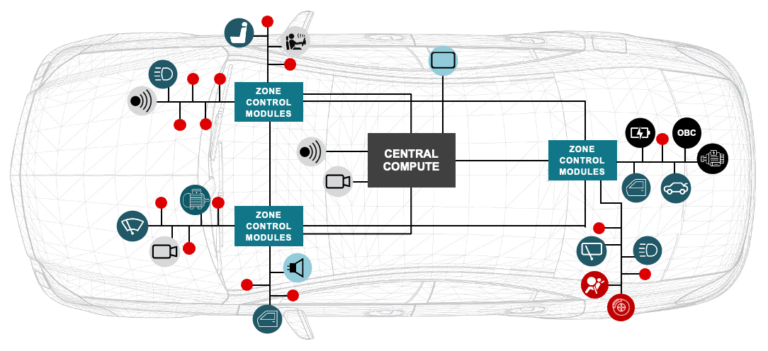
Las Vegas, January 6, 2026 — At the Consumer Electronics Show (CES) 2026, Texas Instruments (TI) (NASDAQ: TXN) announced a suite of next-generation semiconductor…
Read More
The Dutch government’s intervention in the control of Nexperia (Anshi Semiconductor) is triggering a chain reaction of turmoil in the global power semiconductor market.…
Read More
Choose an AC to DC converter by input range, output demand, isolation, efficiency and thermal derating. Compare architectures and check installation needs.
Read More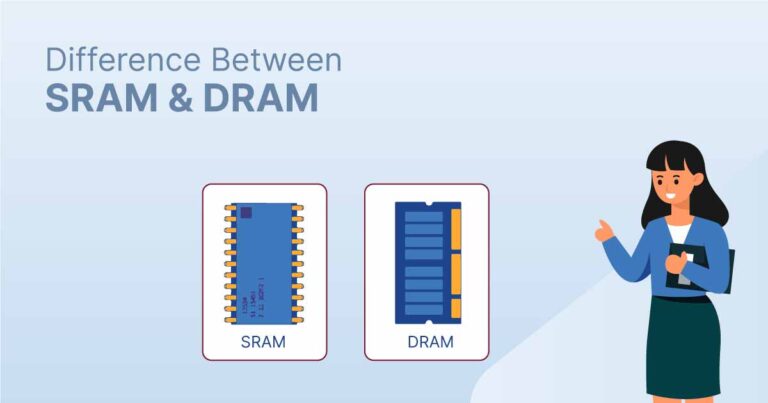
In an era dominated by AI accelerators with terabytes of HBM memory and consumer devices racing toward LPDDR5X bandwidth, it’s easy to wonder: why…
Read More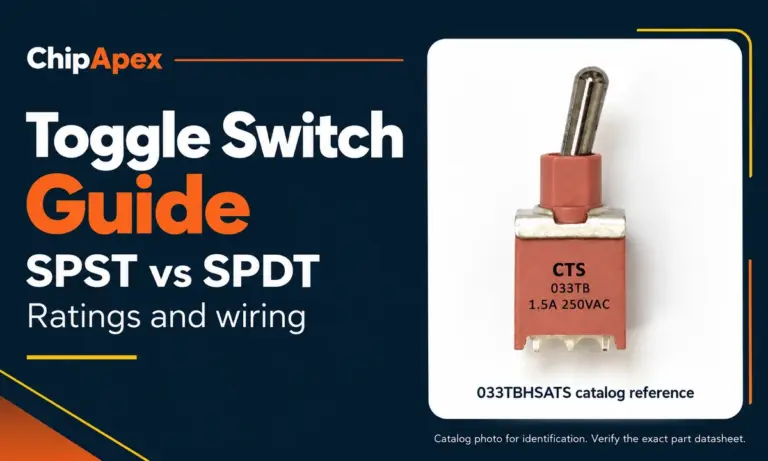
Compare SPST and SPDT toggle switches, understand AC/DC ratings, and follow wiring examples. Check contact action, mounting and parts in the ChipApex catalog.
Read More
Recently, a survey by the Electronic Components Industry Association (ECIA) revealed that the sales sentiment of global electronic components remained optimistic in the third…
Read More
Understand tactile switches, PCB and keyboard differences, four-pin wiring, debounce, force, travel and replacement checks for reliable control inputs.
Read More
Compare RC, crystal and MEMS oscillator circuits. Check ppm, jitter, load capacitance, startup margin and output compatibility before choosing a clock source.
Read MoreA digital-to-analog converter (DAC) turns a digital number into an analog voltage or current. It lets a controller set a physical output, such as…
Read More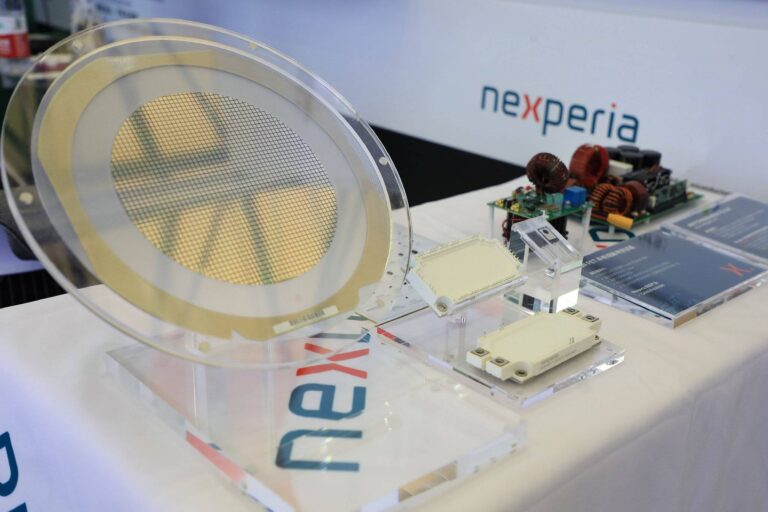
Dutch authorities announced on November 7 the lifting of control measures on Nexperia (formerly NXP Semiconductors’ Standard Products division), marking the end of a…
Read More
Choose a DIP switch by contact type, coded positions, footprint and signal ratings. Check logic polarity, assembly conditions and PCB configuration behavior.
Read More
The activity of extra discounts on wholesale prices is in full swing…
Please fill in your contact information and we will send you the latest wholesale price list.




