ChipApex | Global Electronic Components Supplier

SEARCH
Search Product
Search Post
— IC芯片 | 连接器 | 传感器 | 被动器件 —
Search productSearch post
— IC芯片 | 连接器 | 传感器 | 被动器件 —
Consult the customer manager about the wholesale price.
consultation hotline:86-132-6715-2157
email:[email protected]
Contact the product manager for consultation. One-stop consultation is available.
Do you want a lower wholesale price? Please send us your inquiry and we will reply immediately.
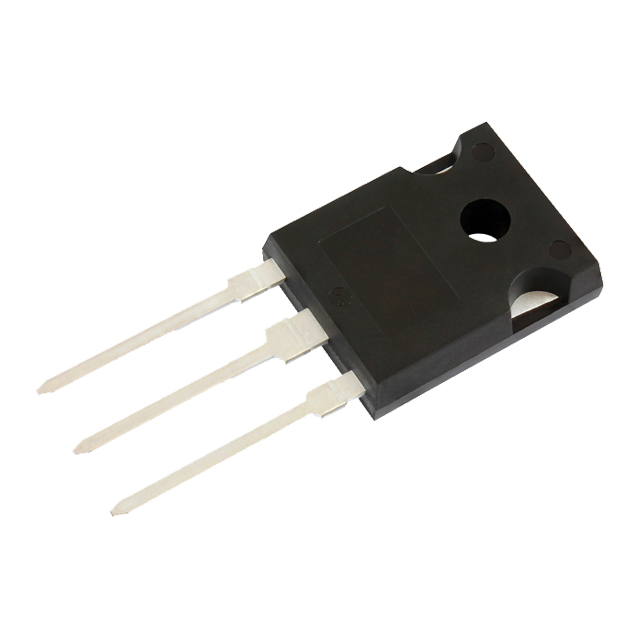
VS-C20CP07L-M3 is listed in the Single Diodes range at ChipApex. The manufacturer field lists Vishay General Semiconductor - Diodes Division. Its product description is DIODE SIL CARB 650V 10A TO220AC. Review the specifications below when checking this part for your BOM.
The VS-C20CP07L-M3 is a silicon carbide (SiC) Schottky diode manufactured by Vishay General Semiconductor. It features a single common cathode configuration housed in a TO-220AC through-hole package. The device supports a maximum repetitive reverse voltage of 650 V and an average forward rectified current of 10 A per diode. Key electrical parameters include a forward voltage of 1.5 V at 10 A, a reverse leakage current of 55 µA at 650 V, and zero reverse recovery time. It operates within a junction temperature range of -55°C to +175°C.
Verify the specific package type upon ordering, as datasheets may list variations such as TO-247 or TO-220AC for similar part numbers. Confirm RoHS compliance status and lead times directly with authorized distributors. Ensure the selected variant matches the required current and voltage ratings for the target circuit design.
Select this component for applications requiring low switching losses and high thermal efficiency. The SiC material allows for higher operating temperatures than silicon alternatives. Verify that the TO-220AC package provides adequate heat sinking for the intended 10 A continuous current load.
This component belongs to Vishay's VS-3C series of silicon carbide Schottky diodes. These devices are engineered for power conversion systems demanding high reliability and efficiency. The series leverages wide-bandgap semiconductor properties to minimize conduction and switching losses.
The device has a specified reverse recovery time of 0 ns due to its Schottky barrier structure.
The maximum operating junction temperature is +175°C.
Explore related parts through Rectifiers, Diodes, Discrete Semiconductor Products, all product categories.
 VS-C20CP07L-M3
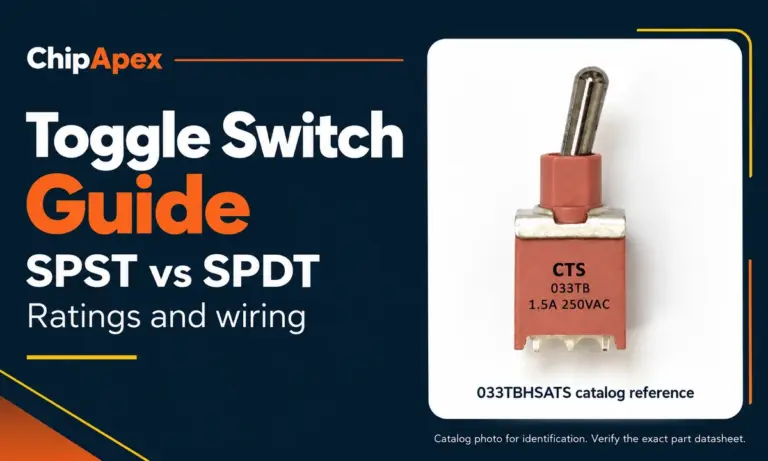
Compare SPST and SPDT toggle switches, understand AC/DC ratings, and follow wiring examples. Check contact action, mounting and parts in the ChipApex catalog.
Read More
VS-C20CP07L-M3 is listed in the Single Diodes range at ChipApex. The manufacturer field lists Vishay General Semiconductor - Diodes Division. Its product description is…
Read More
VS-C20CP07L-M3 is listed in the Single Diodes range at ChipApex. The manufacturer field lists Vishay General Semiconductor - Diodes Division. Its product description is…
Read More
Choose an AC to DC converter by input range, output demand, isolation, efficiency and thermal derating. Compare architectures and check installation needs.
Read More
VS-C20CP07L-M3 is listed in the Single Diodes range at ChipApex. The manufacturer field lists Vishay General Semiconductor - Diodes Division. Its product description is…
Read More
VS-C20CP07L-M3 is listed in the Single Diodes range at ChipApex. The manufacturer field lists Vishay General Semiconductor - Diodes Division. Its product description is…
Read More
VS-C20CP07L-M3 is listed in the Single Diodes range at ChipApex. The manufacturer field lists Vishay General Semiconductor - Diodes Division. Its product description is…
Read More
VS-C20CP07L-M3 is listed in the Single Diodes range at ChipApex. The manufacturer field lists Vishay General Semiconductor - Diodes Division. Its product description is…
Read More
VS-C20CP07L-M3 is listed in the Single Diodes range at ChipApex. The manufacturer field lists Vishay General Semiconductor - Diodes Division. Its product description is…
Read More
Learn why PTC resistance rises with temperature, how it differs from NTC, and which ratings matter for sensing and protection.
Read More
VS-C20CP07L-M3 is listed in the Single Diodes range at ChipApex. The manufacturer field lists Vishay General Semiconductor - Diodes Division. Its product description is…
Read More
VS-C20CP07L-M3 is listed in the Single Diodes range at ChipApex. The manufacturer field lists Vishay General Semiconductor - Diodes Division. Its product description is…
Read More
The activity of extra discounts on wholesale prices is in full swing…
Please fill in your contact information and we will send you the latest wholesale price list.