 ChipApex | Global Electronic Components Supplier

SEARCH
Search Product
Search Post
— IC芯片 | 连接器 | 传感器 | 被动器件 —
Search productSearch post
— IC芯片 | 连接器 | 传感器 | 被动器件 —
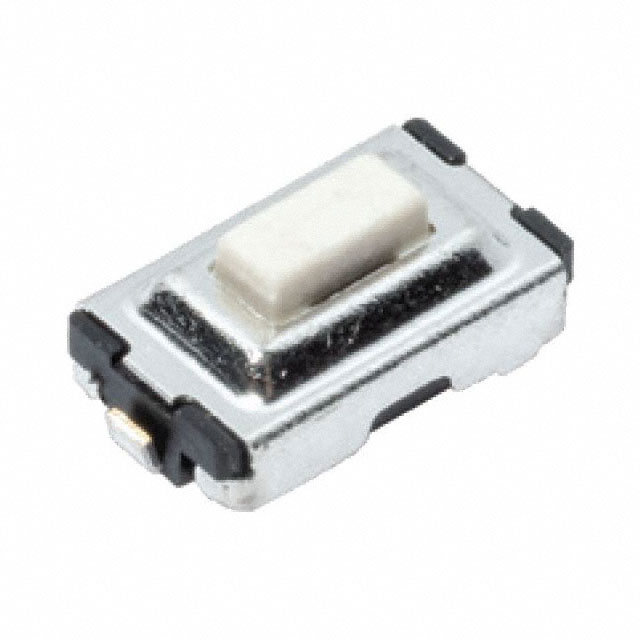
Tactile Switches are an electromechanical device used to start or stop current flow along a circuit. Devices in this family are often very small and are turned on or off through the use of an actuator that is depressed into the unit’s body. These devices also provide feedback to the user through an audible click and/or a change in pressure upon reaching the trigger point. The operating force ranges from 50gf to 970gf.
| Select products | Mfr | Description | Package | Supplier Device Package | Mounting Type | Series | Operating Temperature |
|---|---|---|---|---|---|---|---|
 228CDVARAFDBBD $1.45 | CTS Electrocomponents | SWITCH TACTILE SPST-NO 0.05A 12V | Tray | Through Hole | 228C | -25°C ~ 70°C | |
228CDVARAFDMBA $1.45 | CTS Electrocomponents | SWITCH TACTILE SPST-NO 0.05A 12V | Tray | Through Hole | 228C | -25°C ~ 70°C | |
228CDVARAFDMBB $1.45 | CTS Electrocomponents | SWITCH TACTILE SPST-NO 0.05A 12V | Tray | Through Hole | 228C | -25°C ~ 70°C | |
228CDVARAFDMBD $1.45 | CTS Electrocomponents | SWITCH TACTILE SPST-NO 0.05A 12V | Tray | Through Hole | 228C | -25°C ~ 70°C | |
228CDVARAFDMSA $1.45 | CTS Electrocomponents | SWITCH TACTILE SPST-NO 0.05A 12V | Tray | Through Hole | 228C | -25°C ~ 70°C | |
228CDVARAFDMSB $1.45 | CTS Electrocomponents | SWITCH TACTILE SPST-NO 0.05A 12V | Tray | Through Hole | 228C | -25°C ~ 70°C | |
228CDVARAFDMSD $1.45 | CTS Electrocomponents | SWITCH TACTILE SPST-NO 0.05A 12V | Tray | Through Hole | 228C | -25°C ~ 70°C | |
228CDVARAFDN $1.39 | CTS Electrocomponents | SWITCH TACTILE SPST-NO 0.05A 12V | Tray | Through Hole | 228C | -25°C ~ 70°C |
228BMVARBFGNRView ProductFSMIJ62BPG04View Product228CMVAYFDNRView ProductPTS645VK582LFSView Product228CMVAAFBMBCRView Product228CMVARGFEAARView Product EVP-AT1L1B000View Product
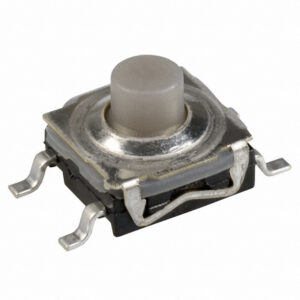 KST221GView Product228CMVABFFRCRView Product228ADS1AYFCREView ProductSM000174View Product
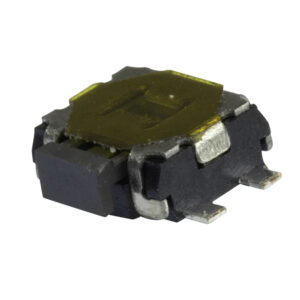 TS23-46-06-BK-260-SMT-TRView Product
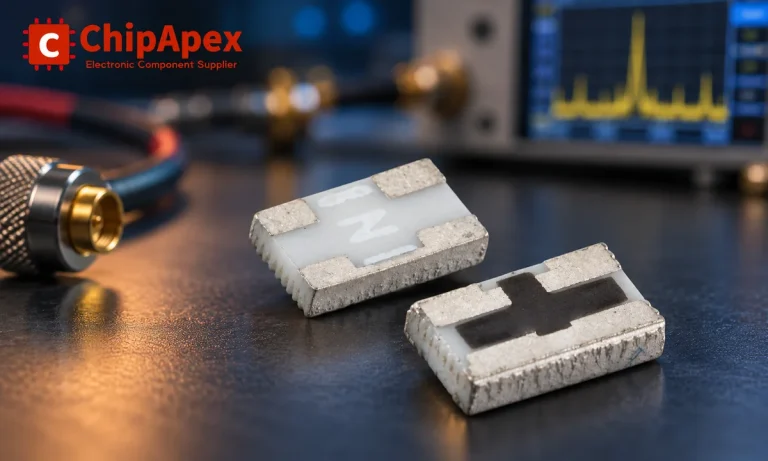
Understand RF attenuator dB values, fixed and programmable types, impedance, power limits and noise tradeoffs before choosing parts for an RF signal path.
Read More
Select a bridge rectifier by reverse voltage, capacitor charging current, startup surge and cooling. Work through a stated DC voltage and ripple example.
Read More
If you’ve spent any time staring at a schematic, you’ve seen the triangle. Two inputs, one output, and a gain symbol that looks deceptively…
Read More
CHICAGO, USA – May 27, 2026 – Global leading interconnect manufacturer Molex officially issued a global distributor price adjustment notice on May 27, confirming…
Read More
WILMINGTON, Mass. – July 3, 2026 – Analog Devices, Inc. (ADI), the global leading supplier of high-performance analog, mixed-signal and signal processing semiconductors, has…
Read More
On September 22nd, it was reported that Samsung Electronics, the South Korean tech giant, had successfully passed NVIDIA’s certification test for its 12-layer HBM3E…
Read More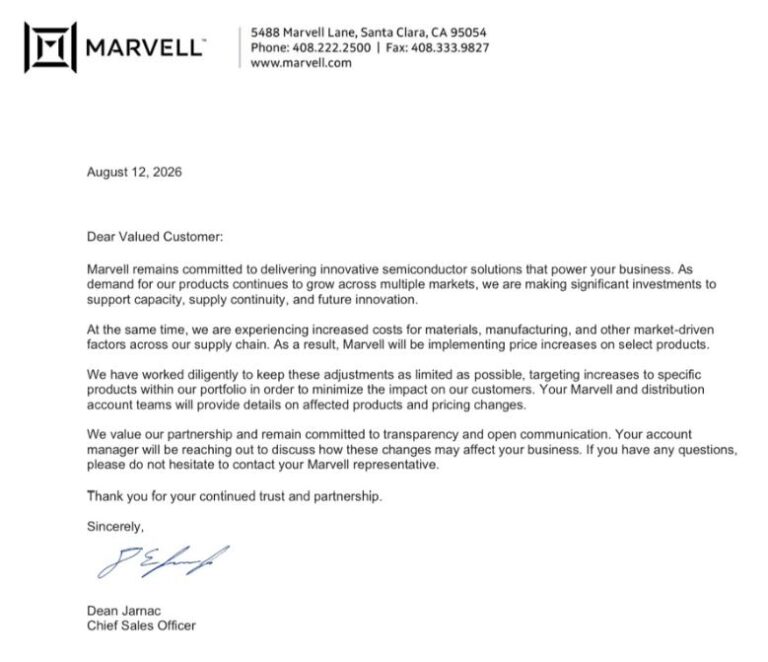
SANTA CLARA, Calif. — Leading semiconductor solution provider Marvell Technology (NASDAQ: MRVL) officially rolled out a selective price adjustment for its core electronic component…
Read More
As the backbone of modern technology, electronic components are undergoing revolutionary changes, driven by advancements in materials science, miniaturization, and smart manufacturing. From ultra-efficient…
Read More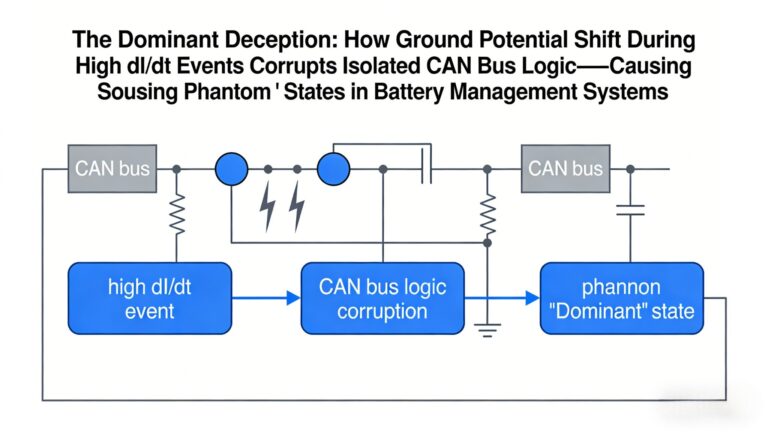
Stay ahead with ChipApex Insights — technical deep dives, market trends, and sourcing tips for memory, microcontrollers, power management, and industrial-grade components. Trusted by…
Read More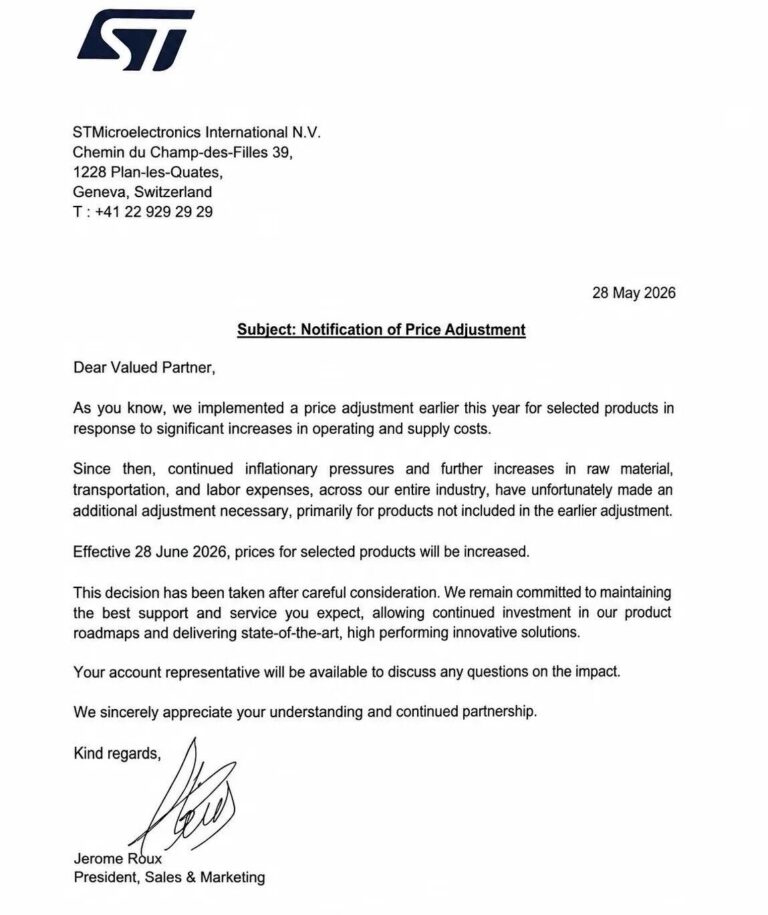
STMicroelectronics (ST), a global leader in semiconductor manufacturing, has officially notified customers of a new round of price increases for selected products, set to…
Read More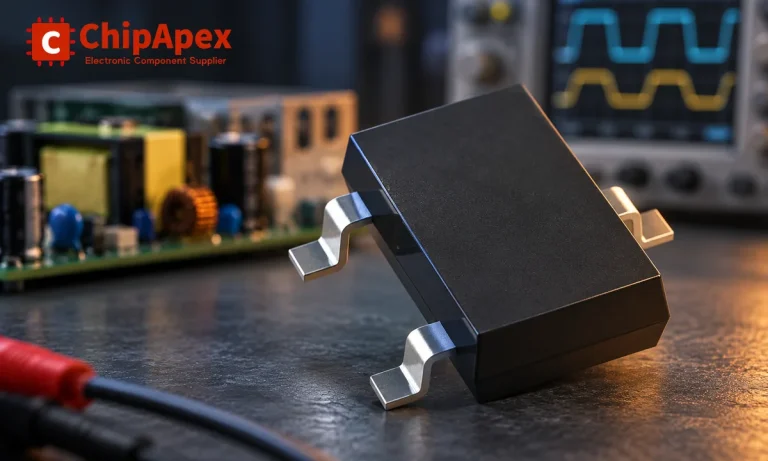
Learn how rectifiers convert AC to DC, compare half-wave and bridge circuits, and select voltage, current, recovery and thermal ratings for your design.
Read More
Compare RC, crystal and MEMS oscillator circuits. Check ppm, jitter, load capacitance, startup margin and output compatibility before choosing a clock source.
Read More
The activity of extra discounts on wholesale prices is in full swing…
Please fill in your contact information and we will send you the latest wholesale price list.

