ChipApex | Global Electronic Components Supplier

SEARCH
Search Product
Search Post
— IC芯片 | 连接器 | 传感器 | 被动器件 —
Search productSearch post
— IC芯片 | 连接器 | 传感器 | 被动器件 —
Consult the customer manager about the wholesale price.
consultation hotline:86-132-6715-2157
email:[email protected]
Contact the product manager for consultation. One-stop consultation is available.
Do you want a lower wholesale price? Please send us your inquiry and we will reply immediately.
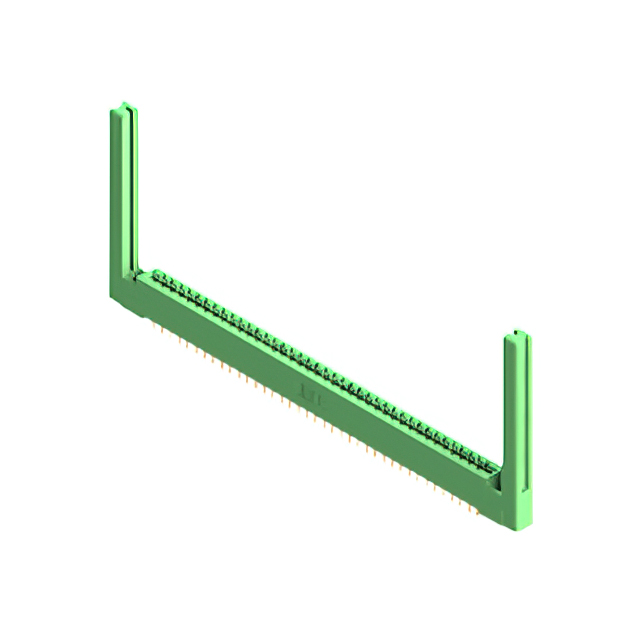
337-078-524-258 is listed in the Edgeboard Connectors range at ChipApex. The manufacturer field lists EDAC Inc.. Its product description is CONN EDGE DUAL FMALE 78POS 0.156. Review the specifications below when checking this part for your BOM.
The EDAC Inc. model 337-078-524-258 is a standard card edge connector socket from the 337 Series, designed for through-hole mounting. It features 78 positions arranged in a dual row configuration with a contact spacing of 3.96 mm (0.156 inches). The connector utilizes gold-plated copper alloy contacts and a green thermoplastic polyester insulator body. It accepts printed circuit boards with a nominal thickness of 1.57 mm (0.062 inches) and operates within a temperature range of -40°C to +105°C.
Verify the specific ordering suffix against the official EDAC datasheet to confirm exact pin count, termination style, and plating specifications. Ensure compatibility with the target PCB thickness of 1.57 mm. Confirm RoHS compliance status if required by project regulations. Cross-reference the manufacturer part number with authorized distributors to validate authenticity and current production status before finalizing procurement orders.
Select this component when a vertical, through-hole card edge socket with 78 positions is required. The 3.96 mm pitch suits applications needing robust mechanical retention for double-sided edge cards. Consider the operating temperature range and insulation material properties for environmental suitability. Verify that the dual-row layout aligns with the schematic net distribution and physical space constraints on the host motherboard.
This part belongs to the EDAC 337 Series, which offers a wide range of standard card edge connectors. The series typically includes various position counts and termination options to accommodate different design requirements. The 337-078 variant specifically addresses needs for moderate-to-high density connections using a standardized footprint and electrical rating common across the family.
The connector is designed to accept printed circuit boards with a nominal thickness of 1.57 mm (0.062 inches).
The contact spacing is 3.96 mm (0.156 inches).
Explore related parts through Connectors, Interconnects, all product categories, ChipApex homepage.
 337-078-524-258

Select MOV varistors by continuous voltage, clamping behavior, surge waveform and repetition. Check thermal disconnection, fuse coordination and replacements.
Read More
Compare Pt100 and Pt1000 RTDs, two-, three- and four-wire connections, excitation and self-heating. Build an error budget from element to reported temperature.
Read More
Select a bridge rectifier by reverse voltage, capacitor charging current, startup surge and cooling. Work through a stated DC voltage and ripple example.
Read More
Understand thermal fuse operation, Tf, Th and Tm, electrical ratings and mounting. Check temperature limits and replacement requirements for your design.
Read More
See how a MEMS gyroscope measures angular rate, why its angle estimate drifts, and which range, noise, interface and temperature specs to compare.
Read More
337-078-524-258 is listed in the Edgeboard Connectors range at ChipApex. The manufacturer field lists EDAC Inc.. Its product description is CONN EDGE DUAL FMALE…
Read More
337-078-524-258 is listed in the Edgeboard Connectors range at ChipApex. The manufacturer field lists EDAC Inc.. Its product description is CONN EDGE DUAL FMALE…
Read More
Learn what an integrated circuit is, how ICs work, the main types and the specs to check before choosing a part for your design…
Read More
337-078-524-258 is listed in the Edgeboard Connectors range at ChipApex. The manufacturer field lists EDAC Inc.. Its product description is CONN EDGE DUAL FMALE…
Read More
337-078-524-258 is listed in the Edgeboard Connectors range at ChipApex. The manufacturer field lists EDAC Inc.. Its product description is CONN EDGE DUAL FMALE…
Read More
Compare RC, crystal and MEMS oscillator circuits. Check ppm, jitter, load capacitance, startup margin and output compatibility before choosing a clock source.
Read More
Learn why PTC resistance rises with temperature, how it differs from NTC, and which ratings matter for sensing and protection.
Read More
The activity of extra discounts on wholesale prices is in full swing…
Please fill in your contact information and we will send you the latest wholesale price list.