 ChipApex | Global Electronic Components Supplier

SEARCH
Search Product
Search Post
— IC芯片 | 连接器 | 传感器 | 被动器件 —
Search productSearch post
— IC芯片 | 连接器 | 传感器 | 被动器件 —
Consult the customer manager about the wholesale price.
consultation hotline:86-132-6715-2157
email:[email protected]
Contact the product manager for consultation. One-stop consultation is available.
Do you want a lower wholesale price? Please send us your inquiry and we will reply immediately.
74LCX241WMX is listed in the Buffers, Drivers, Receivers, Transceivers range at ChipApex. The manufacturer field lists Fairchild Semiconductor. Its product description is IC BUFFER NON-INVERT 3.6V 20SOIC. Review the specifications below when checking this part for your BOM.
The Fairchild Semiconductor 74LCX241WMX is an octal buffer and line driver featuring non-inverting logic with three-state outputs. It operates within a supply voltage range of 2.3V to 3.6V, utilizing advanced CMOS technology for high-speed performance while maintaining low power dissipation. The device incorporates patented noise and EMI reduction circuitry and supports live insertion or withdrawal. It provides bidirectional data transmission control via direction inputs and includes output enable pins to manage bus traffic effectively.
Verify the specific suffix 'WMX' against official Fairchild documentation to confirm package type and tape-and-reel specifications. Ensure compatibility with RoHS directives if required by your manufacturing standards. Cross-reference the manufacturer part number with authorized distributors to validate authenticity and traceability before procurement.
Select this component when designing low-voltage systems requiring robust noise immunity and high-speed data buffering. It is suitable for applications needing direct interface between 3.3V logic and 5V peripherals. Consider the three-state output configuration for efficient bus sharing and the wide operating temperature range for industrial environments.
This device belongs to the 74LCX family of low-voltage CMOS logic devices. It serves as a non-inverting counterpart to the 74LCX245 transceiver, offering unidirectional buffering capabilities. The series is characterized by its ability to operate at lower voltages than traditional HC/HCT families while providing comparable speed and improved power efficiency.
The 74LCX244MTCX is a documented similar buffer from the same manufacturer but lacks the specific 'WMX' packaging designation. Verify pinout compatibility and electrical characteristics before substitution. Other generic 74LCX241 equivalents may vary in propagation delay and output drive strength.
Explore related parts through Logic, Integrated Circuits (ICs), all product categories, ChipApex homepage.
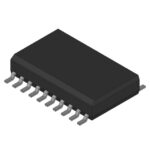 74LCX241WMX
Learn how an analog front end conditions sensor signals. Compare gain, noise, filtering, ADC settling and integration options before selecting components.
Read More
Choose logic inverter ICs by thresholds, supply, output drive and delay. Compare standard and Schmitt-trigger inputs, power sequencing and replacement checks.
Read More
Choose a pin header by pitch, mating geometry, current rating and mounting. Learn why matching pin count and spacing does not guarantee compatibility.
Read More
74LCX241WMX is listed in the Buffers, Drivers, Receivers, Transceivers range at ChipApex. The manufacturer field lists Fairchild Semiconductor. Its product description is IC BUFFER…
Read More
Learn how a diode conducts, how to identify anode and cathode, and when to choose rectifier, TVS, Zener or photodiode types for a circuit.
Read More
74LCX241WMX is listed in the Buffers, Drivers, Receivers, Transceivers range at ChipApex. The manufacturer field lists Fairchild Semiconductor. Its product description is IC BUFFER…
Read More
Understand how oscillators generate timing signals, how they differ from crystals, and which frequency, output and stability specs matter when choosing one.
Read More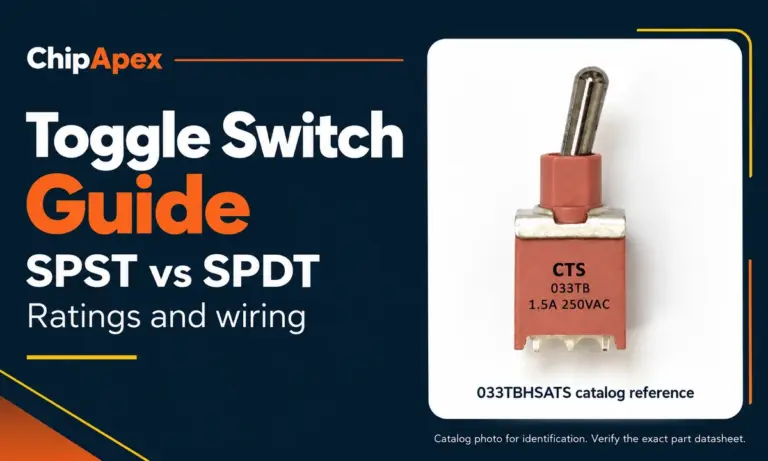
Compare SPST and SPDT toggle switches, understand AC/DC ratings, and follow wiring examples. Check contact action, mounting and parts in the ChipApex catalog.
Read More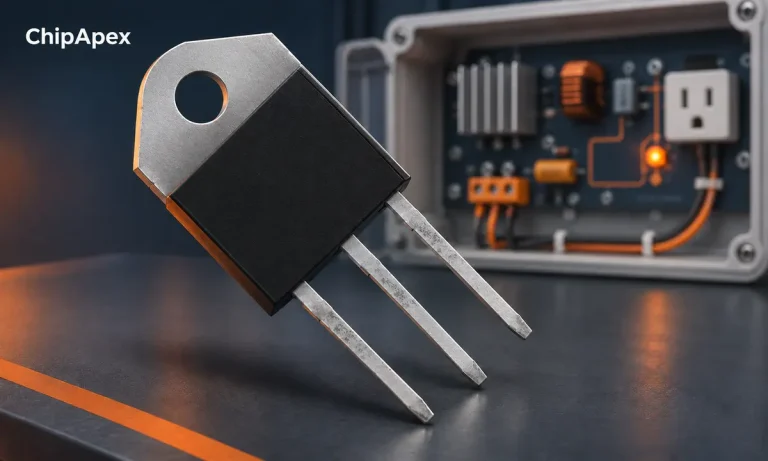
Learn how a TRIAC switches AC loads. Understand triggering, latching, holding current, phase control and thermal limits before choosing a component.
Read More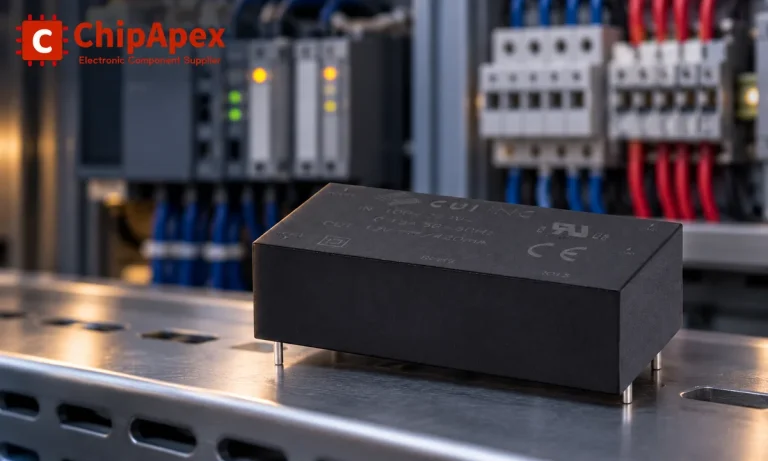
Choose an AC to DC converter by input range, output demand, isolation, efficiency and thermal derating. Compare architectures and check installation needs.
Read More
Learn how rectifiers convert AC to DC, compare half-wave and bridge circuits, and select voltage, current, recovery and thermal ratings for your design.
Read More
Choose LED drivers by current, string voltage, dimming and thermal limits. Understand constant-current operation and the checks needed for your load.
Read More
The activity of extra discounts on wholesale prices is in full swing…
Please fill in your contact information and we will send you the latest wholesale price list.





