 ChipApex | Global Electronic Components Supplier

SEARCH
Search Product
Search Post
— IC芯片 | 连接器 | 传感器 | 被动器件 —
Search productSearch post
— IC芯片 | 连接器 | 传感器 | 被动器件 —
Consult the customer manager about the wholesale price.
consultation hotline:86-132-6715-2157
email:[email protected]
Contact the product manager for consultation. One-stop consultation is available.
Do you want a lower wholesale price? Please send us your inquiry and we will reply immediately.
The TE Connectivity 95H1-25-12-1-C-CC is a circular MIL-spec backshell designed for use with Mil-DTL-38999 Series III and IV connectors. It features an aluminum alloy shell with a nickel electroless plating finish to provide effective EMI/RFI shielding in demanding environments. The component utilizes a straight cable exit orientation and incorporates a threaded coupling mechanism for secure attachment. This specific part number denotes a standard shielded backshell configuration intended for robust interconnect applications.
Verify the exact shell size, contact arrangement, and cable diameter requirements against the specific connector mating interface before procurement. Confirm that the nickel plating specification meets the environmental corrosion resistance standards required for the deployment location. Ensure compatibility with the designated Mil-DTL-38999 series generation.
Select this component when a shielded, threaded backshell is required for Series III or IV circular connectors. Evaluate the need for EMI protection versus unshielded alternatives based on system signal integrity requirements. Consider the straight cable exit geometry relative to available routing space within the equipment enclosure.
This backshell belongs to the 95H1 family of circular connector accessories manufactured by TE Connectivity Aerospace, Defense and Marine. These components are engineered to meet stringent military specifications for durability and performance. The family supports various shell sizes and contact configurations to accommodate diverse wiring harness needs across defense and aerospace platforms.
Cross-reference with other manufacturers offering Mil-DTL-38999 compliant backshells only if dimensional and electrical shielding equivalence is verified. Ensure substitute parts maintain the same threaded coupling style and aluminum construction to preserve mechanical fit.
 95H1-25-12-1-C-CC

Embedded Integrated Circuit Modules: The Backbone of Modern Technology Embedded Integrated Circuit Modules (EICMs) have become an indispensable part of modern technology. Serving as…
Read More
Learn why PTC resistance rises with temperature, how it differs from NTC, and which ratings matter for sensing and protection.
Read More
Every audio power amplifier design starts with the same fundamental challenge: converting a low-voltage line-level signal into the high-current drive required by a reactive…
Read More
Learn how a JFET works and how to compare bias, leakage, noise and pinout. Review practical selection questions for high-impedance analog circuits.
Read More
In the world of electronics, memory components play a critical role in system performance—and DRAM (Dynamic Random-Access Memory) is one of the most widely…
Read More
See how a MEMS gyroscope measures angular rate, why its angle estimate drifts, and which range, noise, interface and temperature specs to compare.
Read MoreA digital-to-analog converter (DAC) turns a digital number into an analog voltage or current. It lets a controller set a physical output, such as…
Read More
Choose a vibration sensor for machine monitoring. Compare sensing methods, bandwidth, noise and mounting, then define the signal-chain requirements.
Read More
Understand load cell sensor output, bridge wiring and calibration. Learn how mV/V sensitivity, mechanics and ADC noise affect measurement accuracy.
Read More
Find out when a bare shock switch needs a pull resistor, when an MCU internal pull-up is enough, and why sensor modules and piezo…
Read More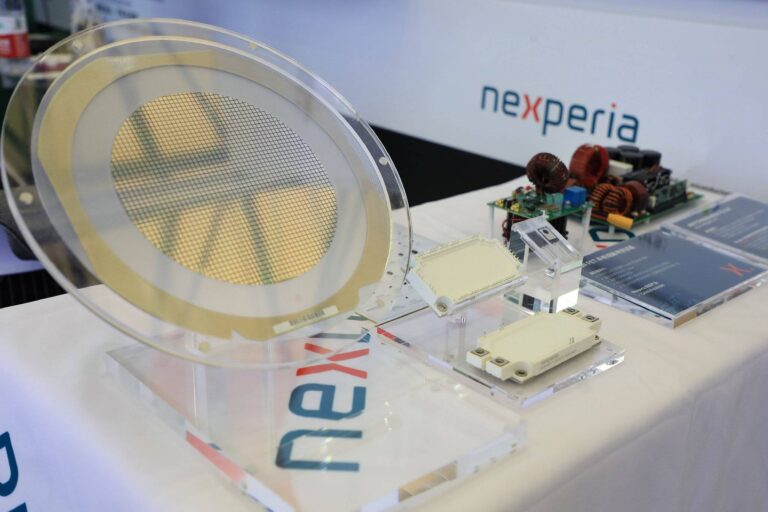
Dutch authorities announced on November 7 the lifting of control measures on Nexperia (formerly NXP Semiconductors’ Standard Products division), marking the end of a…
Read More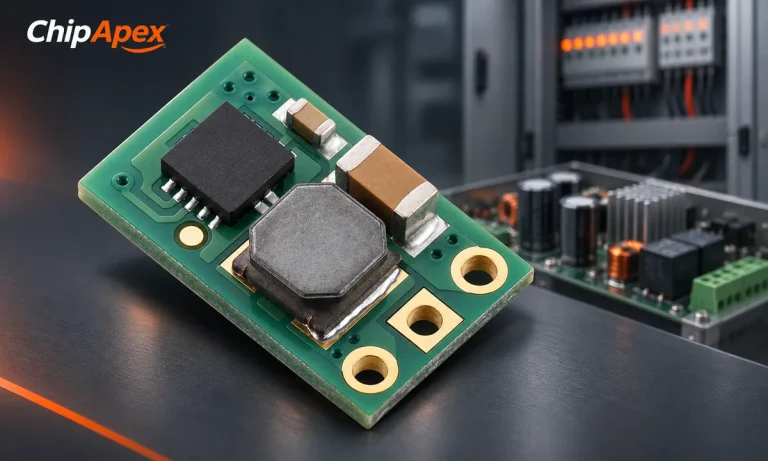
Select a DC-DC converter by input range, topology, isolation and temperature. Compare ripple, efficiency and load limits before choosing a component.
Read More
The activity of extra discounts on wholesale prices is in full swing…
Please fill in your contact information and we will send you the latest wholesale price list.




