ChipApex | Global Electronic Components Supplier

SEARCH
Search Product
Search Post
— IC芯片 | 连接器 | 传感器 | 被动器件 —
Search productSearch post
— IC芯片 | 连接器 | 传感器 | 被动器件 —
Consult the customer manager about the wholesale price.
consultation hotline:86-132-6715-2157
email:[email protected]
Contact the product manager for consultation. One-stop consultation is available.
Do you want a lower wholesale price? Please send us your inquiry and we will reply immediately.
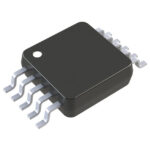
AD8271ARMZ is listed in the Instrumentation, Op Amps, Buffer Amps range at ChipApex. The manufacturer field lists Analog Devices Inc.. Its product description is IC OPAMP PGA 1 CIRCUIT 10MSOP. Review the specifications below when checking this part for your BOM.
The AD8271ARMZ is a precision difference amplifier manufactured by Analog Devices Inc. in a 10-lead MSOP package. It features internal gain setting resistors allowing gains of ½, 1, or 2 without external components. Key electrical parameters include a 15 MHz bandwidth and a 30 V/μs slew rate at G=1. The device operates on single supplies from 5 V to 36 V or dual supplies from ±2.5 V to ±18 V with a maximum supply current of 2.6 mA. DC performance includes a maximum offset voltage of 300 μV (B Grade) and a minimum CMRR of 92 dB.
Verify the specific grade (A or B) required for your application, as specifications such as offset voltage and gain error vary between grades. Confirm that the 10-lead MSOP package aligns with your PCB footprint requirements. Ensure the operating temperature range of -40°C to +85°C meets your environmental constraints. Check for any specific RoHS compliance documentation if required by your manufacturing standards.
Select this component when a low-distortion, precision difference amplifier is needed with minimal external parts. It is suitable for applications requiring high common-mode rejection and wide supply voltage flexibility. Consider the B Grade for tighter DC specifications or A Grade for broader availability. Evaluate the 15 MHz bandwidth against your signal frequency requirements to ensure adequate performance.
The AD8271 belongs to Analog Devices' family of programmable gain precision difference amplifiers. It is designed to replace discrete resistor networks, offering superior matching and thermal tracking. The device integrates a high-precision op amp with seven trimmed resistors, providing a compact solution for signal conditioning tasks in industrial and instrumentation environments.
For a dual-channel version, refer to the AD8270 data sheet. Other difference amplifiers in the category include the AD8270, AD8273, AD8274, AMP03, AD628, AD629, AD8202, AD8203, AD8205, AD8206, and AD8216.
Explore related parts through Amplifiers, Linear, Integrated Circuits (ICs), all product categories.
 AD8271ARMZ
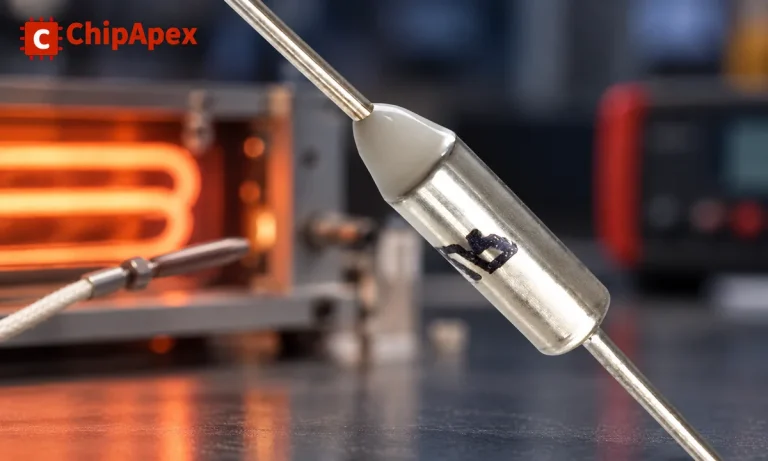
Understand thermal fuse operation, Tf, Th and Tm, electrical ratings and mounting. Check temperature limits and replacement requirements for your design.
Read More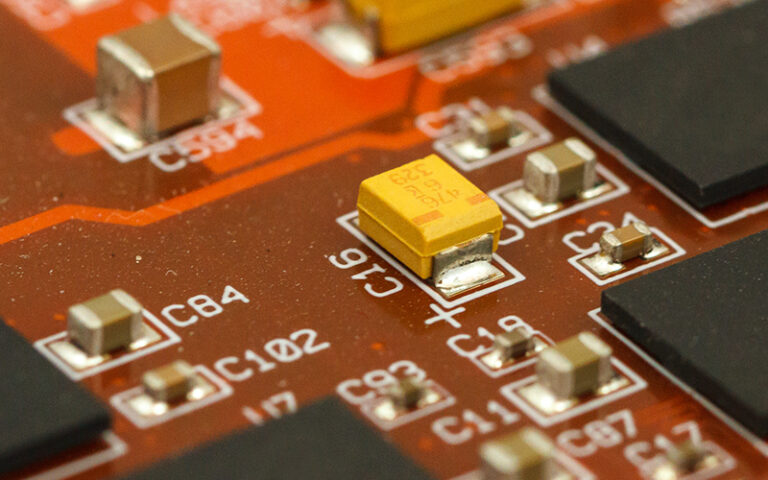
AD8271ARMZ is listed in the Instrumentation, Op Amps, Buffer Amps range at ChipApex. The manufacturer field lists Analog Devices Inc.. Its product description is…
Read More
AD8271ARMZ is listed in the Instrumentation, Op Amps, Buffer Amps range at ChipApex. The manufacturer field lists Analog Devices Inc.. Its product description is…
Read More
Choose logic inverter ICs by thresholds, supply, output drive and delay. Compare standard and Schmitt-trigger inputs, power sequencing and replacement checks.
Read More
Learn how rectifiers convert AC to DC, compare half-wave and bridge circuits, and select voltage, current, recovery and thermal ratings for your design.
Read More
AD8271ARMZ is listed in the Instrumentation, Op Amps, Buffer Amps range at ChipApex. The manufacturer field lists Analog Devices Inc.. Its product description is…
Read More
Understand how oscillators generate timing signals, how they differ from crystals, and which frequency, output and stability specs matter when choosing one.
Read More
AD8271ARMZ is listed in the Instrumentation, Op Amps, Buffer Amps range at ChipApex. The manufacturer field lists Analog Devices Inc.. Its product description is…
Read More
AD8271ARMZ is listed in the Instrumentation, Op Amps, Buffer Amps range at ChipApex. The manufacturer field lists Analog Devices Inc.. Its product description is…
Read More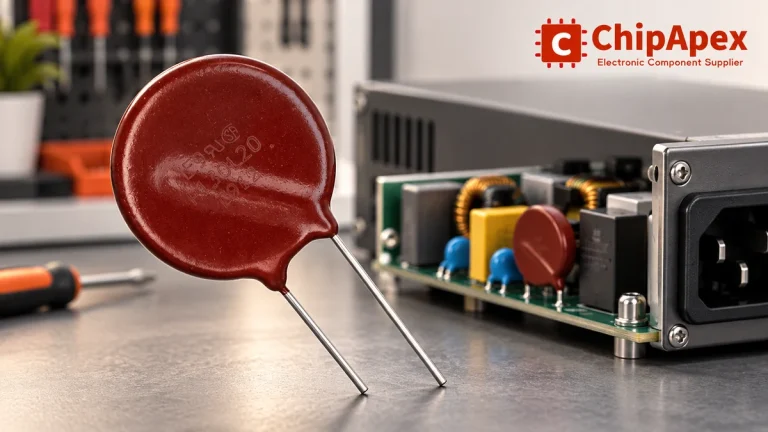
Select MOV varistors by continuous voltage, clamping behavior, surge waveform and repetition. Check thermal disconnection, fuse coordination and replacements.
Read More
See how a MEMS gyroscope measures angular rate, why its angle estimate drifts, and which range, noise, interface and temperature specs to compare.
Read More
Learn why PTC resistance rises with temperature, how it differs from NTC, and which ratings matter for sensing and protection.
Read More
The activity of extra discounts on wholesale prices is in full swing…
Please fill in your contact information and we will send you the latest wholesale price list.