ChipApex | Global Electronic Components Supplier

SEARCH
Search Product
Search Post
— IC芯片 | 连接器 | 传感器 | 被动器件 —
Search productSearch post
— IC芯片 | 连接器 | 传感器 | 被动器件 —
Consult the customer manager about the wholesale price.
consultation hotline:86-132-6715-2157
email:[email protected]
Contact the product manager for consultation. One-stop consultation is available.
Do you want a lower wholesale price? Please send us your inquiry and we will reply immediately.
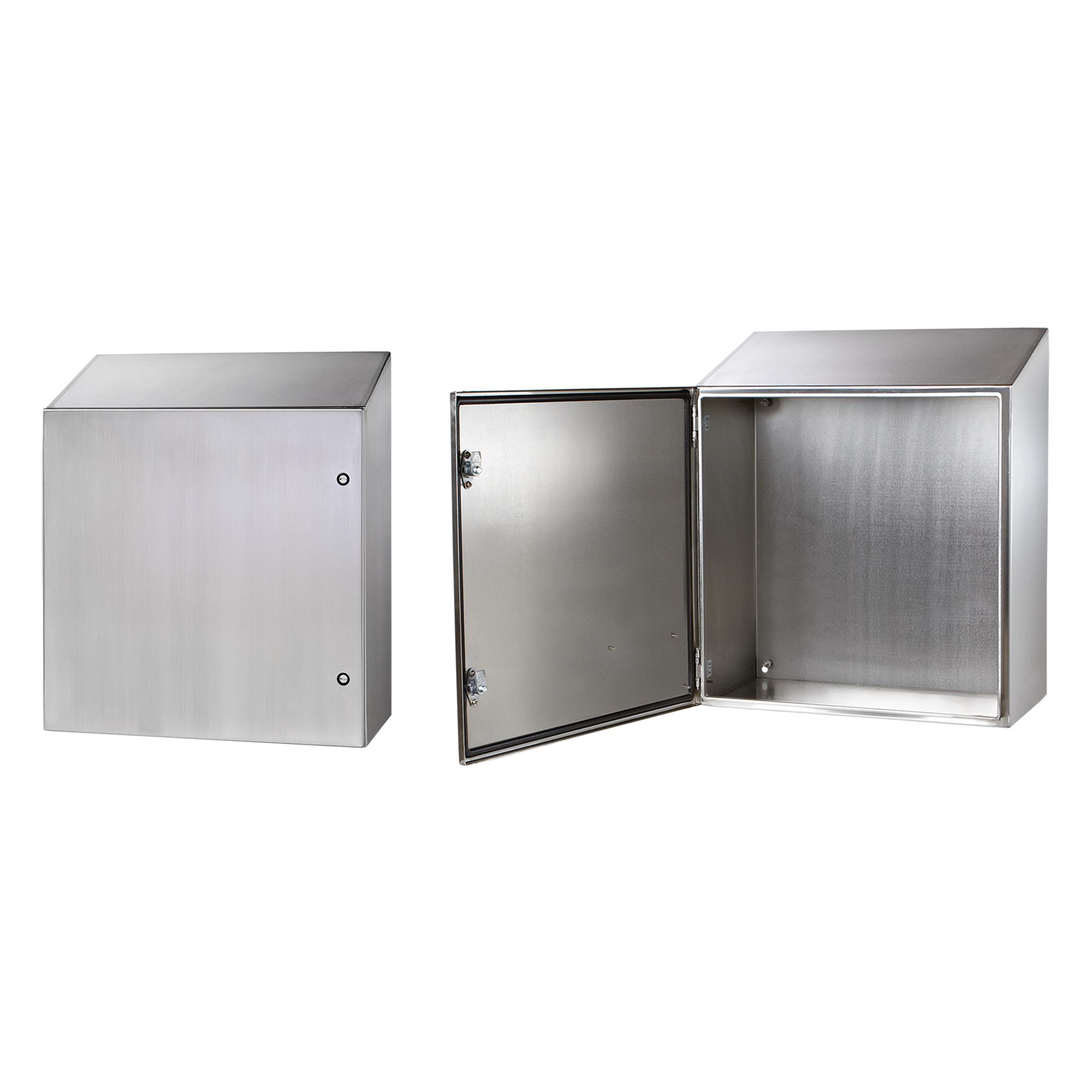
The CSD363612SSST is a wall-mount enclosure manufactured by Hoffman Enclosures, Inc. It features a sloped top design constructed from 304 stainless steel with a #4 smooth brushed finish. The unit measures 36 inches in length, 36 inches in width, and 12 inches in depth. It is rated for NEMA 12, 3R, 4, and 4X environments, providing protection against dust, dripping water, splashing water, and hose-directed water. The enclosure includes a hinged door secured by quarter-turn latches and meets UL 508A and CUL standards.
Verify the specific suffix requirements when ordering, as variations may exist within the Concept series. Confirm that the required mounting hardware and internal accessories are included or ordered separately. Ensure the facility's environmental conditions align with the NEMA 4X rating before finalizing procurement. Check for any regional shipping restrictions due to product weight or dimensions.
Select this model when both high corrosion resistance and a sloped roof are necessary. The 304 stainless steel construction offers durability in harsh chemical or wet environments compared to painted steel alternatives. The 36x36x12 dimensions provide substantial internal volume for complex wiring or multiple components. Consider the quarter-turn latch mechanism for frequent access needs while maintaining a secure seal.
This component belongs to the nVent Hoffman CONCEPT series, which emphasizes streamlined aesthetics and robust performance. The series is designed for demanding industrial settings where standard enclosures may fail due to environmental stressors. The sloped top variant specifically addresses issues related to water accumulation on flat surfaces, enhancing longevity in outdoor or washdown areas.
Direct replacements must match the 304 stainless steel material and sloped top configuration. Verify that substitute models maintain the same NEMA 4X rating and UL 508A listing. Ensure dimensional compatibility if existing mounting points or adjacent equipment restricts size changes. Check if alternative latch mechanisms affect operational workflow.
 CSD363612SSST
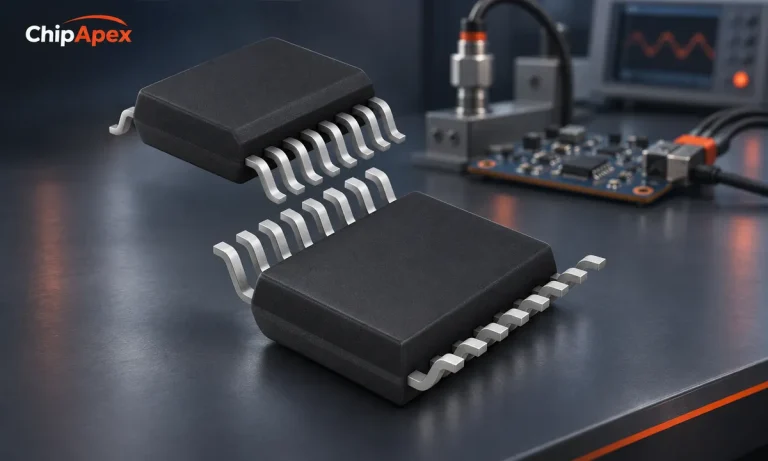
Choose an ADC converter by resolution, sample rate, noise and input design. Review practical tradeoffs and prepare component requirements for ChipApex.
Read More
Recently, a survey by the Electronic Components Industry Association (ECIA) revealed that the sales sentiment of global electronic components remained optimistic in the third…
Read More
See how a MEMS gyroscope measures angular rate, why its angle estimate drifts, and which range, noise, interface and temperature specs to compare.
Read More
Understand UART protocol framing, baud rate and electrical interfaces. Learn 8N1 timing, TX/RX wiring, buffering and practical troubleshooting steps.
Read More
Understand load cell sensor output, bridge wiring and calibration. Learn how mV/V sensitivity, mechanics and ADC noise affect measurement accuracy.
Read More
The global electronics industry is facing an escalating shortage of tantalum capacitors, a critical passive component, as surging demand from AI servers, automotive electronics,…
Read More
Select a bridge rectifier by reverse voltage, capacitor charging current, startup surge and cooling. Work through a stated DC voltage and ripple example.
Read More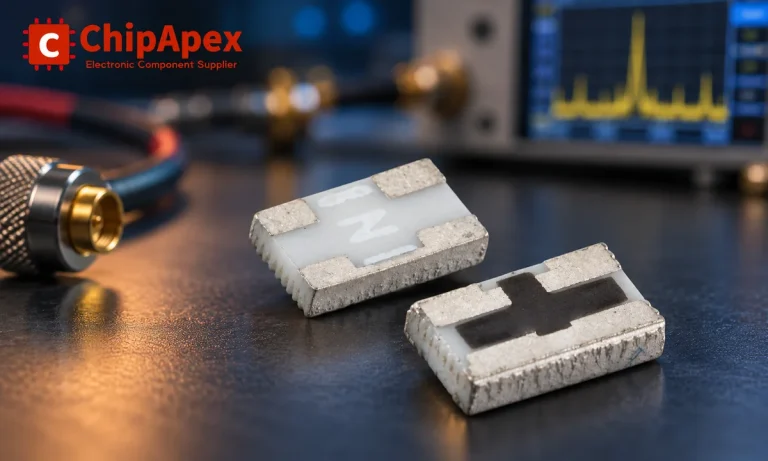
Understand RF attenuator dB values, fixed and programmable types, impedance, power limits and noise tradeoffs before choosing parts for an RF signal path.
Read More
Recently, the global electronic component market has witnessed complex and changeable trends. In the memory chip sector, the wave of price increases continues to…
Read More
If you’ve spent any time staring at a schematic, you’ve seen the triangle. Two inputs, one output, and a gain symbol that looks deceptively…
Read More
May 4, 2026 — The global power semiconductor market is grappling with a worsening supply crunch, as lead times for key components have extended…
Read More
Choose a DIP switch by contact type, coded positions, footprint and signal ratings. Check logic polarity, assembly conditions and PCB configuration behavior.
Read More
The activity of extra discounts on wholesale prices is in full swing…
Please fill in your contact information and we will send you the latest wholesale price list.