 ChipApex | Global Electronic Components Supplier

SEARCH
Search Product
Search Post
— IC芯片 | 连接器 | 传感器 | 被动器件 —
Search productSearch post
— IC芯片 | 连接器 | 传感器 | 被动器件 —
Consult the customer manager about the wholesale price.
consultation hotline:86-132-6715-2157
email:[email protected]
Contact the product manager for consultation. One-stop consultation is available.
Do you want a lower wholesale price? Please send us your inquiry and we will reply immediately.
DGSK40-025A is listed in the Diode Arrays range at ChipApex. The manufacturer field lists IXYS. Its product description is DIODE ARR SCHOT 250V 18A TO2203. Review the specifications below when checking this part for your BOM.
The DGSK40-025A is a Gallium Arsenide Schottky rectifier featuring a common cathode configuration. It supports an average forward current of 18 A at 25°C and withstands a repetitive peak reverse voltage of 250 V. The device exhibits a maximum forward voltage of 1.5 V at 7.5 A and 25°C, with a junction capacitance of 26 pF. It operates within a temperature range of -55°C to +175°C and utilizes TO-220AC or TO-252 packages.
Verify the specific package variant (TO-220AC or TO-252) required for your design, as both are available under this part number series. Confirm that the GaAs material properties align with your thermal management strategy, particularly regarding the 48 W power dissipation limit at 25°C case temperature. Ensure mounting torque specifications are strictly followed to maintain reliable electrical contact and thermal performance.
Select this component when designing circuits requiring MHz-level switching frequencies where standard silicon diodes exhibit excessive reverse recovery losses. The low junction capacitance makes it suitable for resonant topologies. Consider the 175°C operating capability for high-temperature environments, but ensure adequate heat sinking to manage the 48 W power dissipation rating effectively during continuous operation.
This device belongs to the DGS/DGSK family of Gallium Arsenide Schottky rectifiers manufactured by IXYS. These components utilize planar passivated chips to achieve superior high-frequency performance compared to traditional silicon rectifiers. The family includes variants with different current ratings and packaging options, all sharing the core benefits of GaAs technology such as fast switching and low leakage.
DGS 20-025A
The typical junction capacitance is 26 pF.
No, the device features temperature-independent switching behavior due to its majority carrier conduction mechanism.
The maximum repetitive peak reverse voltage (VRRM) is 250 V.
Explore related parts through Rectifiers, Diodes, Discrete Semiconductor Products, all product categories.
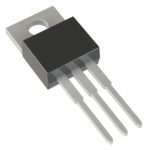 DGSK40-025A

DGSK40-025A is listed in the Diode Arrays range at ChipApex. The manufacturer field lists IXYS. Its product description is DIODE ARR SCHOT 250V 18A…
Read More
DGSK40-025A is listed in the Diode Arrays range at ChipApex. The manufacturer field lists IXYS. Its product description is DIODE ARR SCHOT 250V 18A…
Read More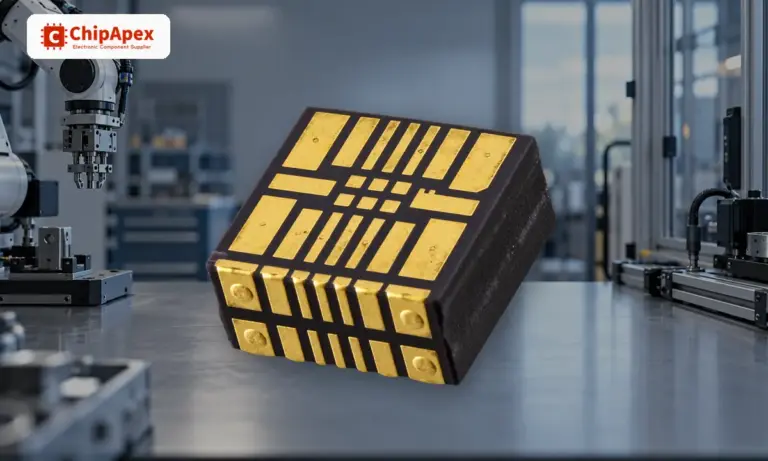
See how a MEMS gyroscope measures angular rate, why its angle estimate drifts, and which range, noise, interface and temperature specs to compare.
Read More
DGSK40-025A is listed in the Diode Arrays range at ChipApex. The manufacturer field lists IXYS. Its product description is DIODE ARR SCHOT 250V 18A…
Read MoreDGSK40-025A is listed in the Diode Arrays range at ChipApex. The manufacturer field lists IXYS. Its product description is DIODE ARR SCHOT 250V 18A…
Read More
DGSK40-025A is listed in the Diode Arrays range at ChipApex. The manufacturer field lists IXYS. Its product description is DIODE ARR SCHOT 250V 18A…
Read More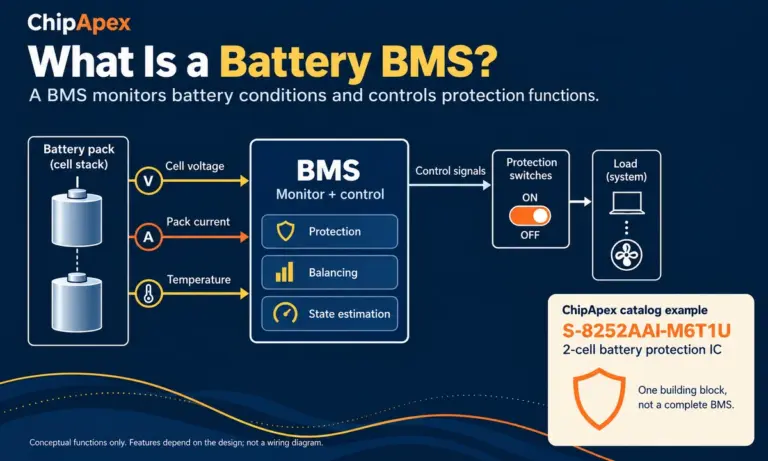
Learn what a battery BMS does, how protection differs from charging, and which pack specifications to check when sourcing BMS components through ChipApex.
Read More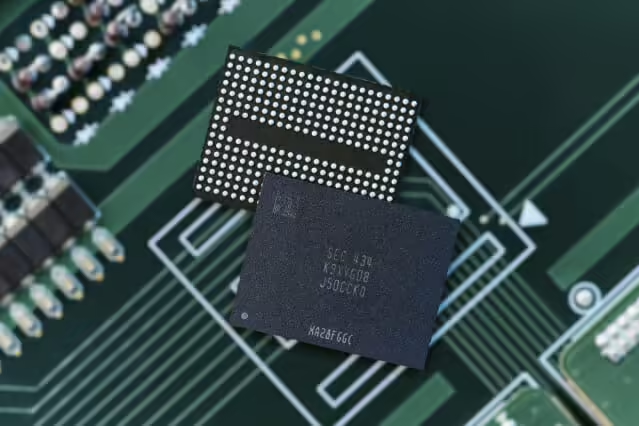
DGSK40-025A is listed in the Diode Arrays range at ChipApex. The manufacturer field lists IXYS. Its product description is DIODE ARR SCHOT 250V 18A…
Read More
Choose a DIP switch by contact type, coded positions, footprint and signal ratings. Check logic polarity, assembly conditions and PCB configuration behavior.
Read More
DGSK40-025A is listed in the Diode Arrays range at ChipApex. The manufacturer field lists IXYS. Its product description is DIODE ARR SCHOT 250V 18A…
Read More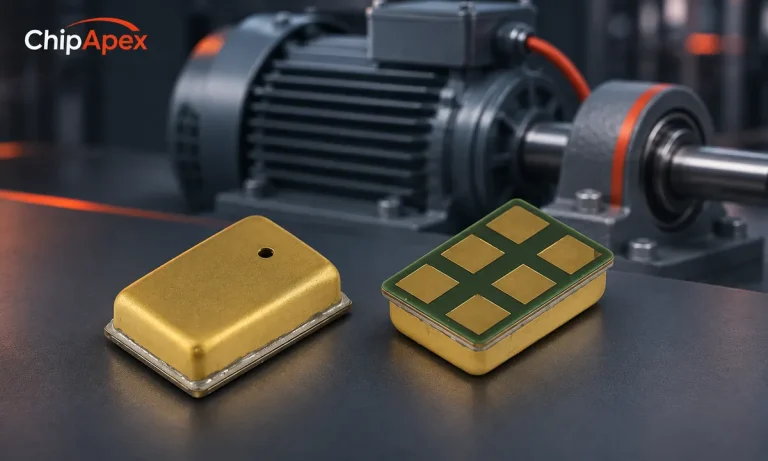
Choose a vibration sensor for machine monitoring. Compare sensing methods, bandwidth, noise and mounting, then define the signal-chain requirements.
Read More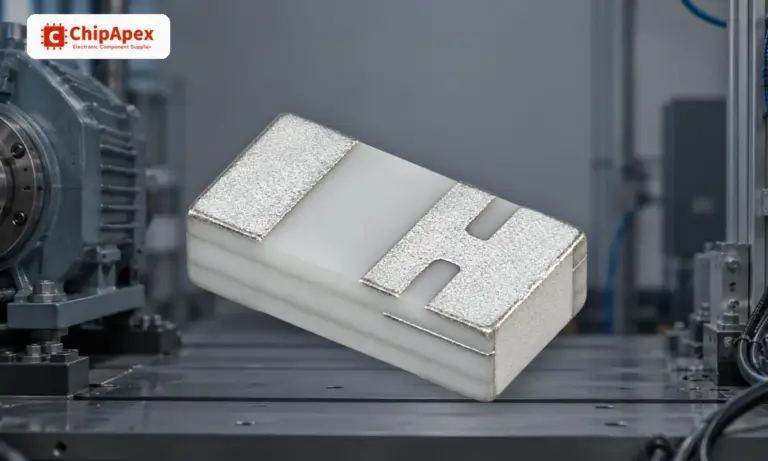
Find out when a bare shock switch needs a pull resistor, when an MCU internal pull-up is enough, and why sensor modules and piezo…
Read More
The activity of extra discounts on wholesale prices is in full swing…
Please fill in your contact information and we will send you the latest wholesale price list.





