 ChipApex | Global Electronic Components Supplier

SEARCH
Search Product
Search Post
— IC芯片 | 连接器 | 传感器 | 被动器件 —
Search productSearch post
— IC芯片 | 连接器 | 传感器 | 被动器件 —
Consult the customer manager about the wholesale price.
consultation hotline:86-132-6715-2157
email:[email protected]
Contact the product manager for consultation. One-stop consultation is available.
Do you want a lower wholesale price? Please send us your inquiry and we will reply immediately.
PC3SF21YTZAF is listed in the Triac, SCR Output Optoisolators range at ChipApex. The manufacturer field lists Sharp Microelectronics. Its product description is OPTOISOLATOR 5KV TRIAC 1CH 6-DIP. Review the specifications below when checking this part for your BOM.
The PC3SF21YTZAF is a Triac and SCR output optocoupler manufactured by Sharp Microelectronics. It features a PhotoTriac output without a zero-crossing circuit, designed for non-zero-crossing applications. The device provides 5000 Vrms insulation voltage and supports a maximum continuous output current of 100 mA with a peak off-state voltage (VDRM) of 600 V. It operates within a temperature range of -30°C to +100°C and utilizes a PDIP-6 package.
Verify component authenticity through authorized distributors or direct manufacturer channels. Confirm RoHS compliance status and specific packaging details prior to acquisition. Ensure supply chain stability as availability may vary. Validate datasheet revisions against the specific batch received to guarantee parameter consistency.
Select this component for applications requiring non-synchronized AC phase control where zero-crossing detection is undesirable. Consider the 5000 Vrms isolation for safety-critical designs. Evaluate thermal management requirements given the operating temperature range. Compare input drive characteristics against available logic levels to ensure proper triggering.
This part belongs to Sharp's Triac and SCR output optocoupler family. It shares the PDIP-6 form factor with other models in the series but differs in internal circuitry, specifically lacking zero-crossing functionality. This distinguishes it from synchronized variants intended for low-noise switching applications.
PC3SF11YVZAF
No, the PC3SF21YTZAF is explicitly designed without a zero-crossing circuit.
The device supports a peak off-state voltage (VDRM) of 600 V.
Explore related parts through Optocouplers, Optoisolators, Isolators, all product categories, ChipApex homepage.
 PC3SF21YTZAF
 is listed in the Triac, SCR Output Optoisolators range at ChipApex. The manufacturer field lists Sharp Microelectronics. Its product description is OPTOISOLATOR 5KV…
Read More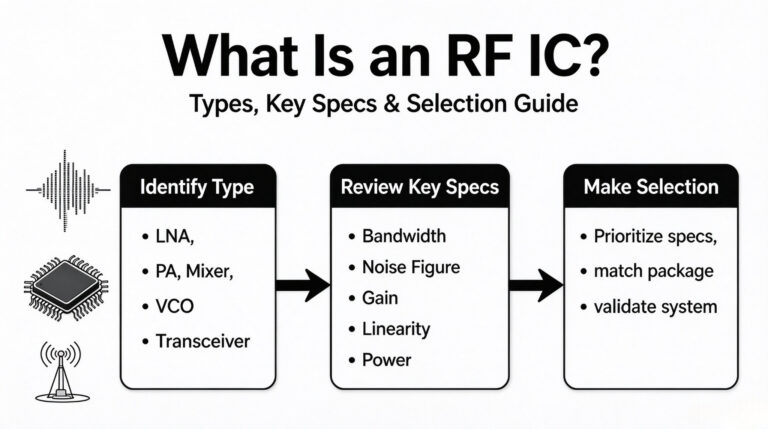
PC3SF21YTZAF is listed in the Triac, SCR Output Optoisolators range at ChipApex. The manufacturer field lists Sharp Microelectronics. Its product description is OPTOISOLATOR 5KV…
Read More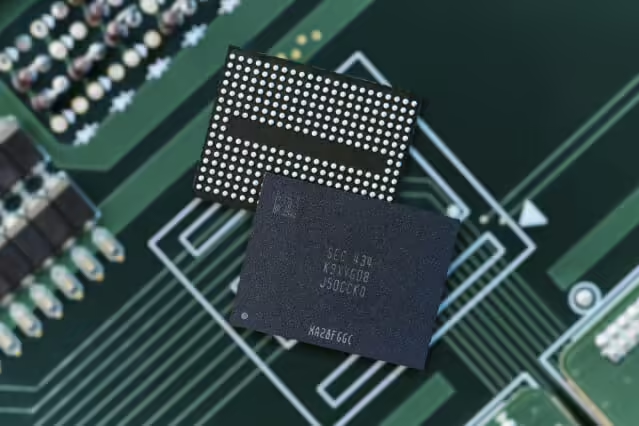
PC3SF21YTZAF is listed in the Triac, SCR Output Optoisolators range at ChipApex. The manufacturer field lists Sharp Microelectronics. Its product description is OPTOISOLATOR 5KV…
Read More
PC3SF21YTZAF is listed in the Triac, SCR Output Optoisolators range at ChipApex. The manufacturer field lists Sharp Microelectronics. Its product description is OPTOISOLATOR 5KV…
Read More
Learn how a pressure transducer converts pressure into voltage, current, or digital output, and compare pressure references and key selection specs.
Read More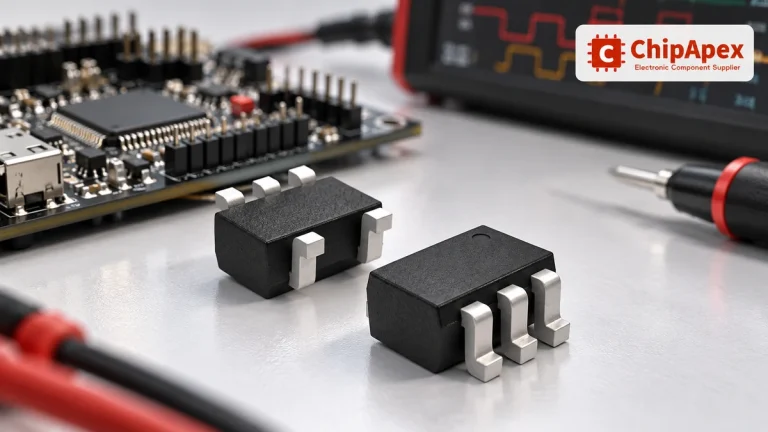
Choose logic inverter ICs by thresholds, supply, output drive and delay. Compare standard and Schmitt-trigger inputs, power sequencing and replacement checks.
Read More
PC3SF21YTZAF is listed in the Triac, SCR Output Optoisolators range at ChipApex. The manufacturer field lists Sharp Microelectronics. Its product description is OPTOISOLATOR 5KV…
Read More
PC3SF21YTZAF is listed in the Triac, SCR Output Optoisolators range at ChipApex. The manufacturer field lists Sharp Microelectronics. Its product description is OPTOISOLATOR 5KV…
Read More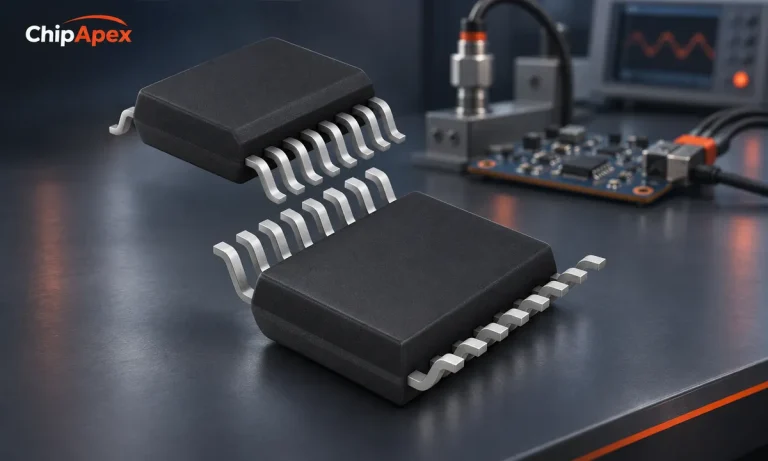
Choose an ADC converter by resolution, sample rate, noise and input design. Review practical tradeoffs and prepare component requirements for ChipApex.
Read More
Learn how rectifiers convert AC to DC, compare half-wave and bridge circuits, and select voltage, current, recovery and thermal ratings for your design.
Read More
Learn how a diode conducts, how to identify anode and cathode, and when to choose rectifier, TVS, Zener or photodiode types for a circuit.
Read More
See when an inductor behaves linearly, how DC bias and saturation reduce inductance, and which current and temperature curves to check.
Read More
The activity of extra discounts on wholesale prices is in full swing…
Please fill in your contact information and we will send you the latest wholesale price list.





