 ChipApex | Global Electronic Components Supplier

SEARCH
Search Product
Search Post
— IC芯片 | 连接器 | 传感器 | 被动器件 —
Search productSearch post
— IC芯片 | 连接器 | 传感器 | 被动器件 —
Consult the customer manager about the wholesale price.
consultation hotline:86-132-6715-2157
email:[email protected]
Contact the product manager for consultation. One-stop consultation is available.
Do you want a lower wholesale price? Please send us your inquiry and we will reply immediately.
SN74ALVC244IPWREP is listed in the Buffers, Drivers, Receivers, Transceivers range at ChipApex. The manufacturer field lists Texas Instruments. Its product description is IC BUF NON-INVERT 3.6V 20TSSOP. Review the specifications below when checking this part for your BOM.
The SN74ALVC244IPWREP is a mil-enhanced octal buffer and line driver manufactured by Texas Instruments. It features non-inverting logic with three-state outputs, designed for low-voltage CMOS applications operating within a 1.65V to 3.6V supply range. The device utilizes a 20-pin TSSOP package and supports mixed-mode signal operations, allowing 5V tolerant inputs while powered by lower voltage supplies. It is engineered for high-speed data bus interfacing and asynchronous communication in demanding environments.
Verify the specific 'REP' suffix designation against official Texas Instruments documentation to confirm mil-enhanced status and exact qualification standards. Ensure the TSSOP-20 package dimensions match your PCB footprint requirements. Cross-reference the datasheet revision date to ensure compatibility with current design specifications and regulatory compliance needs.
Select this component when military-grade reliability is required alongside low-voltage operation. Compare propagation delay characteristics against standard commercial variants if speed is critical. Confirm that the 5V input tolerance aligns with upstream logic levels. Evaluate thermal dissipation capabilities within the TSSOP-20 package for your specific enclosure constraints.
This part belongs to the SN74ALVC244 family of octal buffers. The 'ALVC' series denotes advanced low-voltage CMOS technology optimized for performance at reduced voltages. The 'REP' suffix typically indicates enhanced reliability or specific manufacturing controls distinct from standard commercial versions, differentiating it from parts like the SN74LVC244 or SN74HCT244.
Public confirmed substitute part numbers are not available in the provided source material.
Explore related parts through Logic, Integrated Circuits (ICs), all product categories, ChipApex homepage.
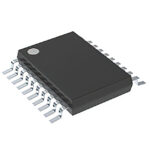 SN74ALVC244IPWREP
SN74ALVC244IPWREP is listed in the Buffers, Drivers, Receivers, Transceivers range at ChipApex. The manufacturer field lists Texas Instruments. Its product description is IC BUF…
Read More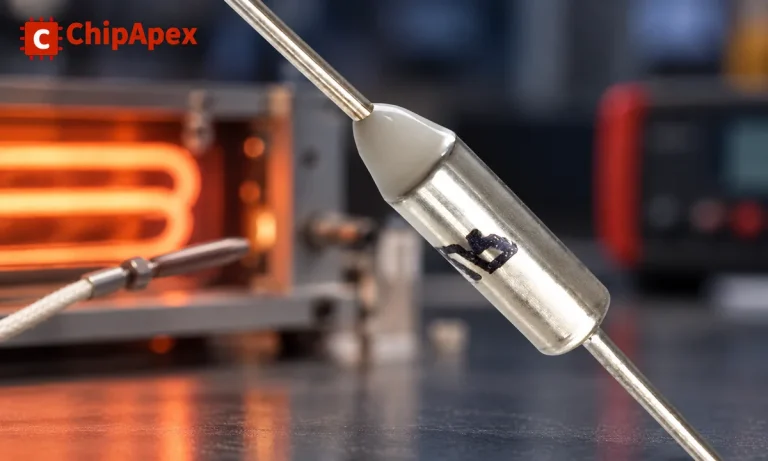
Understand thermal fuse operation, Tf, Th and Tm, electrical ratings and mounting. Check temperature limits and replacement requirements for your design.
Read More
SN74ALVC244IPWREP is listed in the Buffers, Drivers, Receivers, Transceivers range at ChipApex. The manufacturer field lists Texas Instruments. Its product description is IC BUF…
Read More
SN74ALVC244IPWREP is listed in the Buffers, Drivers, Receivers, Transceivers range at ChipApex. The manufacturer field lists Texas Instruments. Its product description is IC BUF…
Read More
Compare thermistors, RTDs, thermocouples and temperature ICs. Learn how range, accuracy, response, interfaces and mounting affect component selection.
Read More
Understand tactile switches, PCB and keyboard differences, four-pin wiring, debounce, force, travel and replacement checks for reliable control inputs.
Read More
Choose logic inverter ICs by thresholds, supply, output drive and delay. Compare standard and Schmitt-trigger inputs, power sequencing and replacement checks.
Read More
Select a bridge rectifier by reverse voltage, capacitor charging current, startup surge and cooling. Work through a stated DC voltage and ripple example.
Read More
SN74ALVC244IPWREP is listed in the Buffers, Drivers, Receivers, Transceivers range at ChipApex. The manufacturer field lists Texas Instruments. Its product description is IC BUF…
Read More
Choose LED drivers by current, string voltage, dimming and thermal limits. Understand constant-current operation and the checks needed for your load.
Read More
See how a MEMS gyroscope measures angular rate, why its angle estimate drifts, and which range, noise, interface and temperature specs to compare.
Read More
Learn why PTC resistance rises with temperature, how it differs from NTC, and which ratings matter for sensing and protection.
Read More
The activity of extra discounts on wholesale prices is in full swing…
Please fill in your contact information and we will send you the latest wholesale price list.





