 ChipApex | Global Electronic Components Supplier

SEARCH
Search Product
Search Post
— IC芯片 | 连接器 | 传感器 | 被动器件 —
Search productSearch post
— IC芯片 | 连接器 | 传感器 | 被动器件 —
Consult the customer manager about the wholesale price.
consultation hotline:86-132-6715-2157
email:[email protected]
Contact the product manager for consultation. One-stop consultation is available.
Do you want a lower wholesale price? Please send us your inquiry and we will reply immediately.
SN74LVC573AQDWRQ1 is listed in the Latches range at ChipApex. The manufacturer field lists Texas Instruments. Its product description is IC D-TYPE TRANSP SGL 8:8 20SOIC. Review the specifications below when checking this part for your BOM.
The SN74LVC573AQDWRQ1 is an automotive-grade octal transparent D-type latch manufactured by Texas Instruments. It operates within a supply voltage range of 2 V to 3.6 V and features eight non-inverting outputs with three-state capability. The device provides propagation delays of 7.7 ns at 2.7 V and 6.9 ns at 3.3 V, alongside a low static current consumption of 10 µA. Output drive strengths include 32 mA for low-level and -24 mA for high-level conditions. Designed for robust performance, it supports operating temperatures from -40°C to +125°C and meets AEC-Q100 qualification standards for automotive applications.
Verify the specific suffix 'Q1' confirms AEC-Q100 automotive qualification status. Confirm the 'DWR' package designation matches the required SOIC-20 footprint dimensions. Ensure the logic family LVC aligns with the target system voltage requirements between 2V and 3.6V. Cross-reference the manufacturer datasheet revision to confirm pinout compatibility before integration.
Select this component when designing systems requiring high-speed data retention with low power consumption in automotive environments. The LVC series offers superior speed compared to standard HC logic while maintaining lower voltage operation. Verify that the 3.6V maximum supply constraint fits the vehicle's power rail specifications. Consider the 20-SOIC package for surface-mount assembly constraints.
This part belongs to the SN74LVC573A-Q1 family of octal transparent D-type latches. It shares functional similarities with other automotive logic devices but is distinguished by its specific LVC technology node and voltage range. The Q1 suffix denotes automotive qualification, differentiating it from commercial grade counterparts like the standard SN74LVC573.
SN74HC573AQDWRQ1: Higher voltage support up to 6V but slower propagation delay.
Explore related parts through Logic, Integrated Circuits (ICs), all product categories, ChipApex homepage.
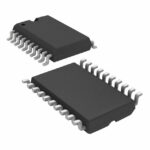 SN74LVC573AQDWRQ1

Learn what a battery BMS does, how protection differs from charging, and which pack specifications to check when sourcing BMS components through ChipApex.
Read More
SN74LVC573AQDWRQ1 is listed in the Latches range at ChipApex. The manufacturer field lists Texas Instruments. Its product description is IC D-TYPE TRANSP SGL 8:8…
Read More
SN74LVC573AQDWRQ1 is listed in the Latches range at ChipApex. The manufacturer field lists Texas Instruments. Its product description is IC D-TYPE TRANSP SGL 8:8…
Read More
SN74LVC573AQDWRQ1 is listed in the Latches range at ChipApex. The manufacturer field lists Texas Instruments. Its product description is IC D-TYPE TRANSP SGL 8:8…
Read More
Learn the relay definition, coil and contact operation, NO and NC forms, load ratings and suppression choices. Compare mechanical, reed and solid-state types.
Read More
SN74LVC573AQDWRQ1 is listed in the Latches range at ChipApex. The manufacturer field lists Texas Instruments. Its product description is IC D-TYPE TRANSP SGL 8:8…
Read More
SN74LVC573AQDWRQ1 is listed in the Latches range at ChipApex. The manufacturer field lists Texas Instruments. Its product description is IC D-TYPE TRANSP SGL 8:8…
Read More
Learn what an IMU measures, how accelerometers and gyroscopes work together, why orientation estimates drift, and what to compare.
Read More
Understand motor controller types, driver functions, startup current, feedback and braking. Use practical checks to match control electronics to your motor.
Read More
Choose a reed relay for signal switching. Understand hot and cold switching, leakage, contact resistance, isolation and measurement settling requirements.
Read More
Understand RF attenuator dB values, fixed and programmable types, impedance, power limits and noise tradeoffs before choosing parts for an RF signal path.
Read More
Understand load cell sensor output, bridge wiring and calibration. Learn how mV/V sensitivity, mechanics and ADC noise affect measurement accuracy.
Read More
The activity of extra discounts on wholesale prices is in full swing…
Please fill in your contact information and we will send you the latest wholesale price list.







