 ChipApex | Global Electronic Components Supplier

SEARCH
Search Product
Search Post
— IC芯片 | 连接器 | 传感器 | 被动器件 —
Search productSearch post
— IC芯片 | 连接器 | 传感器 | 被动器件 —
Consult the customer manager about the wholesale price.
consultation hotline:86-132-6715-2157
email:[email protected]
Contact the product manager for consultation. One-stop consultation is available.
Do you want a lower wholesale price? Please send us your inquiry and we will reply immediately.
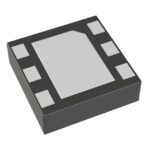
XC6805A2E14R-G is listed in the Battery Chargers range at ChipApex. The manufacturer field lists Torex Semiconductor Ltd. Its product description is IC BATT CHG LI-ION 1CELL 6USPEL. Review the specifications below when checking this part for your BOM.
The XC6805A2E14R-G is a linear charge management IC designed for single-cell Lithium-ion and Lithium Polymer batteries. It provides a regulated output voltage of 4.2 V with a maximum output current of 40 mA. The device operates within a supply voltage range of 4.5 V to 6 V and features a low operating supply current of 100 uA. It supports programmable charging current and includes protection against overcurrent, overtemperature, and overvoltage conditions. The component is housed in a USP-6EL package (6-XDFN bare pad) and functions within a temperature range of -40°C to +85°C.
This component is officially discontinued and no longer manufactured by Torex Semiconductor Ltd. Procurement should focus on verifying the authenticity of remaining stock from authorized distributors or secondary market suppliers. Buyers must confirm the part status and source reliability due to the end-of-life designation. Availability is limited to existing inventory only.
Engineers should evaluate this part primarily for legacy system maintenance or replacement scenarios where the original design utilized the XC6805 series. Due to its discontinuation, new designs should consider alternative active components from the manufacturer's portfolio. Verify that the 40 mA output current and 4.2 V regulation meet the specific target battery specifications before sourcing obsolete inventory.
The XC6805A2E14R-G belongs to the XC6805 series of linear charge management ICs produced by Torex Semiconductor Ltd. This series specializes in efficient power management for portable electronics using small form-factor packages like the USP-6EL. The A2 suffix typically denotes specific electrical characteristics within the family, tailored for low-current applications.
The XC6805A2D14R-G is documented as a parameter-equivalent substitute for the XC6805A2E14R-G.
Explore related parts through Power Management (PMIC), Integrated Circuits (ICs), all product categories, ChipApex homepage.
 XC6805A2E14R-G
XC6805A2E14R-G is listed in the Battery Chargers range at ChipApex. The manufacturer field lists Torex Semiconductor Ltd. Its product description is IC BATT CHG…
Read More
XC6805A2E14R-G is listed in the Battery Chargers range at ChipApex. The manufacturer field lists Torex Semiconductor Ltd. Its product description is IC BATT CHG…
Read More
Choose a DIP switch by contact type, coded positions, footprint and signal ratings. Check logic polarity, assembly conditions and PCB configuration behavior.
Read More
Select a bridge rectifier by reverse voltage, capacitor charging current, startup surge and cooling. Work through a stated DC voltage and ripple example.
Read More
Learn how a pressure transducer converts pressure into voltage, current, or digital output, and compare pressure references and key selection specs.
Read More
XC6805A2E14R-G is listed in the Battery Chargers range at ChipApex. The manufacturer field lists Torex Semiconductor Ltd. Its product description is IC BATT CHG…
Read More
XC6805A2E14R-G is listed in the Battery Chargers range at ChipApex. The manufacturer field lists Torex Semiconductor Ltd. Its product description is IC BATT CHG…
Read More
XC6805A2E14R-G is listed in the Battery Chargers range at ChipApex. The manufacturer field lists Torex Semiconductor Ltd. Its product description is IC BATT CHG…
Read More
Understand how a comparator switches at a voltage threshold, why hysteresis prevents chatter, and which output and input specs matter.
Read More
XC6805A2E14R-G is listed in the Battery Chargers range at ChipApex. The manufacturer field lists Torex Semiconductor Ltd. Its product description is IC BATT CHG…
Read More
Learn how a diode conducts, how to identify anode and cathode, and when to choose rectifier, TVS, Zener or photodiode types for a circuit.
Read More
See when an inductor behaves linearly, how DC bias and saturation reduce inductance, and which current and temperature curves to check.
Read More
The activity of extra discounts on wholesale prices is in full swing…
Please fill in your contact information and we will send you the latest wholesale price list.






