ChipApex | Global Electronic Components Supplier

SEARCH
Search Product
Search Post
— IC芯片 | 连接器 | 传感器 | 被动器件 —
Search productSearch post
— IC芯片 | 连接器 | 传感器 | 被动器件 —
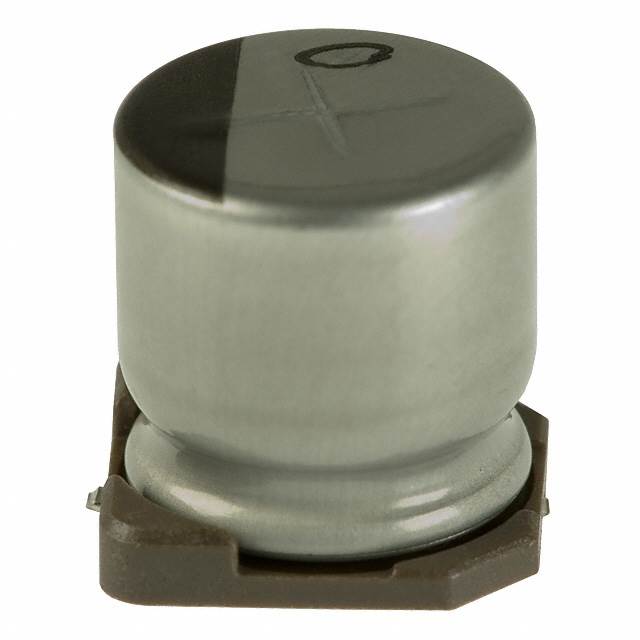
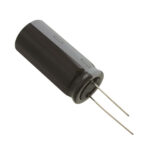
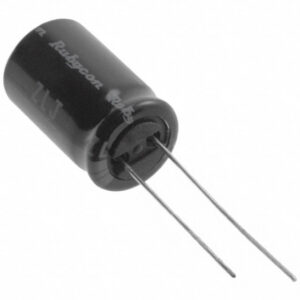
An electrolytic capacitor is a type of polarized capacitor that uses a wet electrolytic solution and an oxide film to store electrical charge. An example is the aluminum electrolytic capacitor which contains two closely spaced spooled strips of aluminum foil for the positive anode and negative cathode. These are separated by a thin spacer material soaked in the wet electrolyte. The thin insulating layer of aluminum oxide formed on the anode between the foil plates acts as the dielectric, creating a high-capacitance device in a compact package. These polarized capacitors are well-suited for applications where space and weight are at a premium, such as in electronic devices, power supplies, and filtering circuits.
| Select products | Mfr | Description | Package | Supplier Device Package | Mounting Type | Series | Operating Temperature |
|---|---|---|---|---|---|---|---|
 200BXA22M10X16 $0.22 | Rubycon | CAP ALUM 22UF 20% 200V RADIAL TH | Bulk | Through Hole | BXA | -25°C ~ 105°C | |
200BXA22M10X20 $0.25 | Rubycon | CAP ALUM 22UF 20% 200V RADIAL TH | Bulk | Through Hole | BXA | -25°C ~ 105°C | |
| Rubycon | CAP ALUM 33UF 20% 200V RADIAL TH | Bulk | Through Hole | BXA | -25°C ~ 105°C | ||
200BXA47M12.5X20 $0.39 | Rubycon | CAP ALUM 47UF 20% 200V RADIAL TH | Bulk | Through Hole | BXA | -25°C ~ 105°C | |
| Rubycon | CAP ALUM 47UF 20% 200V RADIAL TH | Bulk | Through Hole | BXA | -25°C ~ 105°C | ||
| Rubycon | CAP ALUM 68UF 20% 200V RADIAL TH | Bulk | Through Hole | BXA | -25°C ~ 105°C | ||
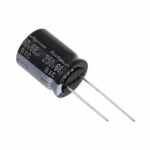 200BXC100MEFC16X20 $1.69 | Rubycon | CAP ALUM 100UF 20% 200V RADIAL | Bulk | Through Hole | BXC | -25°C ~ 105°C | |
200BXC100MEFCGC16X20 $0.60 | Rubycon | CAP ALUM 100UF 20% 200V RADIAL | Tape & Box (TB) | Through Hole | BXC | -25°C ~ 105°C |
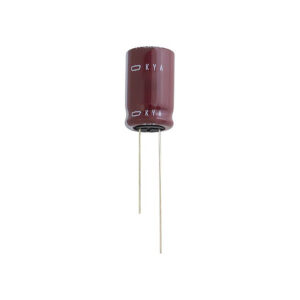 EKYA160ELL472ML25SView ProductRXJ560M1JBK-1012SView Product
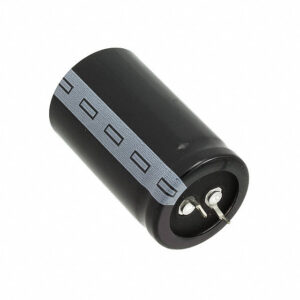 B43634B9157M000View Product
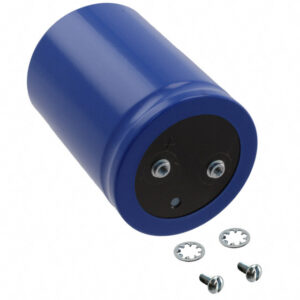 E36D201LPN123TEB7MView Product
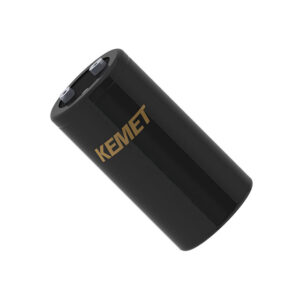 ALS81H363DF040View Product
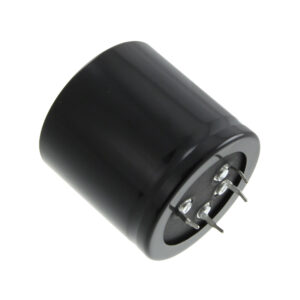 B43511C5477M87View Product
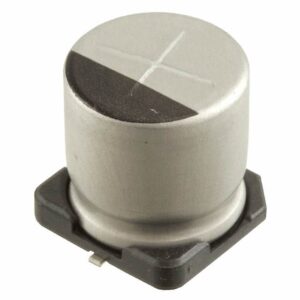 UCD1H221MNL1GSView Product
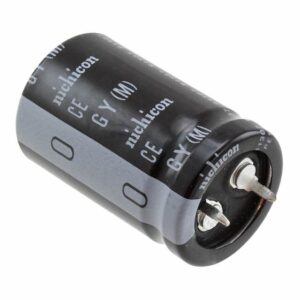 LGY1J222MELZ35View Product
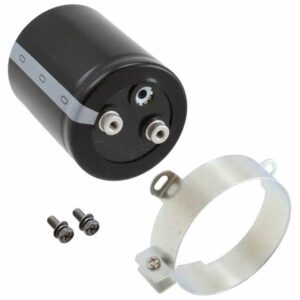 LNC2H152MSEGView Product
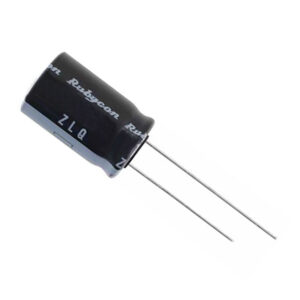 35ZLQ680MEFC10X20View ProductVES470M0JTR-0505SView Product
 35RX301000M12.5X25View Product
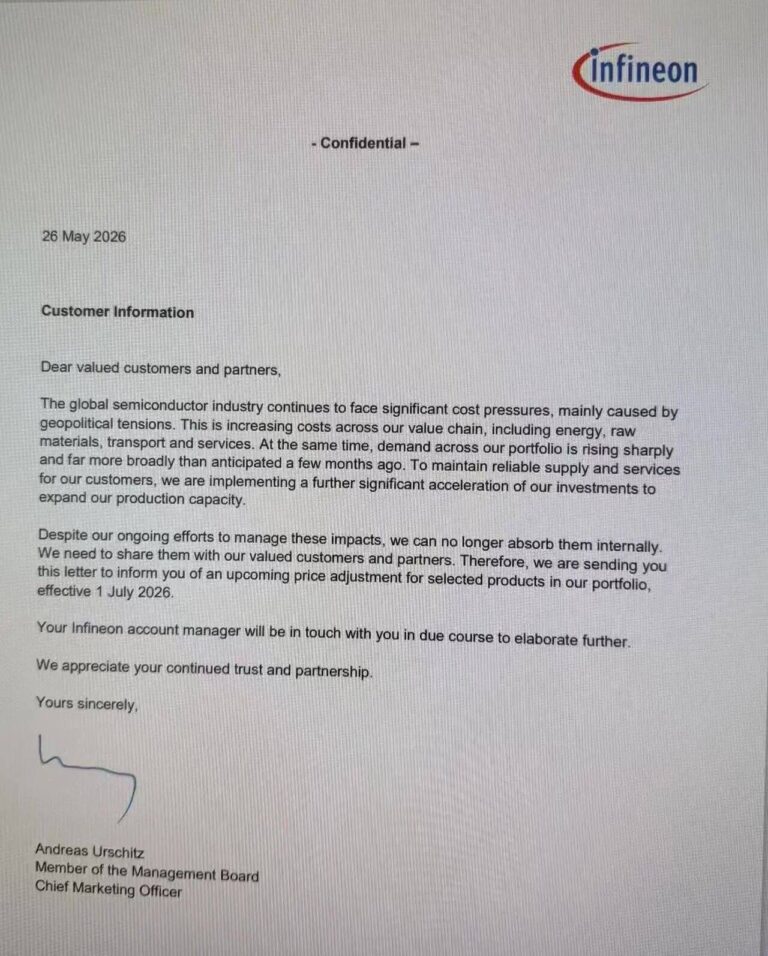
Munich, Germany – May 26, 2026 – Power semiconductor and automotive chip giant Infineon Technologies AG has formally notified customers worldwide of a second…
Read More
Learn the relay definition, coil and contact operation, NO and NC forms, load ratings and suppression choices. Compare mechanical, reed and solid-state types.
Read More
On September 22nd, it was reported that Samsung Electronics, the South Korean tech giant, had successfully passed NVIDIA’s certification test for its 12-layer HBM3E…
Read More
As 2025 draws to a close, the global semiconductor industry stands at a crossroads. Intertwined with escalating geopolitical tensions, supply chain disruptions, and groundbreaking…
Read More
Find out when a bare shock switch needs a pull resistor, when an MCU internal pull-up is enough, and why sensor modules and piezo…
Read More
Choose an AC to DC converter by input range, output demand, isolation, efficiency and thermal derating. Compare architectures and check installation needs.
Read More
Understand how oscillators generate timing signals, how they differ from crystals, and which frequency, output and stability specs matter when choosing one.
Read More
CHICAGO, USA – May 27, 2026 – Global leading interconnect manufacturer Molex officially issued a global distributor price adjustment notice on May 27, confirming…
Read More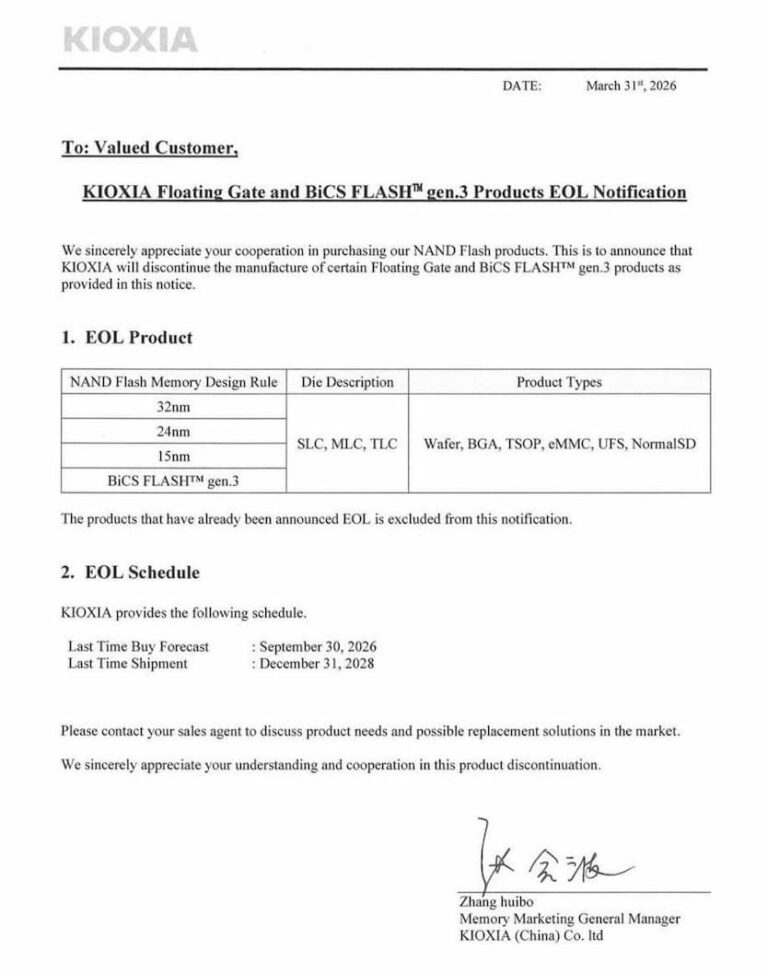
TOKYO, April 1, 2026 – Kioxia Corporation (formerly Toshiba Memory Corporation), a global leader in flash memory and storage solutions, has officially issued a…
Read More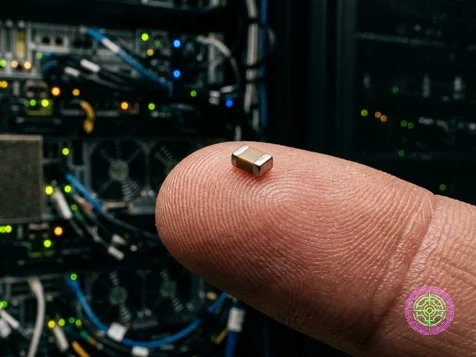
The multilayer ceramic capacitor (MLCC) market has fallen into a severe structural supply crunch in the third quarter of 2026, driven by explosive demand…
Read More
[Shenzhen/Shanghai/Beijing, January 2025] — As global digital transformation accelerates, the electronic components industry has reached a critical inflection point in 2025. Emerging fields such…
Read More
See when an inductor behaves linearly, how DC bias and saturation reduce inductance, and which current and temperature curves to check.
Read More
The activity of extra discounts on wholesale prices is in full swing…
Please fill in your contact information and we will send you the latest wholesale price list.