 ChipApex | Global Electronic Components Supplier

SEARCH
Search Product
Search Post
— IC芯片 | 连接器 | 传感器 | 被动器件 —
Search productSearch post
— IC芯片 | 连接器 | 传感器 | 被动器件 —
Consult the customer manager about the wholesale price.
consultation hotline:86-132-6715-2157
email:[email protected]
Contact the product manager for consultation. One-stop consultation is available.
Do you want a lower wholesale price? Please send us your inquiry and we will reply immediately.
FEP16CT-E3/45 is listed in the Diode Arrays range at ChipApex. The manufacturer field lists Vishay General Semiconductor - Diodes Division. Its product description is DIODE ARRAY GP 150V 16A TO-220-3. Review the specifications below when checking this part for your BOM.
The FEP16CT-E3/45 is a silicon junction rectifier manufactured by Vishay General Semiconductor - Diodes Division. It features a common cathode configuration with two diodes housed in a TO-220AB through-hole package. The device supports a maximum repetitive peak reverse voltage of 150 V and an average forward rectified current of 16 A per diode. Key electrical characteristics include a maximum forward voltage of 1.3 V at the rated current, a peak non-repetitive forward surge current of 125 A, and a maximum reverse leakage current of 10 µA at 150 V. The component operates within a junction temperature range of -55°C to +150°C.
Verify the specific suffix against official Vishay documentation to confirm pinout and packaging details. Confirm RoHS compliance status as required by project specifications. Ensure the TO-220AB footprint matches the target PCB design constraints before finalizing procurement orders.
Select this component when a 150 V rating and 16 A continuous current capacity are required in a standard through-hole format. The common cathode arrangement simplifies wiring compared to separate single diodes. Evaluate thermal management requirements based on the 1.3 V forward voltage drop under full load conditions.
This part belongs to the FEP16xT series of high-current silicon rectifiers from Vishay. The series offers various voltage ratings to suit different power system requirements while maintaining consistent current handling and package dimensions. The E3 suffix indicates lead-free termination compliant with international environmental directives.
The maximum repetitive peak reverse voltage (Vrrm) is 150 V.
No, the FEP16CT-E3/45 is not listed as AEC-Q101 qualified.
The component utilizes a TO-220AB three-pin through-hole package.
Explore related parts through Rectifiers, Diodes, Discrete Semiconductor Products, all product categories.
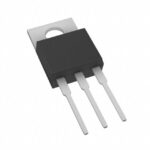 FEP16CT-E3/45

Learn what an IMU measures, how accelerometers and gyroscopes work together, why orientation estimates drift, and what to compare.
Read More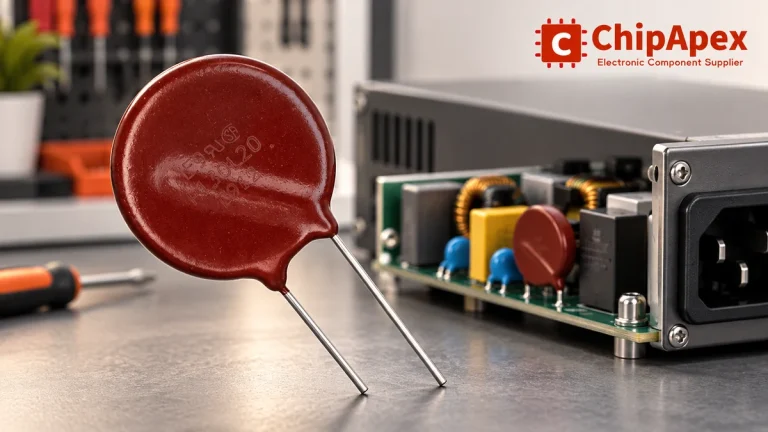
Select MOV varistors by continuous voltage, clamping behavior, surge waveform and repetition. Check thermal disconnection, fuse coordination and replacements.
Read More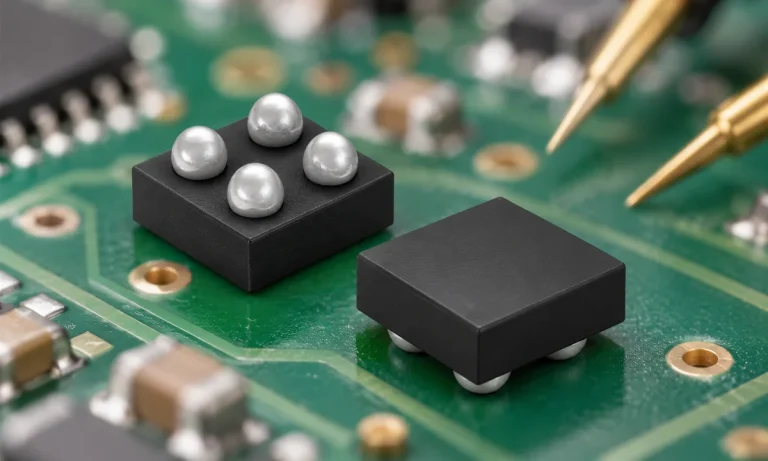
Understand how a comparator switches at a voltage threshold, why hysteresis prevents chatter, and which output and input specs matter.
Read More
FEP16CT-E3/45 is listed in the Diode Arrays range at ChipApex. The manufacturer field lists Vishay General Semiconductor - Diodes Division. Its product description is…
Read More
FEP16CT-E3/45 is listed in the Diode Arrays range at ChipApex. The manufacturer field lists Vishay General Semiconductor - Diodes Division. Its product description is…
Read More
FEP16CT-E3/45 is listed in the Diode Arrays range at ChipApex. The manufacturer field lists Vishay General Semiconductor - Diodes Division. Its product description is…
Read More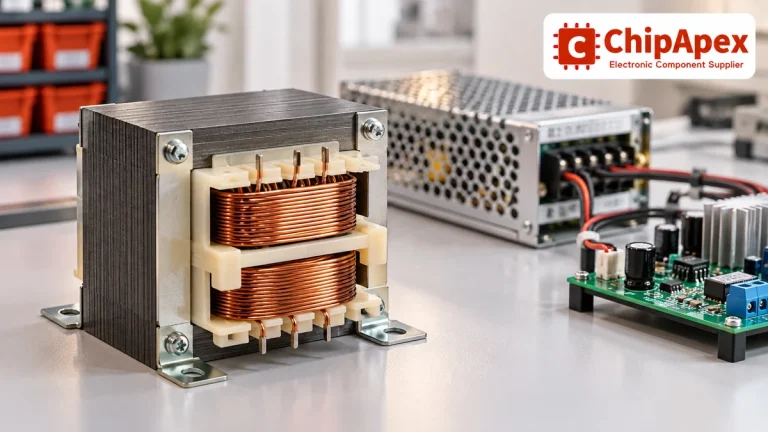
Select power transformers by input frequency, secondary VA, rectifier load, isolation, regulation and inrush. Build a clearer specification for your next RFQ.
Read More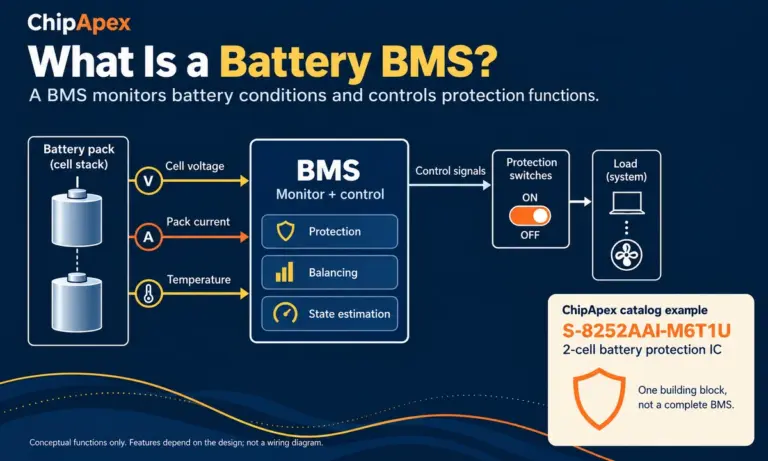
Learn what a battery BMS does, how protection differs from charging, and which pack specifications to check when sourcing BMS components through ChipApex.
Read More
FEP16CT-E3/45 is listed in the Diode Arrays range at ChipApex. The manufacturer field lists Vishay General Semiconductor - Diodes Division. Its product description is…
Read More
FEP16CT-E3/45 is listed in the Diode Arrays range at ChipApex. The manufacturer field lists Vishay General Semiconductor - Diodes Division. Its product description is…
Read More
Learn how a diode conducts, how to identify anode and cathode, and when to choose rectifier, TVS, Zener or photodiode types for a circuit.
Read More
See when an inductor behaves linearly, how DC bias and saturation reduce inductance, and which current and temperature curves to check.
Read More
The activity of extra discounts on wholesale prices is in full swing…
Please fill in your contact information and we will send you the latest wholesale price list.





