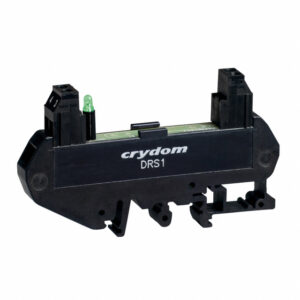
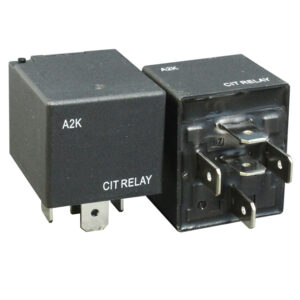
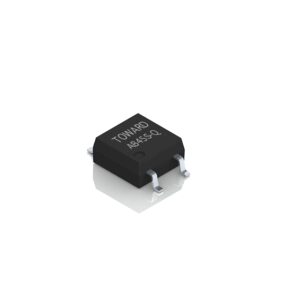
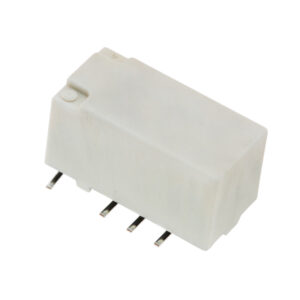
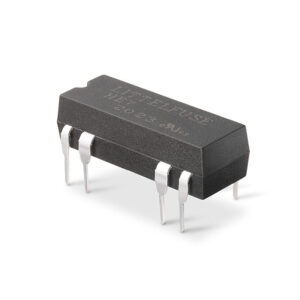
Relays and contactors are devices used to switch or interrupt the flow of electrical current in one or more circuits, using a control signal which is galvanically isolated from the circuit(s) being controlled, with various sub-groups demarcated along lines of device construction or intended application. Traditionally and still-commonly based on the use of an electromagnet to open or close a set of mechanical switch contacts, newer devices using solid-state technologies are also widely available, with both types having characteristics to recommend them under different application conditions.
Function in the design. A relay lets one control signal switch a separate load path through contacts or a semiconductor output. Start with the role the component plays in the switching assembly. Choose the switching technology and check the load type, inrush and control requirements. An RF relay is characterized for switching high-frequency signal paths. On the assembly drawing, identify which part performs each function. That distinction is useful when two catalog categories have similar names.
J104D2C12VDC.20S at a glance. The listing for J104D2C12VDC.20S gives mounting type as Through Hole, coil voltage as 12VDC, contact form as DPDT (2 Form C). These values apply to this ordering code. Check the manufacturer’s description before carrying them over to another member of the family. When you enter a rating in the bill of materials, copy its unit and the conditions attached to it. That gives the next engineer enough information to compare another part on the same basis.
Differences within the range. For coil current, J104D2C12VDC.20S is listed as 16.7 mA and J104D2C12VDC.36S as 30 mA. When comparing relays, distinguish a property shown for an individual model from a requirement shared by the whole design. Short descriptions often omit the detail that decides whether a part fits. Check the drawing for differences that affect assembly. For differences in operation, find the corresponding row in the manufacturer’s characteristic table and read the test conditions.
Electronic Relay: Applications and Design Considerations
Typical operating conditions. Relays switch power, route signals and isolate control electronics from a load. For this use, specify control signal, load waveform, switching frequency and the required state when control power is removed. Write down the conditions at the installation site. If the bench setup reproduces only one of them, record what still needs testing in the assembled equipment. Include at least one representative operating case and the most demanding credible case in the comparison.
Integration example. The listing for J104D2C12VDC.36S gives coil voltage as 12VDC, contact form as DPDT (2 Form C), contact rating (current) as 2:00 AM. Which of those values does the existing design fix? Mark those first. The remaining values give you room to consider another part. The listing for AZ9731-1C-12DC4 gives contact rating (current) as 30 A, switching voltage as 75VDC - Max, must operate voltage as 7.8 VDC. For an existing interface, place its drawing next to the product record. Resolve any discrepancy while the layout can still change and before ordering parts for evaluation.
Checks on the prototype. Check the load type used for the published rating. A resistive load, an inductive load and a capacitive input impose different stresses during switching. Record how the part was installed and what you observed. Include the operating conditions so someone else can repeat the measurement. During the relays check, choose the switching technology and check the load type, inrush and control requirements. If the reading is near the limit, repeat the original measurement. Then vary one condition at a time to see whether the component or the setup accounts for the difference.
Selection Criteria for Electromechanical Relay
Define the acceptance criteria. Choose the switching technology and check the load type, inrush and control requirements. Set a pass or fail limit for each critical requirement before comparing prices. For this category, useful starting columns from the catalog include mounting type, coil voltage, contact form, contact rating (current). Give each critical value a unit and an acceptable range. A blank field leaves an open question. Check the datasheet for that particular ordering code before entering a value in the comparison table.
Compare exact ordering codes. The listing for AZ9731-1C-12DC4 gives coil voltage as 12VDC, contact form as SPDT (1 Form C), contact rating (current) as 30 A. Check the complete manufacturer part number, including suffixes, against the ordering table for the device you intend to buy. For operating temperature, the respective entries for J104D2C12VDC.36S and AZ9731-1C-12DC4 are -40°C ~ 85°C and -40°C ~ 125°C. Check which of these values the assembly drawing or design specification requires. If the table gives only a typical value, look for a guaranteed limit at your operating conditions. The typical figure alone gives you little basis for rejecting a delivered part.
Prepare the purchase specification. For a quotation, identify the required relays by manufacturer and complete part number. If alternatives are acceptable, state which differences require engineering approval. Tell purchasing how many pieces you need, when they must arrive and which packing formats the assembly line can accept. Before approving an alternative for the switching assembly, compare it against the same acceptance criteria used for the original part and keep the comparison with the released bill of materials.
 ChipApex | Global Electronic Components Supplier